


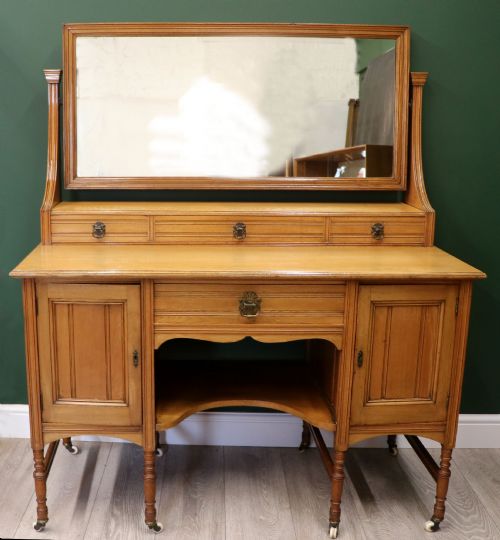

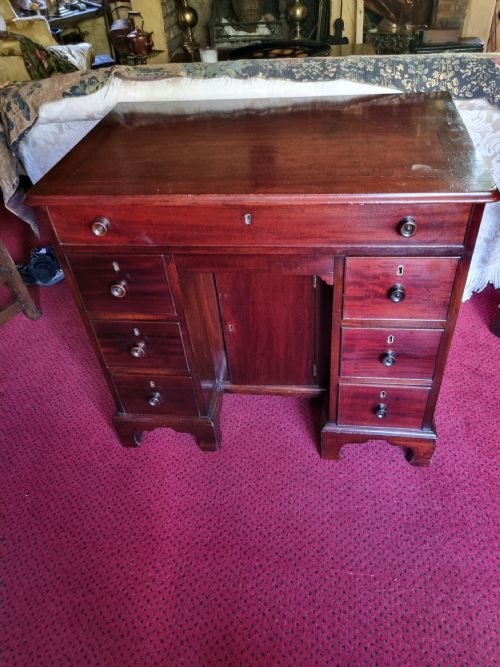


Pedestal Dressing Chest
A pedestal dressing chest brings together the fitted compartments of a desk and the mirror of a dressing table in one substantial piece of furniture.
Pedestal Dressing Chest
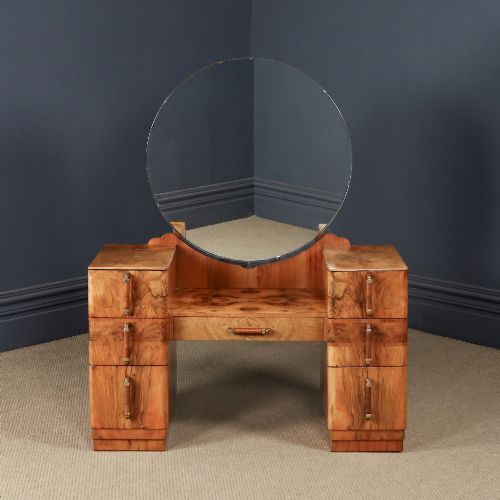
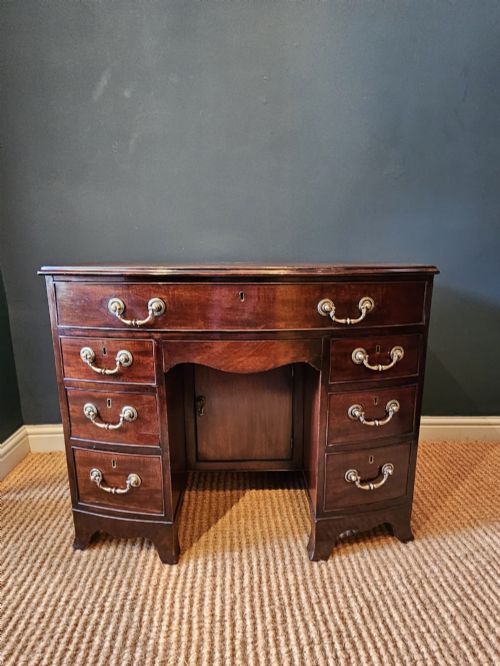
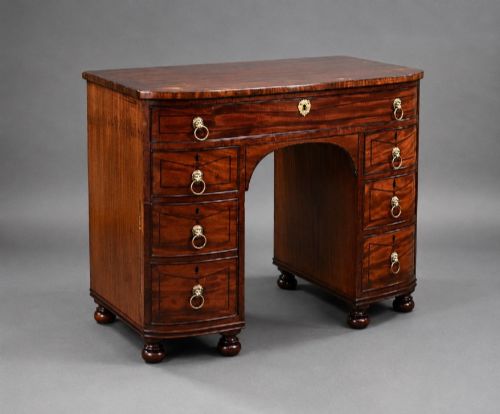
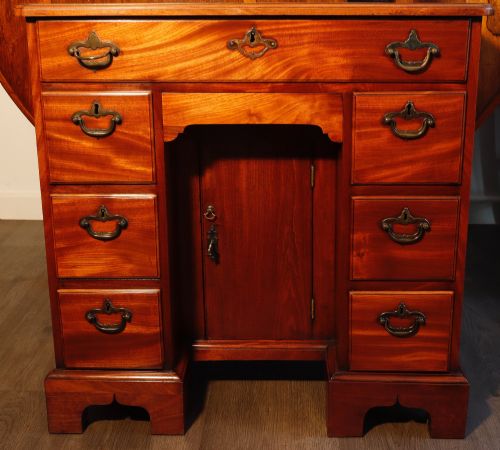
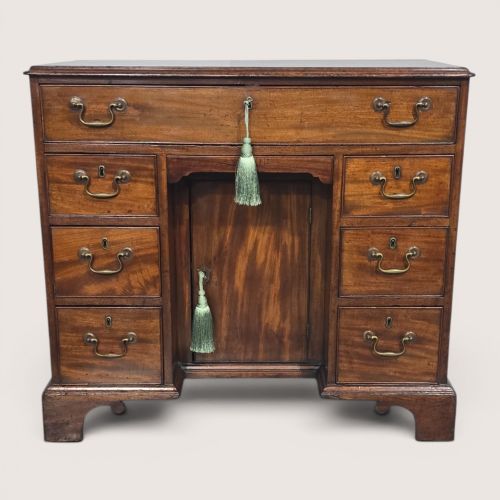
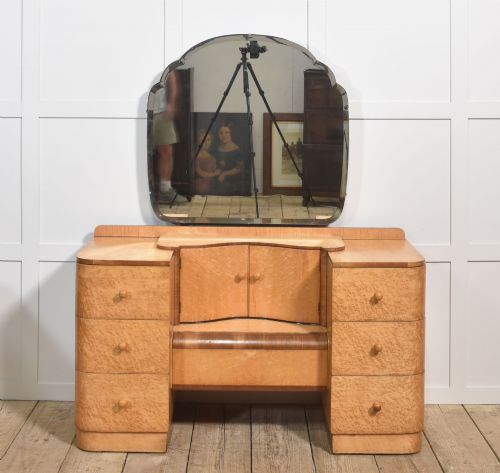
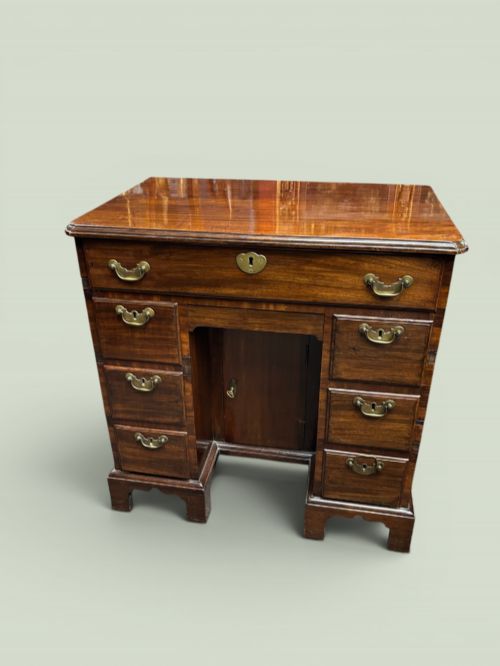
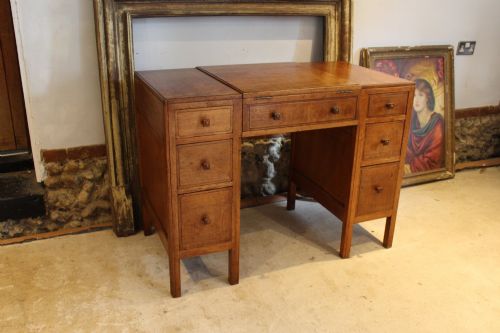
A pedestal dressing chest is a form of furniture that combines storage drawers with a dedicated surface and mirror for grooming, often taking the shape of a kneehole desk or twin-pedestal table. Buyers seeking a pedestal dressing chest will find examples spanning from the eighteenth century through to the art deco period of the 1930s.
The pieces on this page range from Georgian mahogany designs with fitted interiors and slides to Victorian walnut versions and 1930s modernist vanity tables. Earlier examples frequently take the form of kneehole desks with central recessed cupboards, while later iterations incorporate cheval mirrors and distinctive wood veneers.
Makers and workshops across different eras adapted the pedestal format to suit changing fashions in domestic dressing routines. Whether looking for a George II red walnut piece or an art deco burr walnut table, buyers encounter furniture designed to anchor a bedroom or dressing room.
Materials and construction
Timbers such as mahogany, walnut, oak, satinwood and yew form the structural carcass and decorative surfaces of these pieces. Cabinetmakers employed solid woods alongside figured veneers, featherbanding and marquetry inlay to create varied grain patterns on drawer fronts and tabletops.
Secondary materials including brass for handles and keyplates, glass for mirrors, and mirror glass complete the construction. Joints such as dovetails secure the drawers, while specialised compartments inside secretaire drawers demonstrate the precise joinery typical of higher-grade workshop production.
Listings include mahogany, walnut, oak, satinwood, and yew wood, spanning Georgian, Victorian, Regency, and Art Deco periods.
Distinctions in quality
The grade of a pedestal dressing chest depends largely on the choice of timber and the sophistication of its surface decoration. Pieces utilising highly figured burr walnut, featherbanded yew or detailed marquetry inlay sit at the upper end of the scale compared to plain or heavily restored carcases.
Execution of internal fittings also separates standard production from superior work. Fitted drawers containing original compartments, well-integrated slides, and original brass hardware indicate a higher level of original craftsmanship from the workshop.
Heal & Sons Heals·Edwards & Roberts·Grendy
The Pedestal Dressing Chest Glossary
- Kneehole desk
- A small writing or dressing table with a central recessed space for the legs, flanked by pedestals of small drawers. This form is frequently encountered in eighteenth-century walnut and mahogany examples.
- Secretaire
- A desk or chest featuring a pull-out drawer with a hinged front that drops to reveal a writing surface and small pigeonholes or drawers. It combines storage with a compact writing space.
- Featherbanding
- A type of inlay where thin strips of veneer are laid in a herringbone pattern around the edge of a drawer front or tabletop. It requires considerable skill from the cabinetmaker to execute cleanly.
- Burr walnut
- Wood taken from a walnut tree growth featuring swirling, knotty grain patterns prized for decorative veneer work. It appears on high-status furniture from the Georgian and Art Deco periods.
- Slide
- A pull-out wooden board mounted above drawers to provide an extra temporary surface for writing or sorting items. It is commonly found on Georgian desks and dressing chests.
Pedestal Dressing Chest: Frequently Asked Questions
What is a pedestal dressing chest?
A pedestal dressing chest is a multi-drawer furniture piece designed for grooming and personal administration, featuring flanking stacks of drawers with a central kneehole or dressing surface.
These pieces often include integrated mirrors or pull-out writing slides, bridging the function of a desk and a dressing table.
How do I date a pedestal dressing chest?
Dating relies on identifying the prevailing timber choices, hardware styles, and construction methods associated with specific periods like the Georgian era or the 1930s.
Early pieces often feature solid mahogany or walnut with hand-cut dovetails, while twentieth-century examples display modernist lines or art deco veneer work.
Where were these pieces used?
These pieces were traditionally placed in bedrooms, dressing rooms, or private studies of large houses and town residences for morning grooming and correspondence.
Today, they function equally well as statement dressing tables in modern bedrooms or as compact writing desks in living spaces.
How should I care for walnut veneer?
Walnut veneer requires protection from direct sunlight and extreme humidity fluctuations to prevent fading and lifting of the delicate wood surfaces.
Regular dusting with a dry cloth and occasional application of appropriate furniture wax helps maintain the lustre of the grain.