



Pedestal Desk and Cabinet
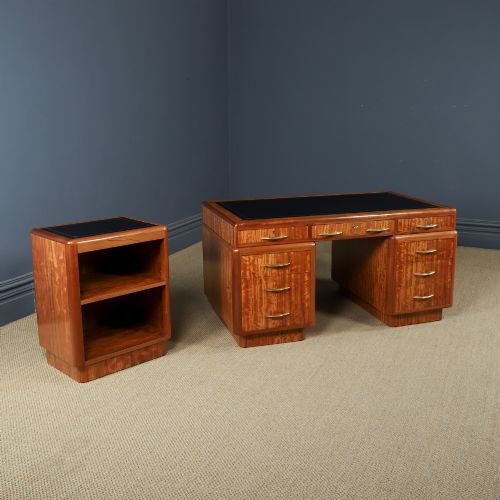
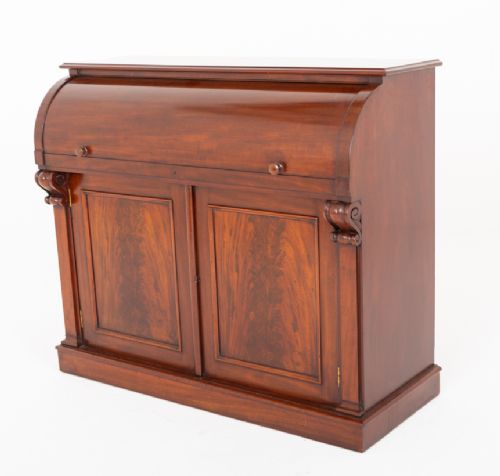
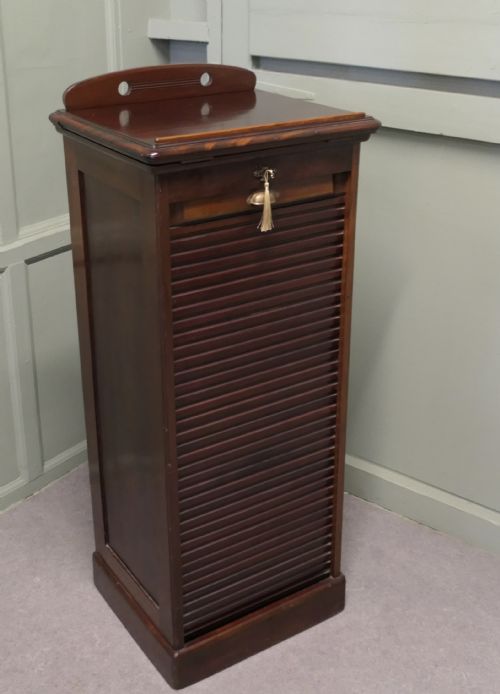
A pedestal desk and cabinet combination offers dedicated workspace and concealed storage, bringing stately proportions and timber craftsmanship to a study.
Pedestal Desk and Cabinet
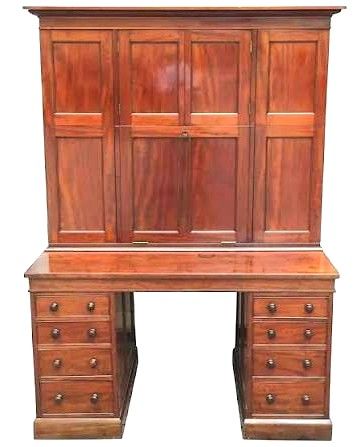
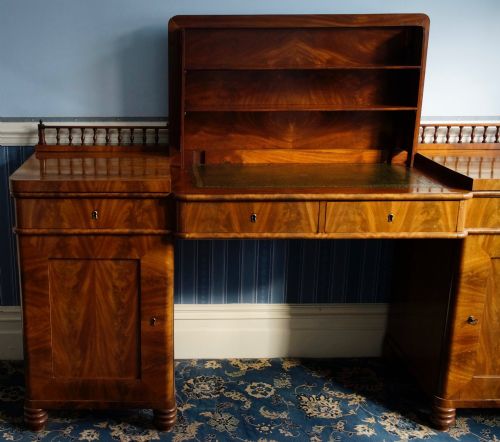
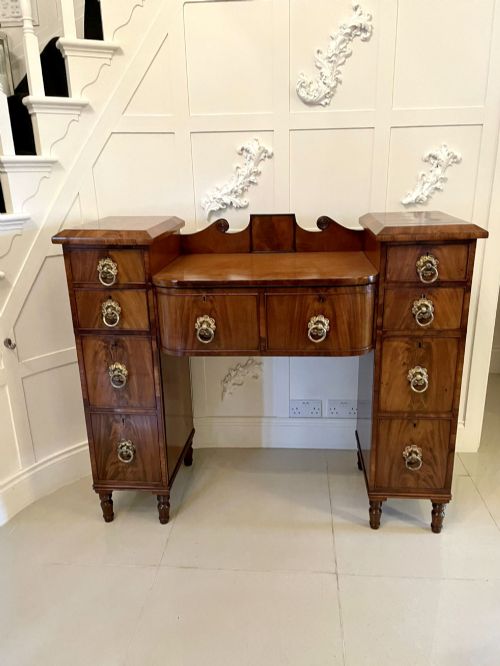
A pedestal desk and cabinet arrangement brings together heavy writing furniture and matched storage units, originating primarily from Georgian, Regency, and Victorian workshops. Buyers seeking this pairing find large timber workspaces accompanied by matching sideboards, filing cabinets, or superstructure cabinets designed to hold correspondence and ledgers.
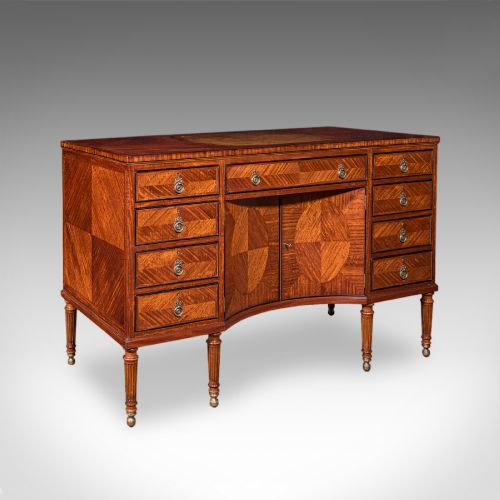
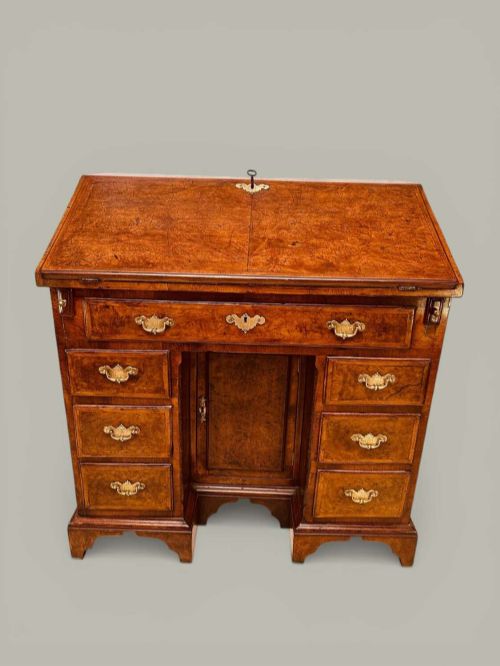
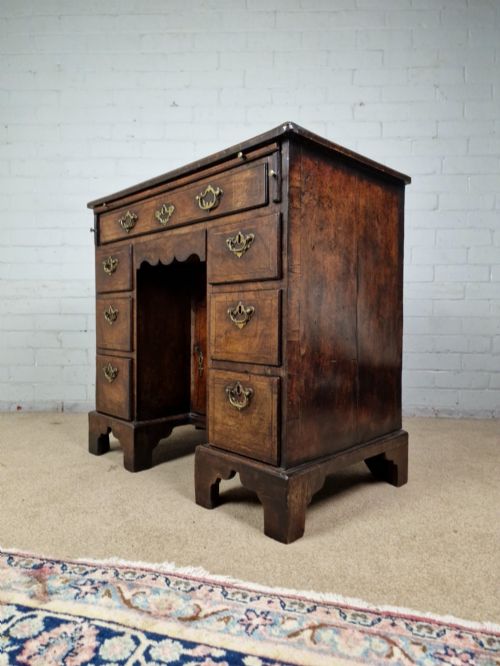
The pieces appearing most often span the eighteenth and nineteenth centuries, featuring substantial mahogany, walnut, and rosewood constructions designed for estate offices, morning rooms, and libraries. These forms range from freestanding kneehole desks with banks of drawers to elaborate partner desks and bureau bookcases.
Materials and construction
Cabinet makers utilised dense hardwoods such as mahogany, walnut, rosewood, and padouk, often selecting figured veneers like burr walnut or satinwood for primary display surfaces. Secondary woods such as pine appear within drawer linings and internal partitions.
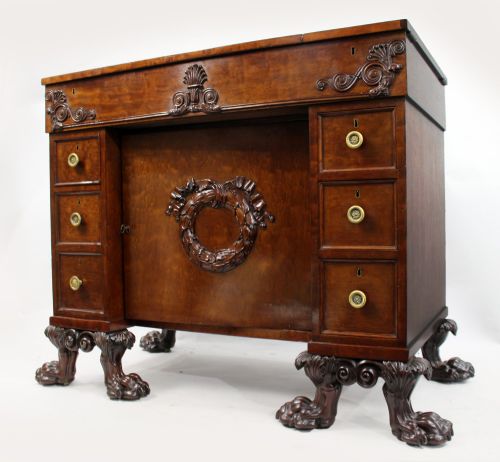
Joinery techniques relied on dovetailed drawer construction and mortise and tenon frames, supplemented by brass hardware, leather writing inserts, and occasionally ormolu mounts or mother-of-pearl inlay. Carved details such as paw feet or Green Man motifs indicate specialised hand carving by period artisans.
Pedestal Desk and Cabinet Retail Price Guide 2026
Typical asking prices for pedestal desk and cabinet among the pieces listed under this phrase on Sellingantiques today, from the lower quarter to the upper quarter. They describe what is for sale here now, not the wider market.
Some Victorian Davenport desks conceal pop-up stationery compartments that spring upward when a hidden brass button is pressed.
Indicators of quality
The grade of a pedestal desk and cabinet depends on the selection of timber figures, the precision of veneer matching, and the crispness of hand-carved mouldings or inlay work. Finer examples display continuous grain patterns across drawer fronts and heavy, well-cast brass handles rather than stamped replacements.
Structural integrity and the retention of original secondary timbers and drawer linings elevate a piece's standing. Workshop attribution, visible in branded maker signatures or distinctive construction habits, further separates standard regional items from high-end metropolitan commissions.
Waring & Sons·Mercier Frères·Edwards & Roberts·Gillows of Lancaster
The Pedestal Desk and Cabinet Glossary
- Pedestal desk
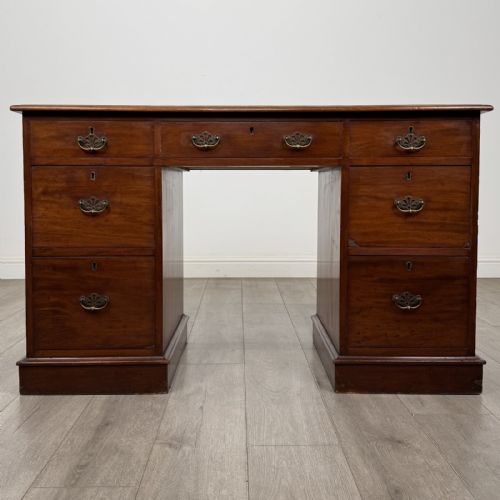
- A heavy writing table supported by two vertical banks of drawers rather than conventional legs. These units provide substantial storage beneath the main writing surface.
- Davenport desk
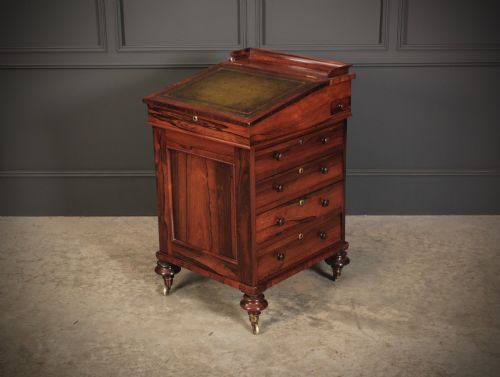
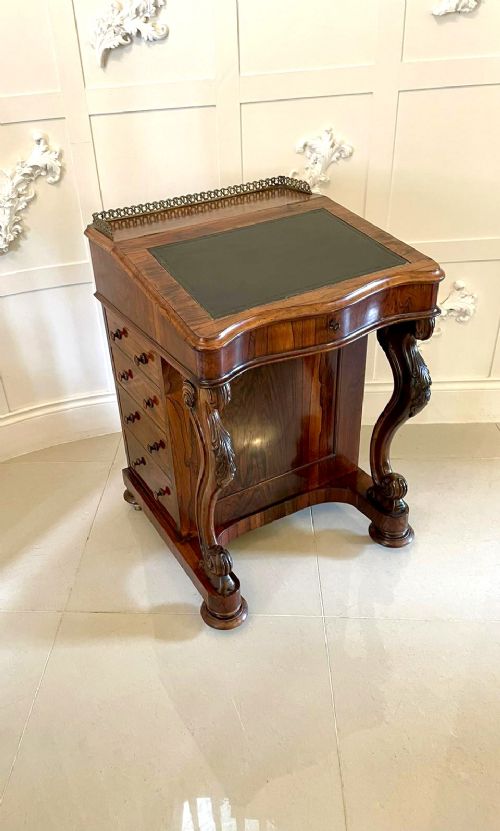
- A compact Victorian writing desk featuring a sloping, hinged top above a set of side drawers. They often incorporate stationery compartments and pull-out slides.
- Kneehole desk
- A bureau or writing table featuring a central recess for the user's legs, flanked by pedestals of drawers. Georgian versions frequently conceal a small cupboard within the kneehole recess.
- Secretaire
- A piece of furniture containing a pull-out drawer or drop-front panel that conceals a writing surface and pigeonholes. This allows a cabinet or chest to function as a desk.
- Ormolu
- Gilt bronze mounts applied to furniture as decorative enrichment, common on nineteenth-century pieces. They provide a metallic contrast to dark woods like walnut and mahogany.
Pedestal Desk and Cabinet: Frequently Asked Questions
How do I distinguish a Georgian pedestal desk from a Victorian one?
Georgian desks typically exhibit restrained classical proportions, solid mahogany or walnut primary construction, and subtle cockbeading around drawer edges. Handles are often brass swan necks or shaped backplates secured with fine pins.
Victorian pieces frequently display heavier timber dimensions, elaborate veneers such as burr walnut, and machine-assisted dovetailing in later decades. They may also incorporate patent locking mechanisms and more varied secondary woods.
What is the difference between a Davenport and a pedestal desk?
A Davenport is a smaller, highly compact writing box fitted onto a single pedestal base with side-opening drawers and a sloping top. It is designed for light correspondence and casual use in sitting rooms.
A pedestal desk is a much larger, double-pedestal workspace intended for heavy administrative duties, featuring substantial kneehole space and two banks of drawers supporting a wide top.
How should I care for leather desk inserts?
Leather writing surfaces require protection from direct sunlight and excessive dryness to prevent cracking. Dust them gently with a dry cloth and avoid harsh chemical cleaners.
Periodic application of appropriate leather balms helps maintain suppleness, while ink spills should be blotted immediately without rubbing.
Can these desks be disassembled for transport?
Many pedestal desks are constructed in three primary sections: two drawer pedestals and a top writing surface. This modular design allowed historical owners to move heavy furniture between rooms.
Securing screws or wooden brackets must be carefully removed before attempting to separate the pedestal columns from the desktop.