
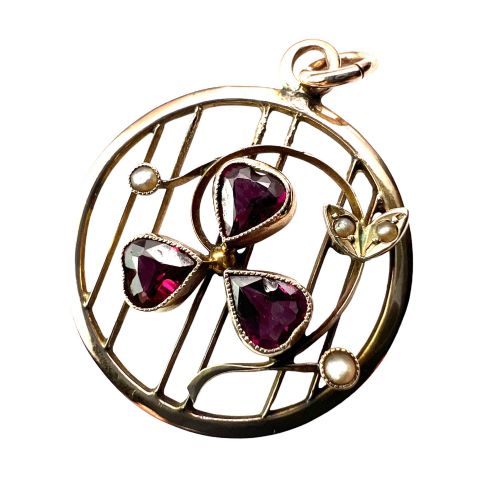


Pearl Openwork Pendant
A pearl openwork pendant combines delicate metal piercing with lustrous pearls, offering timeless elegance for everyday wear.
Pearl Openwork Pendant
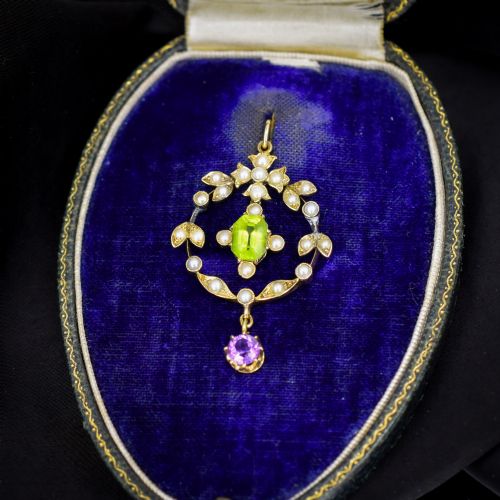
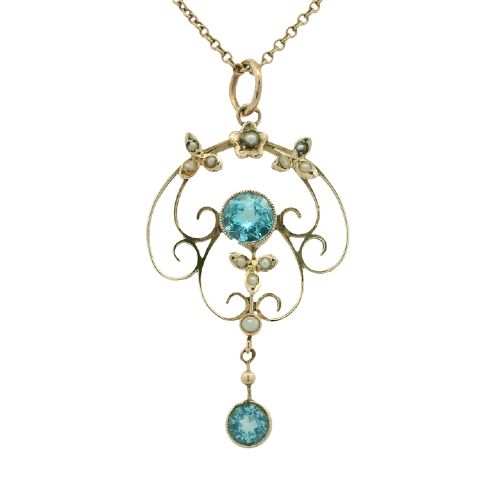
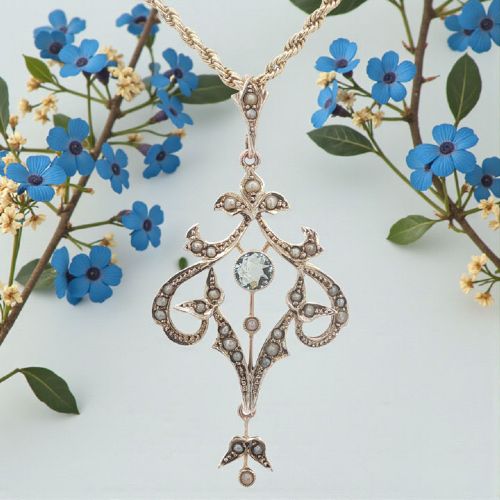
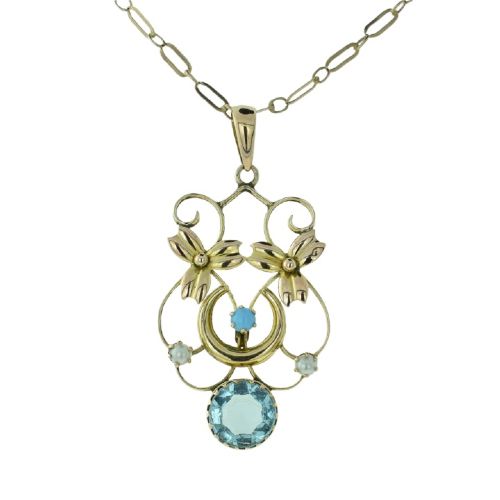
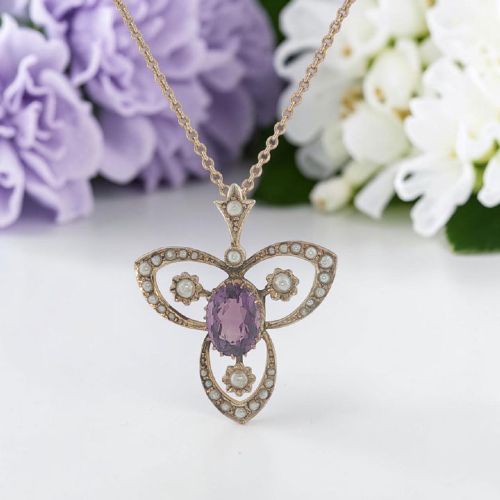
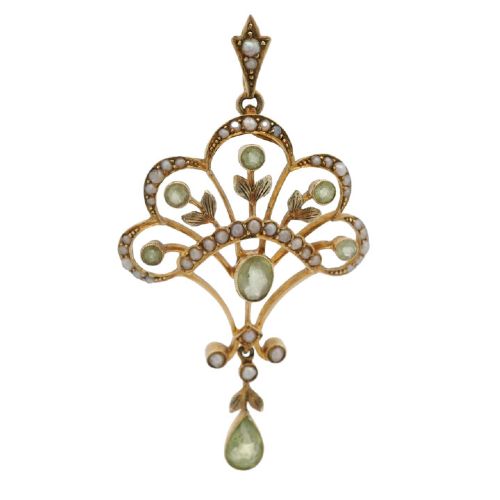
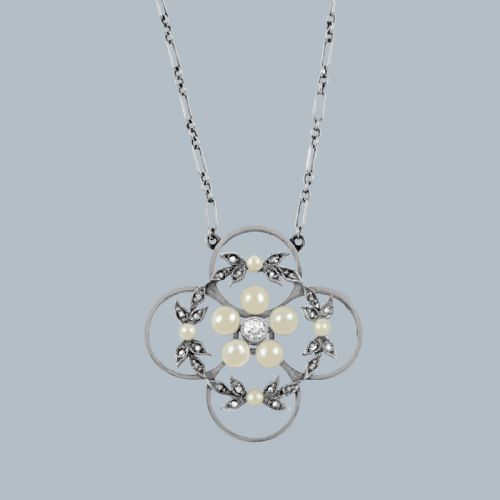
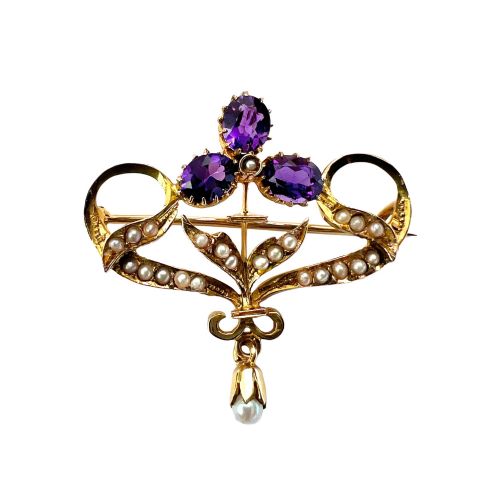
A pearl openwork pendant is a delicate piece of antique jewellery defined by intricate pierced metalwork combined with pearls, seed pearls, and coloured gemstones.
Buyers browsing this selection will frequently encounter Edwardian and Victorian examples, alongside Art Nouveau and Arts and Crafts designs.
The forms vary widely from lavalier necklaces and drop pendants to convertible brooch-pendants featuring amethyst, peridot, aquamarine, and garnet.
How They Were Made
Goldsmiths utilised varying purities of gold, including 9ct and 15ct, alongside silver and platinum, shaping the metal into intricate openwork frames to hold central gemstones and seed pearls.
Craftsmen set small pearls and delicate seed pearls by hand into bezel or claw settings, integrating articulated drops and fine chains to complete the necklace.
What Varies in Quality
Quality rests upon the precision of the openwork metal piercing and the secure matching of natural pearls and coloured stones such as aquamarine, peridot, and amethyst.
Pieces bearing identifiable maker marks or demonstrating refined Art Nouveau and Arts and Crafts design sensibilities stand apart in craftsmanship.
S. Blanckensee & Son·Theodor Fahrner
The Pearl Openwork Pendant Glossary
- Openwork
- Metalwork pierced or cut through to create a pattern resembling lace or wire scrollwork. This technique lightens the weight of the pendant while adding visual complexity.
- Seed Pearl
- Very small natural pearls, often pierced and threaded or tiny enough to be set in clustered pavé designs. They are characteristic of Victorian and Edwardian jewellery.
- Lavalier
- A pendant style featuring a main gemstone suspended from a chain with one or more dangling drops below. This design originated in the eighteenth century and gained popularity during the Edwardian era.
- Art Nouveau
- A stylistic movement spanning the late nineteenth and early twentieth centuries, known for flowing, organic plant lines and asymmetrical forms. Pieces from this period often incorporate enamel alongside pearls and coloured stones.
Pearl Openwork Pendant: Frequently Asked Questions
How do I wear a convertible pendant brooch?
Many Edwardian and Victorian pieces feature a pin mechanism alongside a suspension loop, allowing the item to function as either a brooch or a necklace pendant. You can thread a fine gold chain through the top loop for neckwear or fasten the secure pin directly onto garments.
When converting the piece, ensure the clasp mechanism remains locked safely to prevent loss during wear.
What is a lavalier pendant?
A lavalier is a drop-style necklace featuring a primary gemstone suspended from a delicate chain, often accompanied by one or more swinging pearl drops. These designs became especially popular during the Edwardian period.
The swinging elements create gentle movement when worn against clothing.
How do I identify an Edwardian pendant?
Edwardian pendants typically utilise platinum, yellow gold, or silver-gilt settings combined with diamonds, seed pearls, and pastel gemstones like peridot, aquamarine, and amethyst. The metalwork often exhibits delicate garland motifs or symmetrical filigree.
Maker marks and hallmarks stamped on the reverse can further confirm the production date.
Are seed pearls fragile?
Seed pearls are delicate organic gems that require gentle care to maintain their natural lustre. Avoid exposing them to harsh chemicals, perfumes, cosmetics, and ultrasonic cleaning baths.
Store them separately in a soft pouch to prevent scratching against harder gold and gemstones.