




Patterned Wingback Armchair
A patterned wingback armchair brings traditional upholstery and draught-excluding wings to a room, offering both comfort and strong period character.
Patterned Wingback Armchair
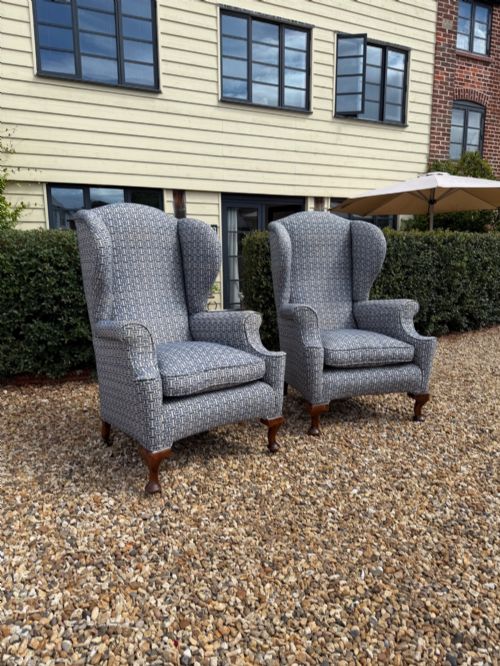
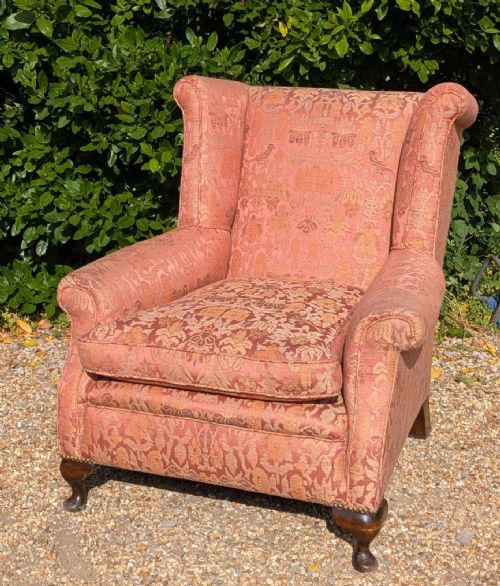
A patterned wingback armchair is a substantial seating form defined by protective side panels on the backrest designed to shield the sitter from draughts. When searching for a patterned wingback armchair, you encounter diverse iterations spanning the eighteenth century through to the early twentieth century, with Edwardian and Victorian examples appearing frequently.
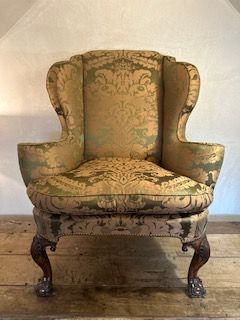
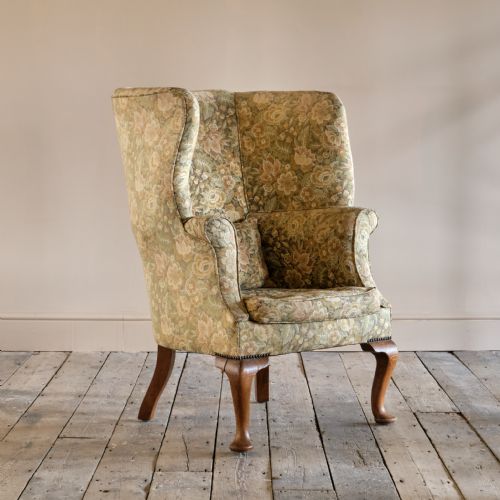
The selection includes revival pieces in Georgian and Queen Anne styles, alongside arts and crafts designs and barrel-backed variations. Frames often display traditional exposed timber such as mahogany, walnut, or oak beneath textile upholstery.
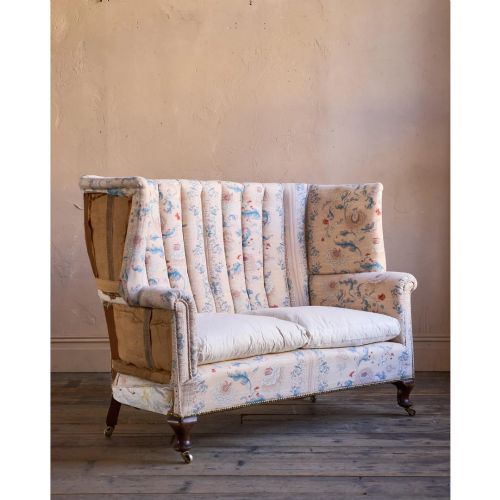
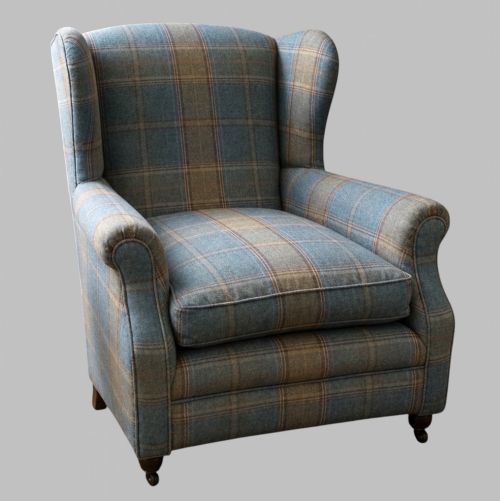
Textiles range from damask and tapestry fabrics to plaid wools and recycled cottons, sometimes finished with feather fillings. Alongside traditional armchairs, the inventory includes occasional pairs and related high-backed sofa forms.
Materials and construction methods
Makers built these frames using dense hardwoods like mahogany, walnut, and oak to provide structural stability for the deep-sprung and upholstered bodies. Brass details occasionally appear on castors or hardware components.
Traditional upholstery techniques involved heavy textile coverings such as damask, tapestry, and plaid fabrics stretched over dense stuffing, frequently incorporating feather fillings for seat comfort.
Some forest claw and ball armchairs bring an entire woodland ecosystem indoors to keep your ankles warm.
Distinctions in craftsmanship and design
Quality rests in the sculptural grace of the exposed wooden framework, particularly where carved cabriole legs, claw and ball feet, or precise fluting show the hand of a skilled cabinetmaker. Workshop attribution also elevates certain pieces, with recognised names like Whytock and Reid or Howard and Sons commanding particular respect.
The choice and execution of the textile upholstery significantly alter the character of a chair. Hand-stitched tapestries, heavy damasks, and matched plaids represent a higher tier of finish than plain or utilitarian coverings.
Whytock and Reid·Howard and Sons·William Morris
The Patterned Wingback Armchair Glossary
- Wingback
- An upholstered chair style featuring protective flaps or wings attached to the backrest designed to trap heat and block room draughts.
- Bergère
- A classically French-derived armchair style with enclosed upholstered sides, seen here adapted into Edwardian mahogany wing chairs.
- Damask
- A reversible figured fabric traditionally woven on a jacquard loom, frequently used to upholster formal period armchairs.
- Cabriole leg
- A furniture leg that curves out and then in, commonly found on eighteenth-century and revival Queen Anne style armchairs.
- Barrel back
- A seating design where the upholstered back curves continuously around to form the arms, offering a snug enclosure.
Patterned Wingback Armchair: Frequently Asked Questions
What is a wingback armchair used for?
These chairs were historically positioned near fireplaces to shield the occupant from cold air drafts while trapping heat from the hearth.
Today they function as prominent reading chairs or fireside seating in living spaces and libraries.
How do I date a wing chair?
Dating relies on observing structural clues such as the profile of the wooden legs, the rake of the back, and the materials used in the frame.
Revival pieces often emulate earlier eighteenth-century Georgian or Queen Anne aesthetics while retaining later Victorian or Edwardian construction methods.
Are these chairs comfortable for daily sitting?
Many period examples feature deep padding and feather fillings designed for substantial physical support and relaxation.
Because upholstery is frequently renewed by restorers, comfort levels often reflect modern standards while preserving antique frames.
What fabric types should I expect?
The selection includes traditional damask fabrics, woven tapestry textiles, and wool plaids alongside modern patterned cottons.
Original textiles are uncommon on older pieces, so many survive with period-appropriate or recent reupholstery.