
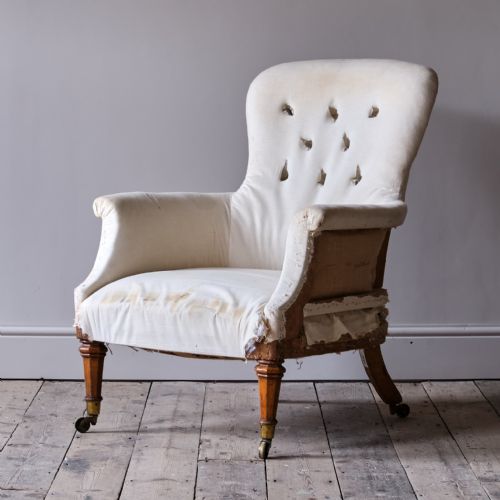


Regency Easy Chair
A regency easy chair offers substantial comfort wrapped in the crisp architectural lines of the early nineteenth century.
Regency Easy Chair
A regency easy chair takes several distinct forms across the nineteenth century, ranging from library chairs to library reading chairs and reclining armchairs. Buyers searching for a regency easy chair will most frequently encounter mahogany framed examples upholstered in fabric, leather, or calico.
The selection on this page demonstrates various interpretations of the style, including pieces with spoon backs, lyre fronts, and wing chair proportions. Makers during this period drew upon earlier Georgian precedents while introducing new mechanical reclining functions and distinctive library forms.
How a regency easy chair was made
Makers constructed the primary frames of a regency easy chair from solid mahogany, supporting the structure with brass castors and fittings. These woods were shaped into architectural arms and legs, reflecting the prevailing styles of the Regency, William IV, and late Regency periods.
Upholstery techniques involved traditional stuffing layers held together with hessian, then finished in materials such as leather, velvet, or calico. Patent reclining mechanisms appeared in advanced library models, combining iron adjustments with traditional timber framing.
Listings incorporate mahogany, leather, fabric, calico, velvet, hessian, brass, and wood across various nineteenth-century styles.
What varies in quality
Quality in a regency easy chair rests upon the crispness of the mahogany carving and the structural integrity of the frame. Superior examples demonstrate refined proportions in the arms and back, alongside sophisticated timber selection.
Attribution to prominent workshops elevates certain library chairs above standard domestic seating. The sophistication of mechanical reclining patents and the original integrity of the brass mounts also separate everyday pieces from exceptional examples.
Robert Daws London·Gillows
The Regency Easy Chair Glossary
- Mahogany
- A dense tropical hardwood favoured for high-end furniture framing throughout the Regency period. Its stability and rich grain made it the primary choice for structural armchair components.
- Lyre front
- A decorative furniture motif shaped like an ancient Greek lyre, frequently incorporated into the arm supports or front legs of library seating.
- Library chair
- A specialised seating form designed for reading and study, often featuring leather upholstery and sturdy mahogany construction to withstand heavy daily use.
- Wing chair
- An armchair featuring protective side panels attached to the back, designed to shield the sitter from drafts. Early nineteenth-century variants often incorporate deeper seats and modified wing profiles.
- Hessian
- A coarse woven fabric made from jute fibres, traditionally utilised as the foundational scrim beneath the top upholstery layers of upholstered chairs.
Regency Easy Chair: Frequently Asked Questions
What is a regency easy chair?
A regency easy chair is a nineteenth-century upholstered seating form designed for domestic comfort and study, typically constructed from mahogany.
These pieces encompass library chairs, wing chairs, and reclining models produced during the Regency and William IV periods.
How do I identify a regency easy chair?
Identification relies on observing architectural wooden framing, characteristic mahogany surfaces, and specific period upholstery styles.
Details such as lyre-shaped arm supports and brass castors frequently help distinguish examples from the early nineteenth century.
Where were regency easy chairs used?
These armchairs were primarily designed for domestic reception rooms, studies, and private libraries.
Their robust construction made them suitable for prolonged reading and relaxing by the household occupants.
How should I care for leather upholstery?
Leather surfaces on period library chairs require gentle cleaning and periodic conditioning to prevent drying.
Keeping the material away from direct sunlight and excessive heat preserves the historical finish.