
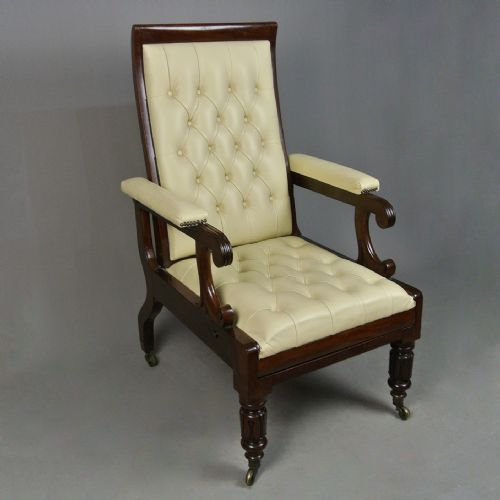


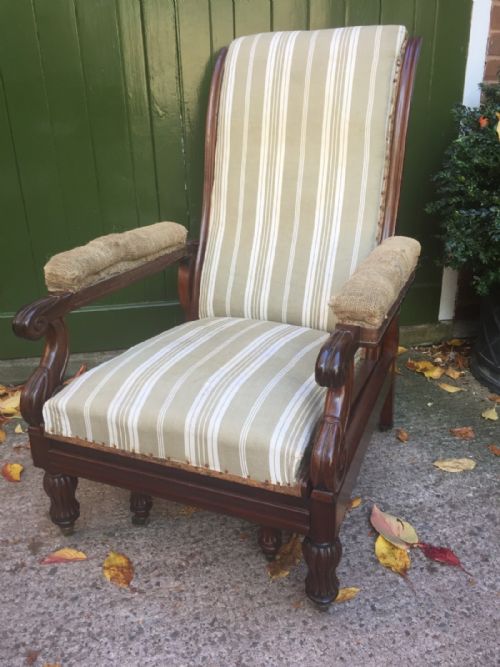
Regency Recliner Chair
These regency recliner chair examples combine ingenious nineteenth-century mechanical comfort with rich timbers for the serious library interior.
Regency Recliner Chair
A regency recliner chair offers sophisticated seating developed during the Regency, George IV, William IV, and early Victorian periods. These sophisticated armchairs appear frequently in mahogany and rosewood, incorporating functional mechanisms designed for reading and repose.
Buyers encounter forms such as the caned bergere library chair and the sliding library armchair alongside patented reclining designs. Origins span the early nineteenth century around 1800 up to mid-century 1850 interpretations.
How they were made
Cabinet makers utilised solid mahogany and rosewood to construct the heavy frames of these library chairs. Brass hardware often facilitated the sliding and reclining mechanical movements integral to the patented designs.
Traditional upholstery materials included leather, fabric, horsehair, hessian, and cane. These components were assembled by hand during the nineteenth century to support the adjustable reclining framework.
Some nineteenth-century readers adjusted their posture so frequently that the brass patent latches show polished grooves from decades of thumb pressure.
What varies in quality
The sophistication of the mechanical patent work distinguishes standard library seating from high-end examples associated with makers such as Robert Daws. Smooth operation of the reclining mechanism reflects superior nineteenth-century engineering.
The selection of dense mahogany or figured rosewood combined with original leather or cane work indicates the tier of craftsmanship. Finer pieces demonstrate meticulous joinery and unaltered structural integrity across the frame.
Robert Daws·Minter
The Regency Recliner Chair Glossary
- Bergère
- An enclosed upholstered armchair with a cane back and sides, commonly featuring a loose seat cushion. This French-inspired form became popular in English libraries during the Regency period.
- Patent
- A government license protecting an invention, often stamped onto nineteenth-century furniture mechanisms. Makers registered specific reclining and sliding designs to denote their proprietary engineering.
- Mahogany
- A durable, reddish-brown tropical hardwood favoured by Regency cabinet makers. Its stability made it ideal for heavy library seating and complex mechanical frames.
- Horsehair
- A traditional upholstery stuffing woven from equine tail or mane hair. It provides resilient, firm padding beneath leather or fabric surfaces.
Regency Recliner Chair: Frequently Asked Questions
How do these reclining mechanisms operate?
The mechanical systems often utilise sliding components and adjustable ratchets concealed within the wooden frame. These allow the user to alter the angle of the backrest for reading or resting.
Patented designs by makers like Robert Daws demonstrate the ingenious engineering employed during the early nineteenth century. Collectors should handle these antique adjustments with care to preserve the original brass work.
Where were these chairs used?
These seating pieces typically resided in gentleman's libraries, studies, and private reading rooms. Their sturdy construction and adjustable comfort suited long hours of study.
Today, they function well as statement armchairs in traditional living spaces or home offices. Their rich timber tones complement period architectural details.
How do I distinguish Regency from William IV pieces?
Regency furniture generally displays refined, classical proportions influenced by Greek and Roman designs. Timbers are frequently paired with subtle brass accents and restrained carving.
William IV pieces tend to be heavier and bolder in scale, anticipating early Victorian tastes. The turning and scrollwork on the arm supports often appear more robust.