
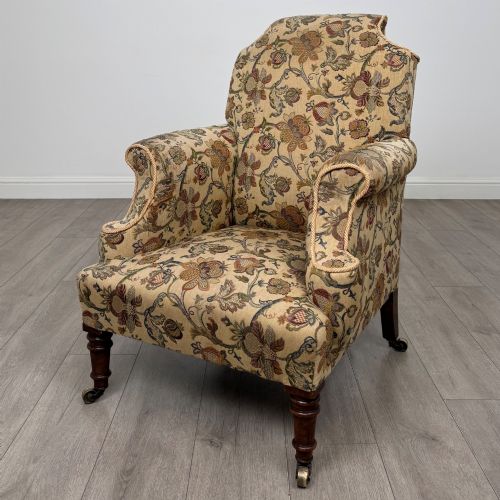
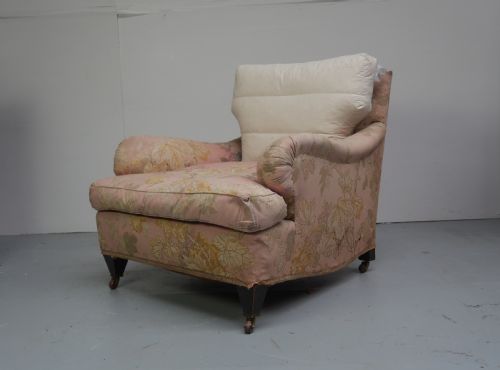


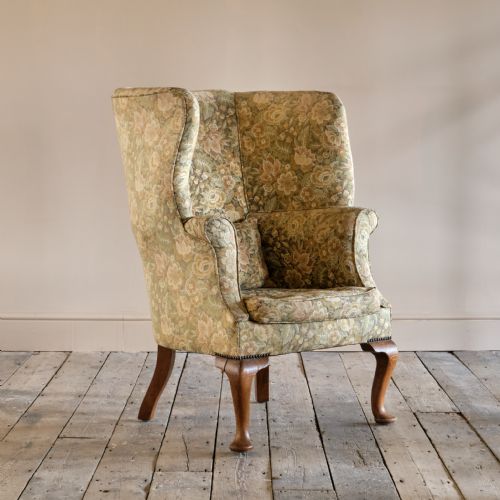


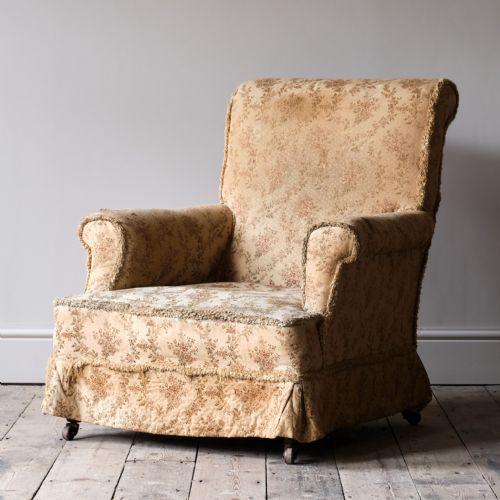

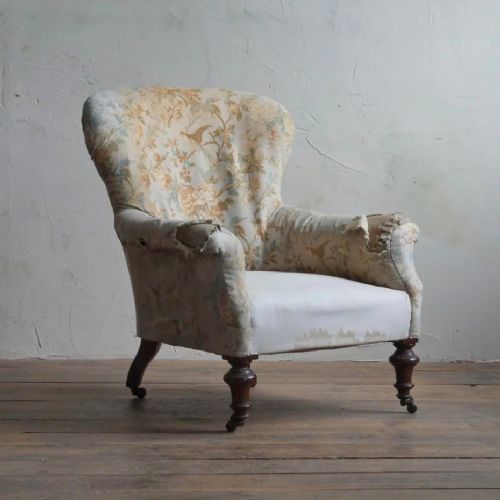


Floral Fabric Reading Chair
A floral fabric reading chair brings together structured upholstery and supportive seating, offering a comfortable spot for long hours with a book.
Floral Fabric Reading Chair
A floral fabric reading chair encompasses a range of upholstered armchairs designed for comfort and extended seating. These pieces span periods from the eighteenth century through the Edwardian era and the nineteen-twenties.
The selections on this page feature forms such as wing chairs, barrel backed armchairs, Howard style armchairs, and spoonback armchairs. Stylistic influences include Victorian, Queen Anne Revival, Georgian, Art Nouveau, and Chippendale style.
Buyers encountering this phrase find armchairs upholstered in patterned textiles, supported by frames constructed from woods like mahogany, walnut, oak, and hardwood. Brass accents and detailed hand carving appear on select examples from various decades.
Materials and construction
Frames rely on sturdy timbers including mahogany, walnut, oak, and general hardwood to provide a solid structural foundation for the seat. Joinery and hand carving shape the exposed wooden elements on specific nineteenth and twentieth-century models.
Upholstery techniques utilise fabric, tapestry fabric, and tapestry upholstery applied over supportive springing and internal padding. Brass details occasionally appear as castors or hardware fittings on the wooden frames.
Listings span from the eighteenth century to the nineteen-twenties, incorporating wood, brass, and tapestry fabric.
Assessing quality
Quality rests in the integrity of the wooden frame, whether manifested in the clean lines of an Edwardian oak structure or the intricate hand carvings of a Regency wingback armchair. The weight and durability of the underlying timber dictate the longevity of the seat.
The execution of the upholstery work, from the choice of tapestry fabric to the tautness of the textile application, defines the refinement of each piece. Superior examples display harmonious proportions between the upholstered body and the exposed wooden supports.
Thomas Chippendale
The Floral Fabric Reading Chair Glossary
- Wing chair
- An armchair with side panels attached to the back, designed to shield the occupant from draughts. These pieces often feature exposed wooden legs and substantial upholstered bodies.
- Barrel backed armchair
- A seat featuring a semi-circular upholstered backrest that curves continuously around the sides. This form creates an enclosed, supportive posture for reading.
- Howard style
- A nineteenth-century upholstered armchair design known for deep, comfortable seating and rolled arms. These chairs typically sit on low wooden legs with brass castors.
- Spoonback armchair
- A nineteenth-century seat shape characterised by an oval upholstered backrest that curves inward, resembling the bowl of a spoon. The wooden frame follows the perimeter of the padded back.
- Tapestry fabric
- A heavy, decorative textile woven with pictorial or botanical patterns. This material is frequently utilised for traditional upholstery on period armchairs.
Floral Fabric Reading Chair: Frequently Asked Questions
What defines a reading chair?
A reading chair provides a supportive backrest and comfortable arm placement designed for prolonged sitting.
These armchairs often incorporate wing or barrel-backed designs to create a private, enclosed space for holding books.
How do I identify a Victorian armchair?
Victorian armchairs typically utilise dark woods like mahogany and feature substantial upholstery.
Stylistic markers from this era include spoonback forms and robust frames produced during the nineteenth century.
What is a Howard style chair?
Howard style armchairs originate from the late nineteenth century and are celebrated for deep, relaxed cushioning.
They generally present low profiles with upholstered arms and concealed or minimal wooden supports.
Where were wing chairs placed?
Wing chairs historically stood near fireplaces to protect occupants from cold draughts.
The side panels of the wings trapped heat around the head and shoulders.
How do I care for antique upholstery?
Antique upholstery requires gentle maintenance using appropriate textile cleaning methods.
Protecting the fabric from direct sunlight prevents the fading of floral patterns over time.