


Patterned Upholstered Bench
These patterned upholstered benches span centuries of seating forms, offering distinct textiles and sturdy timber frames that anchor a room.
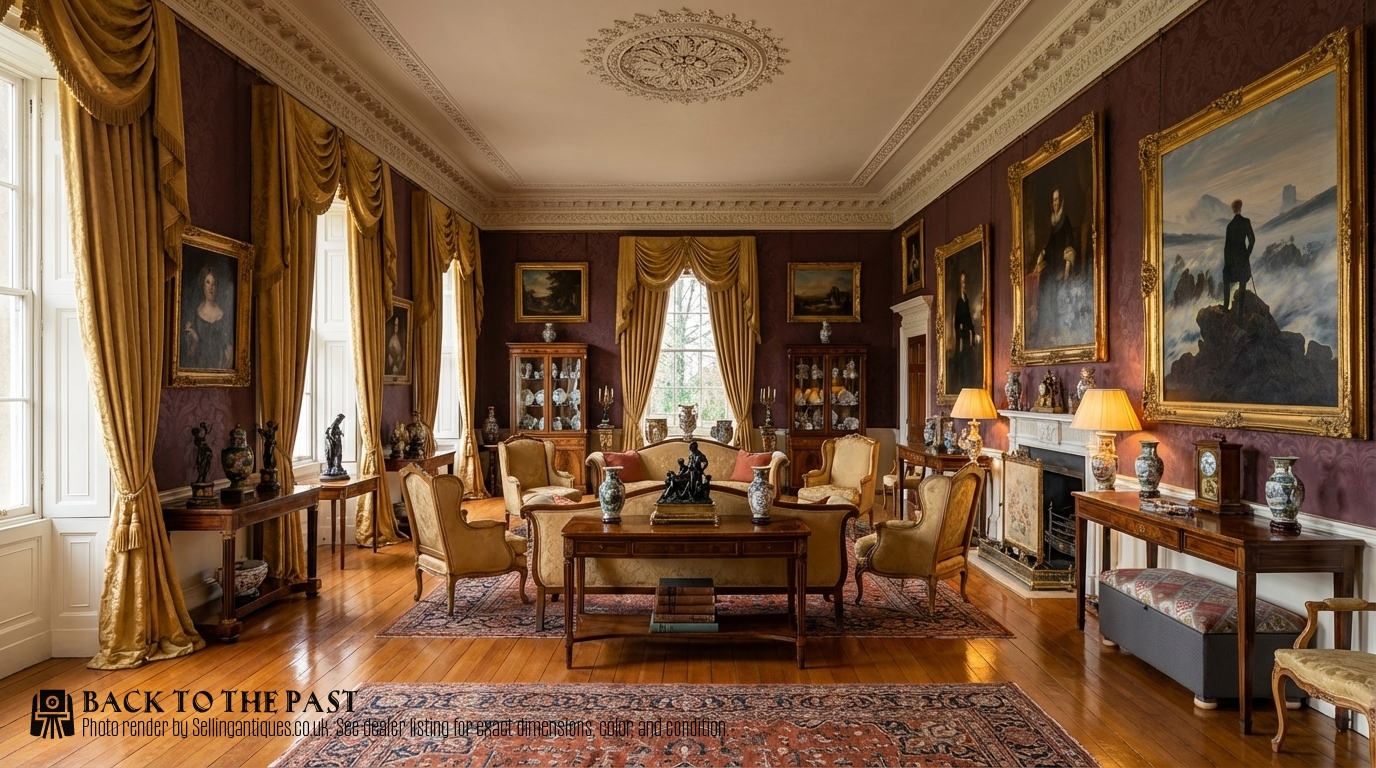
Patterned Upholstered Bench
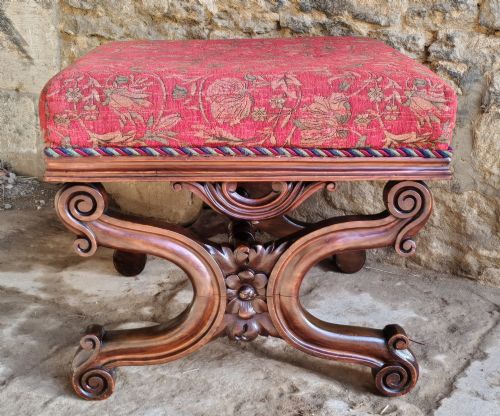
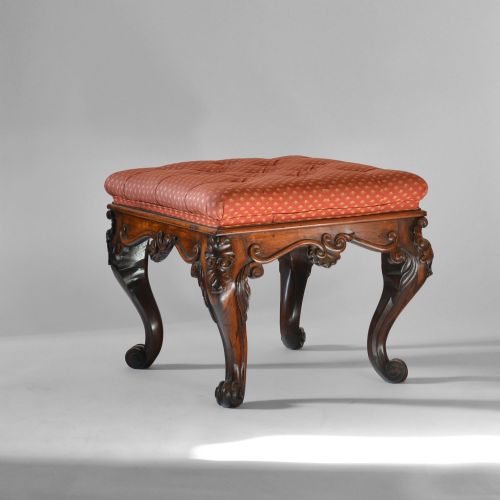
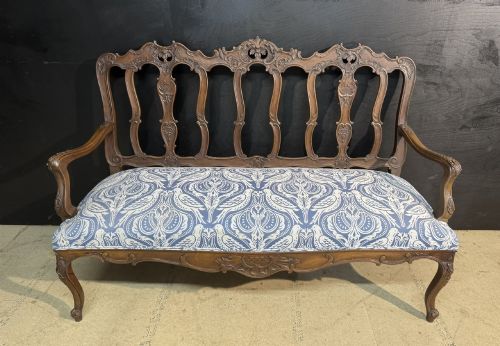
When searching for a patterned upholstered bench, buyers encounter a diverse range of forms including footstools, ottomans, settees, and sofas. These pieces serve functional seating and resting roles across various domestic spaces, originating from centuries of design.
The most common versions met on this page date from the nineteenth century and the Victorian era, often constructed from timber frameworks paired with textile coverings. Examples range from compact footstools to large couches and window seats.
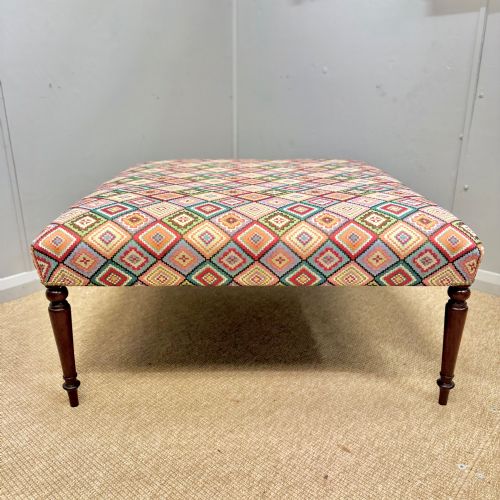
Origins span English country house styles, French workshops, and Anglo-Indian productions, reflecting varied regional tastes. Upholstery treatments involve diverse fabrics such as kilim and geometric textiles.
How they were made
Makers utilised solid timbers like mahogany, walnut, oak, and rosewood to build sturdy load-bearing frames. These woods were frequently carved, turned, or inlaid with materials such as brass.
Upholstery techniques applied textiles directly to the frames, incorporating button backing, box seats, and kilim coverings. Decorative elements included giltwood finishes and intricate inlay work.
Some nineteenth-century footstools wear bright kilim covers that have quietly outlived the empires that spun them.
What varies in quality
The standard of craftsmanship shows in the precision of the timber carving and the stability of the structural frame. Superior examples demonstrate expert joinery in hardwoods like mahogany and walnut.
Quality also rests in the selection and application of the textile covering, where dense weaves and careful pattern alignment elevate the piece. The sophistication of stylistic details, such as turned legs or inlay work, distinguishes finer items.
The Patterned Upholstered Bench Glossary
- Kilim
- A flat-woven textile often utilised as a durable and decorative covering for footstools and seats. This material brings traditional woven patterns to nineteenth-century furniture.
- Giltwood
- Timber treated with a thin layer of gold leaf for decorative effect. It appears on ornate eighteenth-century frames and seating.
- Settee
- A long upholstered seat with a back and arms, designed to accommodate multiple people. These pieces emerged in various revival styles across different centuries.
- Ottoman
- A padded seat typically without a back or arms, often functioning as a footstool or low bench. Versions range from large country house editions to Victorian box seats.
- Boulle inlay
- The practice of ornamenting furniture surfaces with tortoiseshell and brass marquetry. This technique appears on specific nineteenth and twentieth-century couches.
Patterned Upholstered Bench: Frequently Asked Questions
What periods do these benches come from?
The pieces span several centuries, with items originating from the eighteenth, nineteenth, and early twentieth centuries. Victorian and Georgian eras are well represented among the surviving examples.
Craftsmen across these periods applied distinct regional styles, ranging from English country house designs to French and Anglo-Indian interpretations.
How were these benches used originally?
They functioned as practical seating, daybeds, and footrests in formal drawing rooms, bedrooms, and country houses. Larger settees provided communal seating, while smaller stools served bed ends or dressing rooms.
Upholstered top surfaces allowed for comfortable lounging, reclining, or resting feet during daily domestic routines.
What woods were used for the frames?
Frames were constructed predominantly from durable hardwoods including mahogany, walnut, oak, and rosewood. French and Italian pieces occasionally utilised specialised timbers or giltwood.
These strong timbers supported heavy upholstery, complex carvings, and turned leg structures without losing structural integrity.
How do I identify different styles?
Styles are recognised through specific design motifs, woodwork carving techniques, and upholstery treatments. Pieces draw on Queen Anne, Rococo Revival, Art Deco, and Jacobean Revival traditions.
Examining the shape of the legs, the frame silhouette, and the fabric pattern helps place each item within its historical period.