


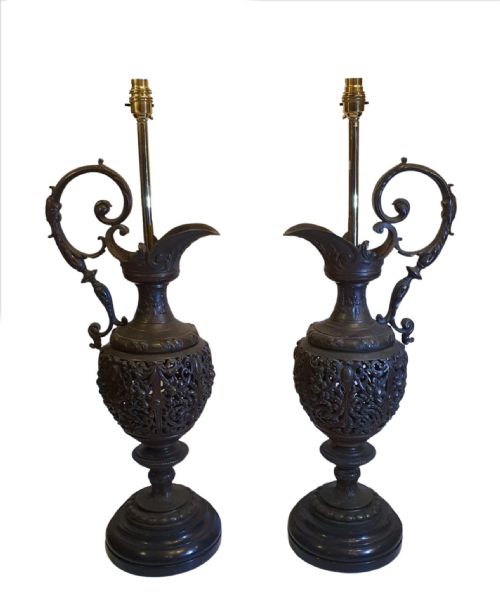


Patinated Metal Desk Lamp
These patinated metal desk lamp examples combine practical task lighting with classical or modernist design, offering both heavy character and historic craft for a workspace.
Patinated Metal Desk Lamp
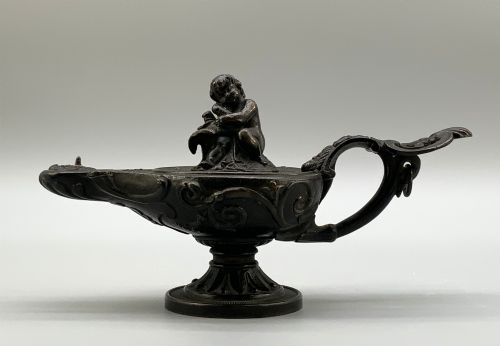
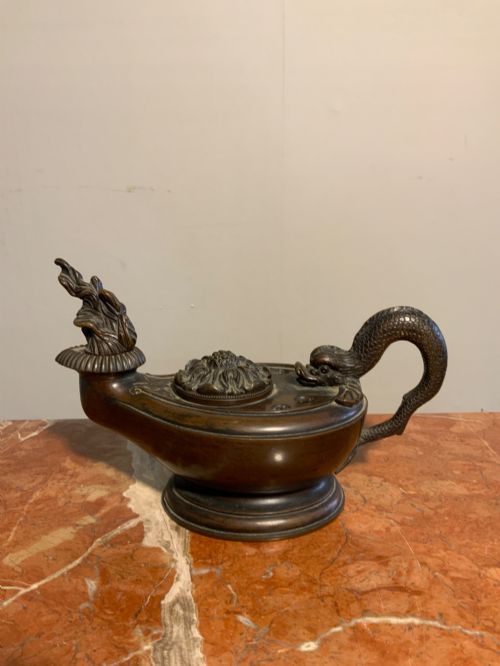
A patinated metal desk lamp brings historic character to a workspace through forms ranging from early classical columns and figural oil lamps to geometric Art Deco and Bauhaus designs. These functional objects bridge the gap between utilitarian workspace lighting and decorative sculpture.
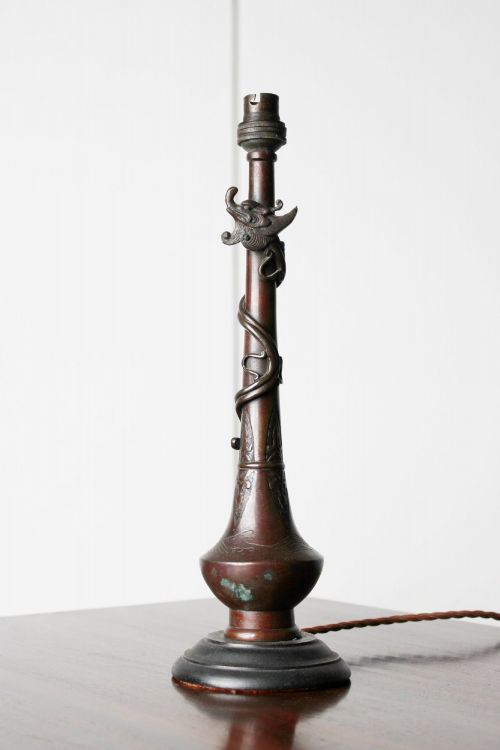
The selections available here span from the early nineteenth century through the nineteen-thirties, encompassing Grand Tour pieces, French Empire ormolu, Chinoiserie interpretations, and Amsterdam School metalwork. Table lamps and converted table lights dominate the selection, alongside related forms such as inkwells.
Materials and construction methods
Makers utilised cast bronze, brass, patinated white metal, and patinated copper, frequently mounting heavier metal components upon marble bases. These metals acquired distinct surfaces over time, ranging from darkened bronze tones to warm brass finishes.
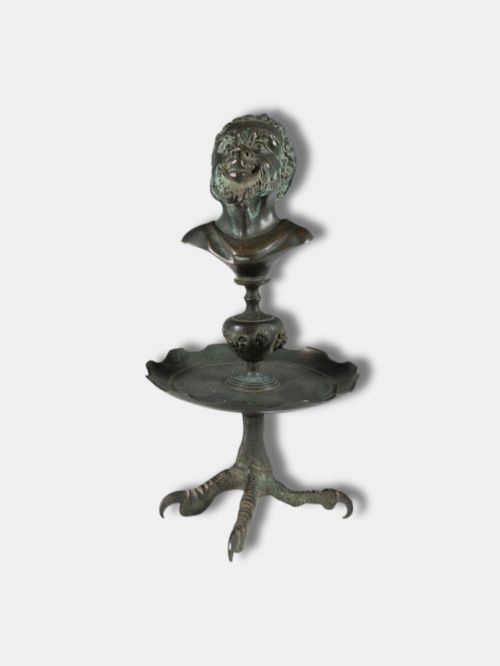
Many pieces originated as functional oil lamps, ewers, or inkwells before receiving modern electrical conversions, retaining their original cast details, figural busts, and structural integrity.
Listings feature bronze, brass, patinated white metal, and patinated copper across the nineteenth century and the nineteen-thirties.
Assessing quality in historical desk lighting
Quality rests in the crispness of the metal casting, whether the piece depicts a finely detailed satyr, an eagle's claw, or clean modernist lines. Heavier gauge metals and genuine period patination separate superior examples from later copies.
The integration of secondary materials, such as solid marble bases or well-preserved fabric shades, dictates the overall refinement of the lighting fixture.
Wilhelm Wagenfeld·P. Sega·Adrien Gaudez
The Patinated Metal Desk Lamp Glossary
- Patination
- The natural or artificial ageing of a metal surface over time. This process creates distinct colour variations and surface textures unique to older pieces.
- Grand Tour
- A nineteenth-century tradition where travellers collected classical antiquities and souvenirs across Europe. These objects often inspired domestic lighting designs.
- Ormolu
- Finely ground high-carat gold applied to bronze through a mercury-gilding process. This technique gives metalwork a rich, enduring metallic lustre.
- Chinoiserie
- European artistic interpretations of Chinese and East Asian decorative styles. This aesthetic influenced various nineteenth-century metal table lamps.
- Amsterdam School
- An early twentieth-century architectural and design movement known for expressive brickwork and distinctive metalwork. Pieces from this tradition utilise brass and patinated copper.
Patinated Metal Desk Lamp: Frequently Asked Questions
How do I date a patinated metal desk lamp?
Dating relies on examining the casting methods, material composition, and stylistic markers such as Empire columns, Art Deco figures, or Bauhaus geometry. Secondary elements like wiring methods and base construction also offer clues to the period.
Comparing the specific patination and decorative motifs against documented nineteenth and early twentieth-century examples helps confirm the age of the piece.
Were all these lamps originally electric?
Many older examples started life as oil lamps, inkwells, or decorative ewers before being converted to electrical table lamps at a later date. This adaptation was a common way to preserve decorative antique metalwork for modern domestic use.
Converted pieces retain their original nineteenth or early twentieth-century metal bodies while incorporating modern internal wiring for safe daily illumination.
Where should I place a bronze desk lamp?
These heavier metal lamps suit traditional writing desks, side tables, or studies where their substantial weight and decorative bases can anchor the room. Their directional light works well for reading or task use.
Care should be taken to pair the metal finish with surrounding wooden surfaces and interior decor, ensuring the patinated bronze or brass complements the workspace.
How do I care for antique metal finishes?
Maintaining the surface requires gentle dusting with a dry microfibre cloth to prevent the accumulation of grime without disturbing the historic patination. Avoid harsh chemical cleaners or polishes that strip away the aged metal surface.
Keeping the lamp away from direct moisture and handling the bronze or brass with care preserves the integrity of the original finish for years to come.