


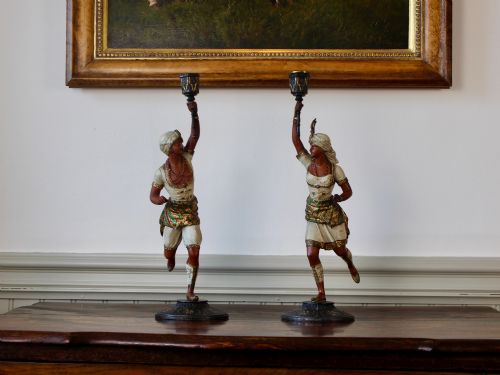

Antique Figural Table Light
An antique figural table light brings human, animal or mythical form into domestic illumination through cast metal, carved wood and fine porcelain.
Antique Figural Table Light
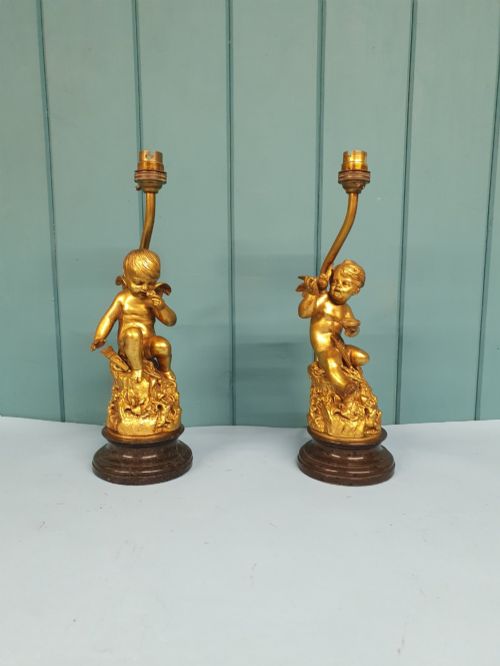
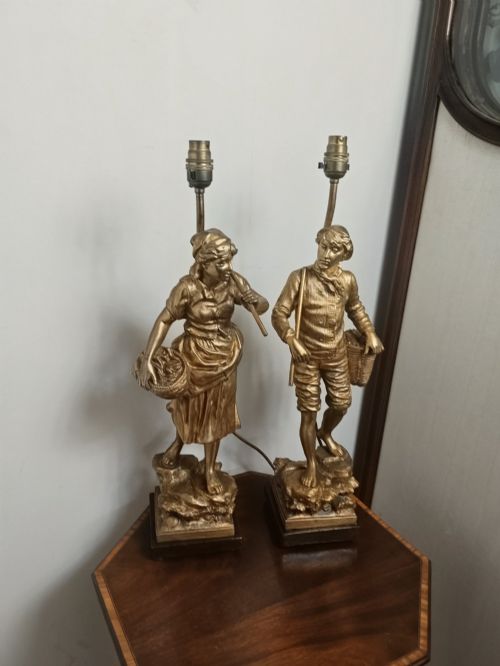
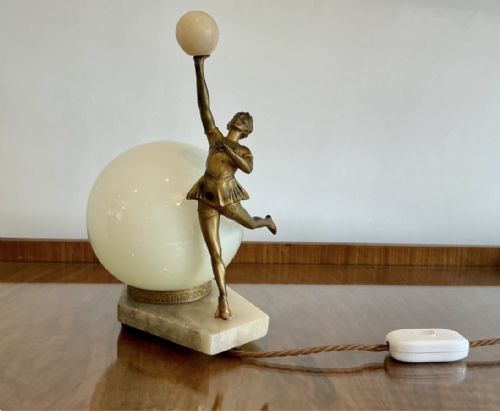
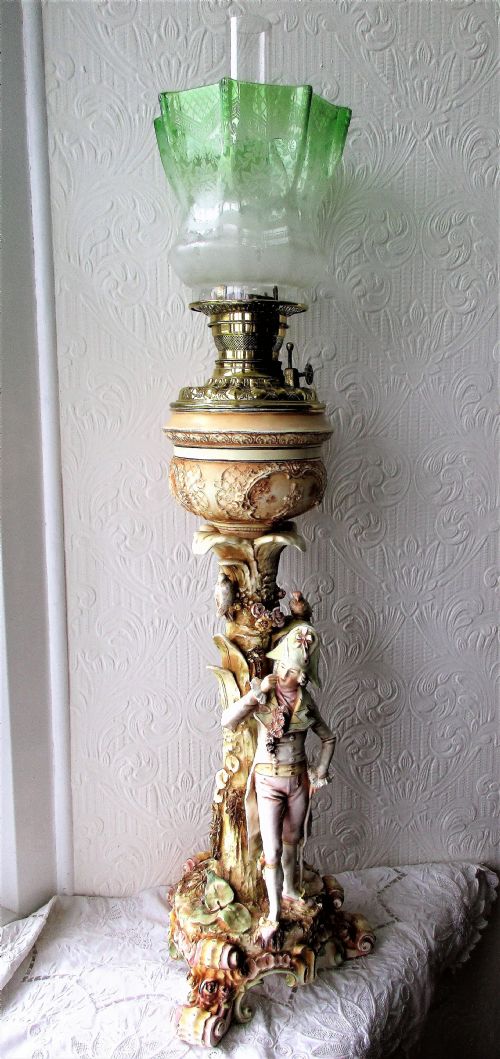
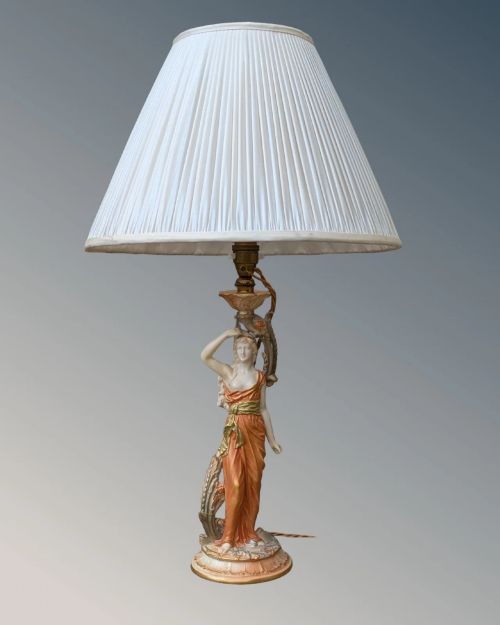
An antique figural table light takes the shape of human figures, cherubs, animals or mythological subjects, functioning primarily as table lamps, candlesticks, candelabra and oil lamps.
The pieces appearing on this page span the nineteenth century through the early decades of the twentieth century, with notable representation from the Victorian, Art Nouveau and Art Deco periods.
Makers and foundries across England, France, Italy, Japan and Germany produced these sculptural objects using materials ranging from bronze and brass to porcelain and carved root wood.
Materials and Technique
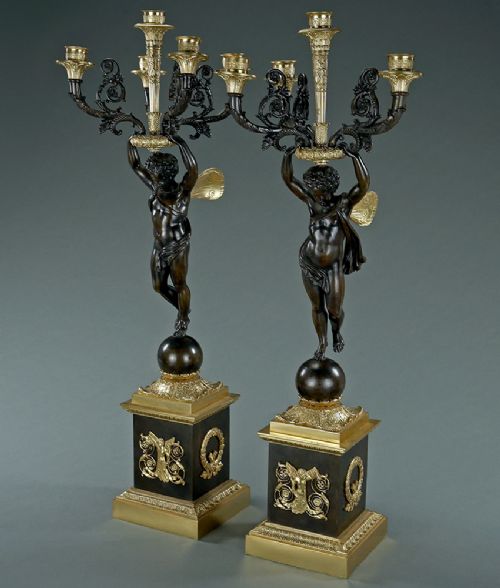
Foundries shaped metals such as bronze, brass, spelter and silver using casting techniques, frequently applying gilt or cold-painted finishes to accentuate the sculptural details.
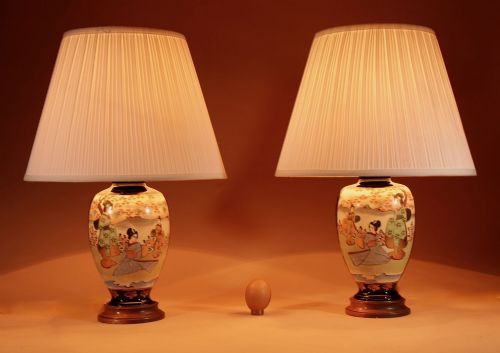
Ceramic works combine moulded porcelain or earthenware with hand-painted decoration, often integrating gilt bronze mounts or fabric and toleware shades.
Carved pieces utilise organic materials like root wood, while glassmakers employed frosted and moulded techniques to form specialised lamp bodies.
Styles represented include Art Deco, Neoclassical, Rococo Revival, Art Nouveau, Victorian, Chinoiserie and French Empire Revival.
Craftsmanship and Definition
The quality of the material finish, whether the depth of fire-gilding on bronze or the subtlety of hand-painting on porcelain, dictates the visual success of the piece.
Original integrity matters significantly, particularly in the preservation of matched pairs, integrated bases of marble or wood, and period-appropriate mounts.
L and F Moreau·Emile Picault·Ivan Zaiec·Anton Buschelberger·E Rousseau
The Antique Figural Table Light Glossary
- Spelter
- A zinc alloy commonly used as a substitute for bronze in decorative figures and lamps, often finished with a cold-painted surface.
- Candelabra
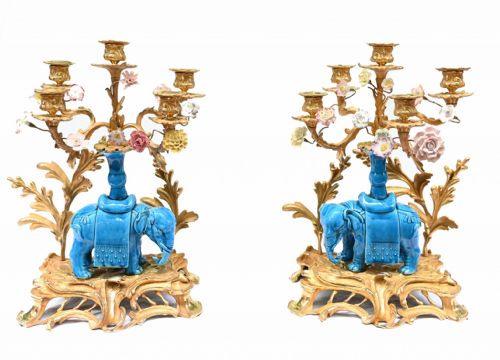
- A branched candlestick holding multiple lights, frequently incorporating figural shafts in nineteenth-century designs.
- Torchère
- A stand or lamp base modeled to represent a classical figure holding a light source aloft.
- Veilleuse
- A type of small night light, often ceramic, popular during the Art Deco period.
- Famille rose
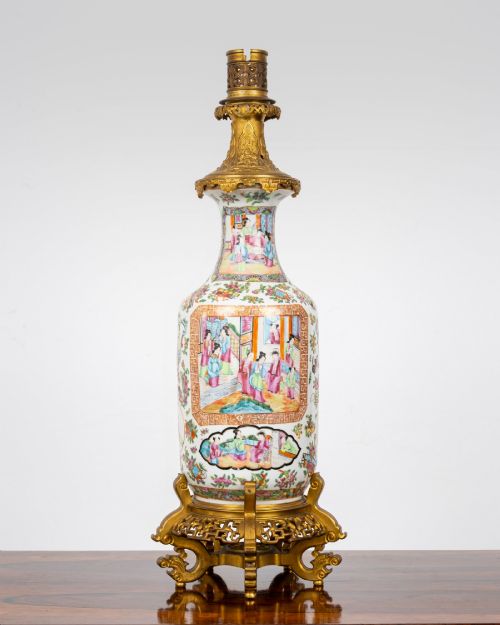
- A palette of Chinese porcelain enamels dominated by pink, visible on imported lamp bodies from the nineteenth century.
Antique Figural Table Light: Frequently Asked Questions
How do I distinguish spelter from bronze?
Spelter is a softer zinc alloy that feels lighter than bronze and often shows a dull grey metal beneath chips in the painted or patinated surface.
Bronze exhibits greater weight, density and a richer underlying metallic tone when the patina wears at high points.
Were these originally wired for electricity?
Most pieces originating from the nineteenth century began as oil lamps, candleholders or candlesticks before later conversion to electricity.
Art Deco and later twentieth-century examples were frequently designed from the outset to house electrical fittings.
How do I identify Art Deco figural lamps?
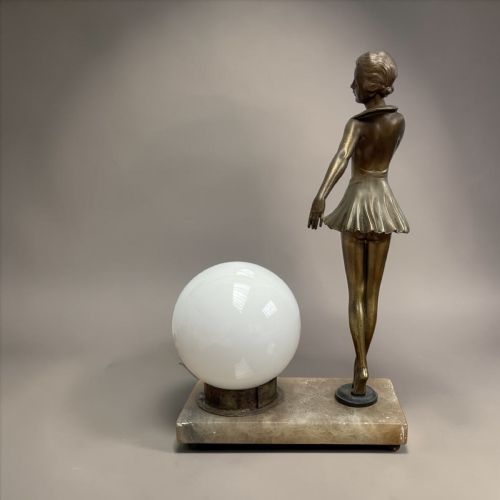
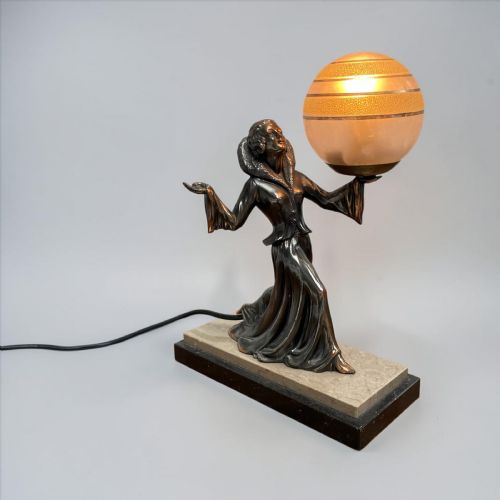
Art Deco pieces typically feature stylized female nudes, dancers or pierrots with geometric streamlining, smooth surfaces and materials like marble, frosted glass and cold-painted metal.
These contrast sharply with the organic, flowing plant tendrils of earlier Art Nouveau designs or the ornate scrolling of Rococo Revival pieces.
Can I find matching pairs?
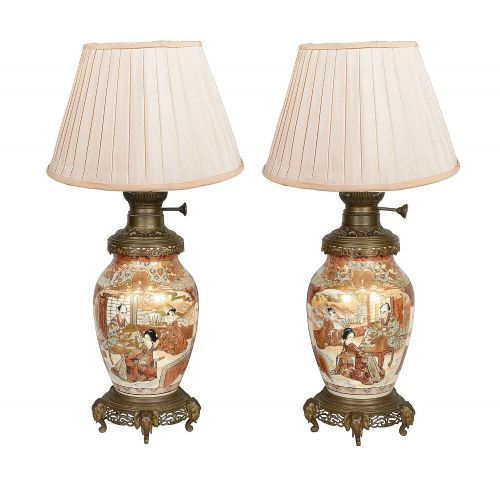
Matching pairs appear regularly among cast metal candlesticks and porcelain lamps, often produced as garnitures or mantel ornaments.
Single lamp bases also occur frequently, particularly when sculptural bronze or carved wood figures were converted individually.