
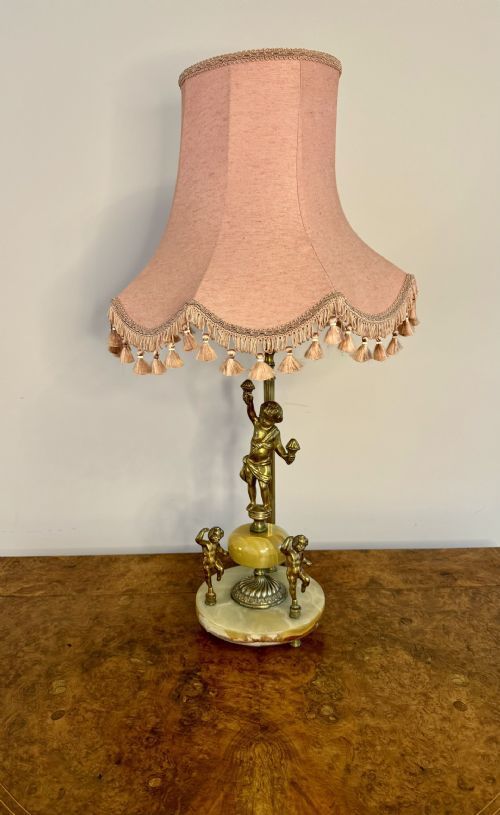


Vintage Desk Statue Light
A vintage desk statue light brings figural presence and illumination to a work space, combining sculptural bronze, spelter, or marble with functional light.
Vintage Desk Statue Light
When you search for a vintage desk statue light, you are looking at figural table lamps and converted statuettes that merge sculpture with task lighting. These pieces take the form of human figures, animals, and classical subjects cast in metal and mounted on stone bases.
The versions you are most likely to meet on this page span the late nineteenth century through to the art deco period of the nineteen-thirties. They appear as bronze cherubs, spelter musketeers, marble-mounted pierrots, and art deco lady lamps.
Makers and sculptors utilised traditional foundry methods to produce these decorative objects, often adapting existing statuary for electrical use. The resulting pieces function equally as desk lamps and as small cabinet bronzes or spelter figures.
How they were made
Bases of marble, onyx, or glass support the metal figures, grounding the weight of the statue and providing a stable plinth for electrical fittings. Fabric shades or torchere glass components complete the assembly, casting light down onto the sculptural form.
Periods represented on this page range from the nineteenth century through the art deco era of the nineteen-thirties.
What varies in quality
The refinement of the casting separates standard production pieces from finer sculptural works, particularly in the rendering of facial expressions and hands. Crisp chiselling after the cast distinguishes superior bronze and spelter figures from softer, more generalised commercial output.
The integration of the lighting components into the original figure determines the integrity of the piece. High quality conversions preserve the balance and stance of the statue without obscuring the modelled details of the metalwork.
P. Sega
The Vintage Desk Statue Light Glossary
- Spelter
- A zinc alloy used extensively for figural casting as a cheaper alternative to bronze. It takes patination and gilding well, though it is softer than bronze.
- Patinated metal
- Metal treated with chemicals or heat to produce a coloured surface finish. This technique highlights the contours of a cast figure.
- Torchere shade
- An upward-pointing lampshade resembling a torch. These glass components direct illumination toward the ceiling while highlighting the statue below.
- Art Deco
- A design style spanning the nineteen-twenties and nineteen-thirties characterised by streamlined geometric forms and stylised human figures. It influences many lamps from this era.
Vintage Desk Statue Light: Frequently Asked Questions
What is a vintage desk statue light?
A vintage desk statue light is a table lamp that incorporates a figural bronze, spelter, or marble sculpture into its design. These pieces illuminate a workspace while serving as decorative works of art.
They combine nineteenth and twentieth-century foundry craft with functional electrical components. Many pieces started as decorative statuettes before being converted into lamps.
How do I date a statue lamp?
Dating relies on the style of the figure, the materials used for the base, and the manufacturing techniques visible in the metal cast. Art deco pieces feature stylised modernist clothing and geometric lines, whereas nineteenth-century examples often favour classical or romantic subjects.
Materials such as heavy marble bases and patinated spelter point toward specific decades between eighteen-eighty and nineteen-thirty. Examining the wiring and mounting hardware also helps establish the period of conversion.
Where should I place a statue lamp?
These lamps suit study desks, side tables, and bookshelves where they can be viewed close up. Their dual nature as sculptures means they command attention even when switched off.
Position them away from damp areas to protect the patinated metal and marble surfaces. Ensure the scale of the lamp matches the surface area of the desk.
What is spelter?
Spelter is a zinc-based alloy that mimic bronze in figural sculptures. It was widely utilised across the nineteenth and early twentieth centuries for decorative objects and lighting.
Foundries finished spelter with various metallic paints and patinas to resemble aged bronze or brass. It provides a lighter and more affordable sculptural medium than solid bronze.