





Patinated Bronze Urn Pair
A patinated bronze urn pair brings sculptural classical symmetry or intricate Japanese artistry to a room, offering matched display pieces designed to anchor a mantel or console.
Patinated Bronze Urn Pair
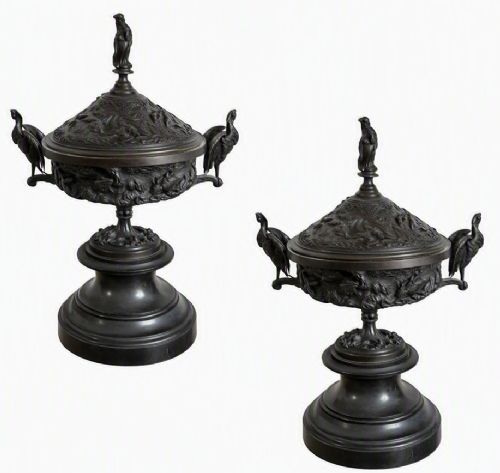
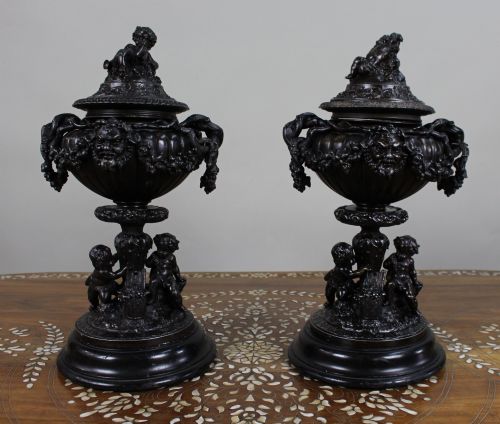
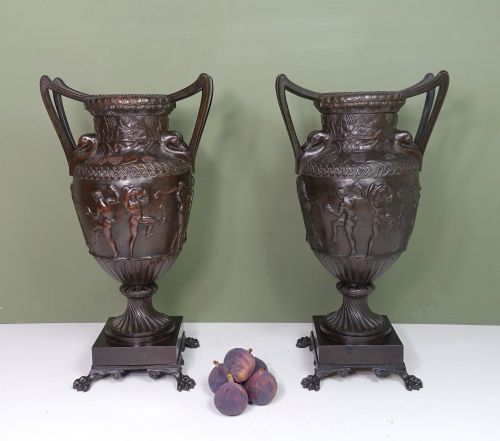
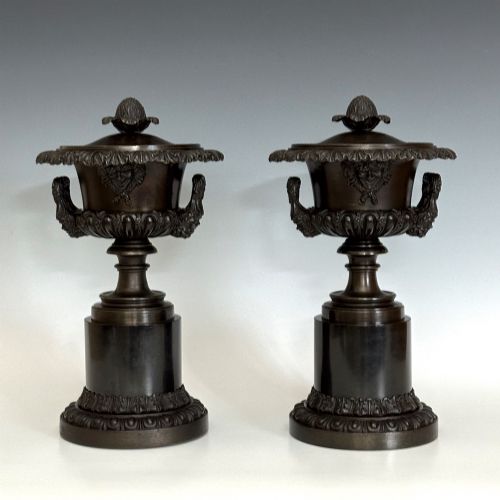
A patinated bronze urn pair consists of matching dual decorative vessels created primarily during the nineteenth century, encompassing French Neoclassical models, Italian Grand Tour souvenirs, and Japanese Meiji period examples. These pieces take various forms including traditional campana shapes, cassolettes with reversible lids, ewers, and table lamps converted from earlier vessels.
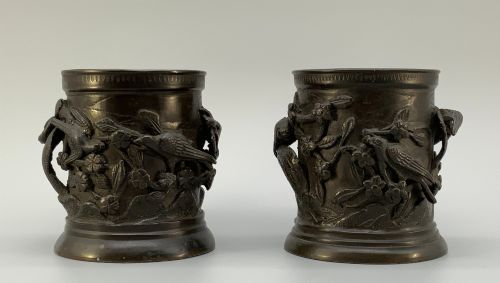
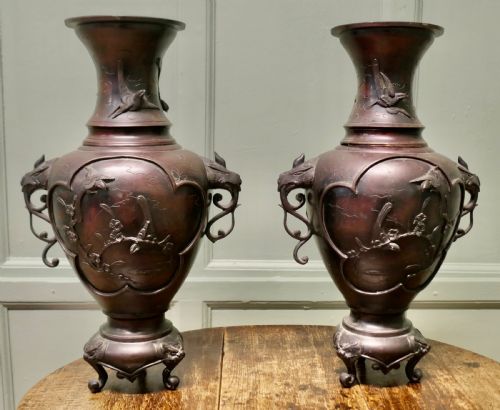
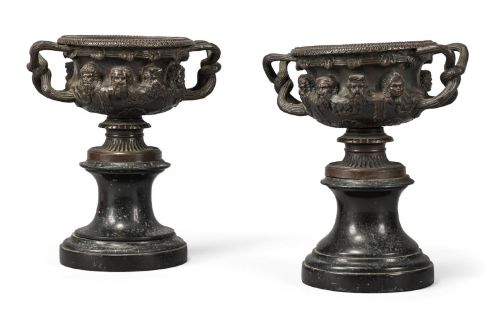
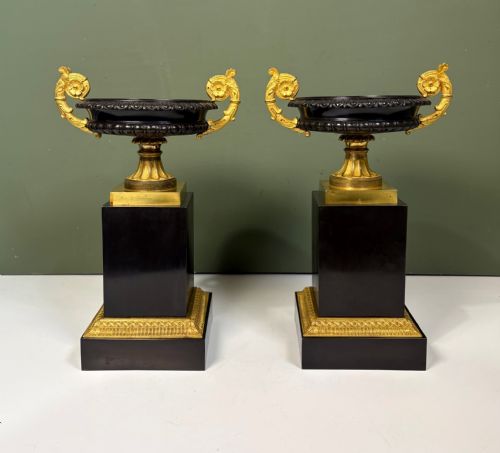
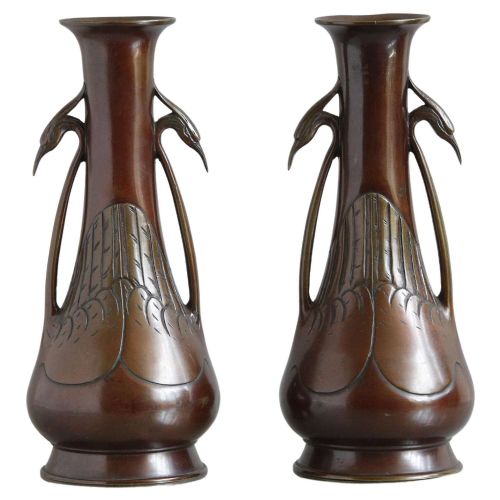
The English and continental pieces often draw heavily on classical antiquity, referencing Warwick designs and Regency tastes through handles, Bacchic masks, and pedestal bases of marble or ormolu. Alongside these European works, Japanese bronze vases from the Meiji era frequently appear, decorated with birds, blossoms, and mixed metal highlights.
Buyers encounter everything from compact pastille burners to substantial ornamental urns weighing several kilograms, sometimes mounted on stepped plinths or black marble bases. While many retain their original decorative function, others show later adaptations into electrified lamps.
Materials and construction methods
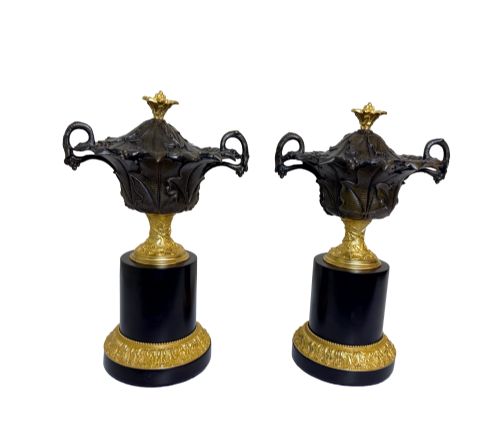
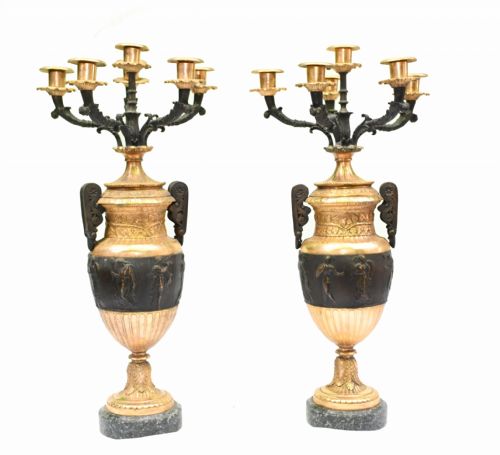
Metalworking techniques rely heavily on traditional bronze casting, supplemented by the use of gilt bronze and ormolu for mounts, handles, and decorative accents. Makers also utilised spelter as a base metal for certain decorative French urns, applying patination to achieve the appearance of aged bronze.
Surface treatments involve chemical patination to produce dark brown or green finishes, often paired with polished marble pedestals and mixed metal inlays. Artisans incorporated cast details such as putti, egrets, and classical foliage directly into the metal body during the casting process.
Materials documented across the collection include patinated bronze, gilt bronze, ormolu, black marble, green marble effect, and fabric components.
Distinguishing quality in matched pairs
The choice of secondary materials influences the overall character, with genuine marble pedestals, fire-gilt ormolu mounts, and signed works by makers such as Jules Moigniez representing higher tiers of craftsmanship. Alterations, such as the conversion of ewers or vases into table lamps, change the original integrity of the piece.
Jules Moigniez·Thomas Hope·Clodion
The Patinated Bronze Urn Pair Glossary
- Patination
- The ageing or chemical treatment applied to the surface of bronze to produce a specific coloured finish. This layer protects the metal while defining its visual character.
- Campana
- A bell-shaped vessel form common in classical and neoclassical urns. Originating from ancient pottery, this silhouette remains standard for decorative metal vases.
- Cassolette
- A decorative container featuring a reversible lid that functions either as a solid urn top or a candle holder. These dual-purpose objects were popular during the Regency and nineteenth century.
- Ormolu
- Gilding technique using finely ground gold mercury amalgam applied to bronze. It provides a bright, durable golden surface on mounts and bases.
- Grand Tour
- Cultural travel undertaken by nineteenth-century Europeans collecting classical souvenirs. Many bronze urns and vases commemorate these educational journeys.
Patinated Bronze Urn Pair: Frequently Asked Questions
What is a bronze cassolette?
A cassolette is a decorative vessel with a lid that reverses to hold a candle or burn pastilles. These dual-function pieces served both decorative and aromatic purposes in nineteenth-century interiors.
They often combine patinated bronze bodies with gilt bronze or ormolu mounts, standing on marble pedestals.
How do I identify a Grand Tour urn?
Grand Tour bronze urns replicate ancient classical forms encountered by travellers in Italy during the nineteenth century. They frequently draw inspiration from famous antiquities such as the Warwick vase.
These pieces typically feature detailed patination, classical friezes, and mounted stone bases suitable for display on nineteenth-century tables.
Are Meiji period bronze vases Japanese?
Yes, Meiji period bronze vases originate from Japan during the late nineteenth and early twentieth centuries. They often incorporate motifs of birds, blossoms, and mixed metal decoration.
Such pieces reflect the opening of Japanese trade and the strong European appetite for Eastern craftsmanship during the Victorian era.
Can I use antique bronze urns as lamps?
Many nineteenth-century bronze urns and ewers have been converted into table lamps over time. This adaptation preserves the decorative value of the metalwork while adding modern electrical functionality.
Some conversions are reversible, while others involve internal wiring through the original base or body of the vessel.