



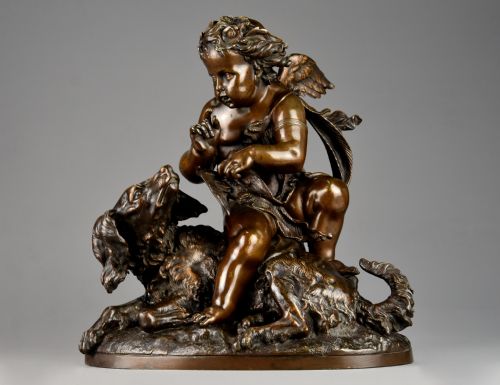
Patinated Bronze Putto
When you search for a patinated bronze putto, you encounter sculptural figures of winged children modelled in cast metal from the nineteenth century.
Patinated Bronze Putto
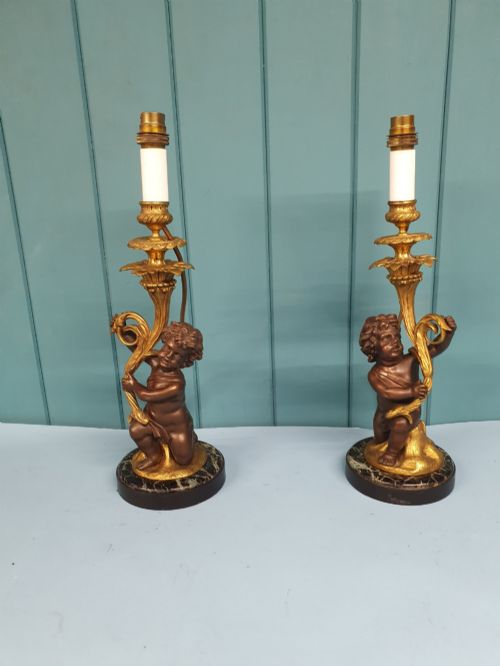
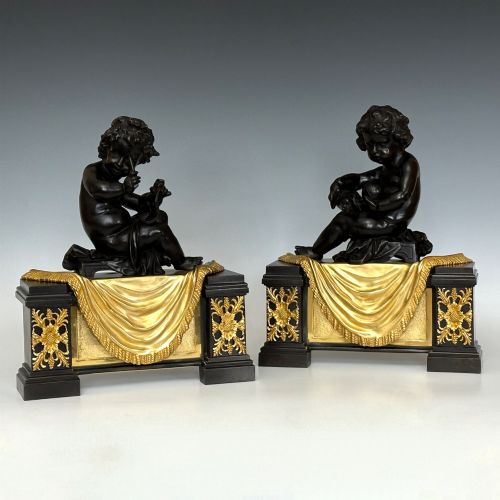
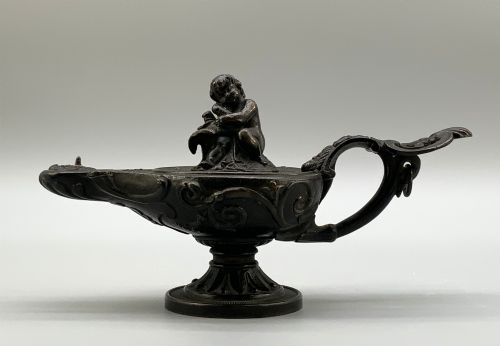
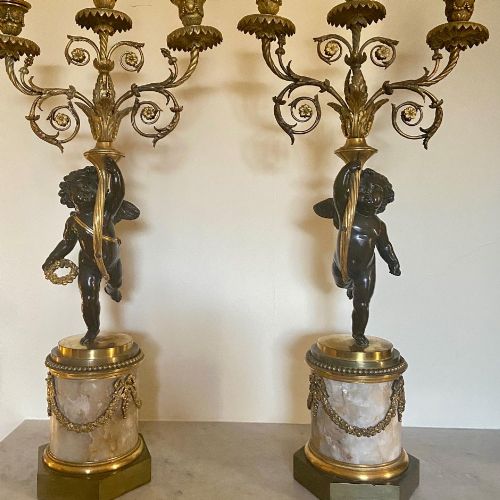
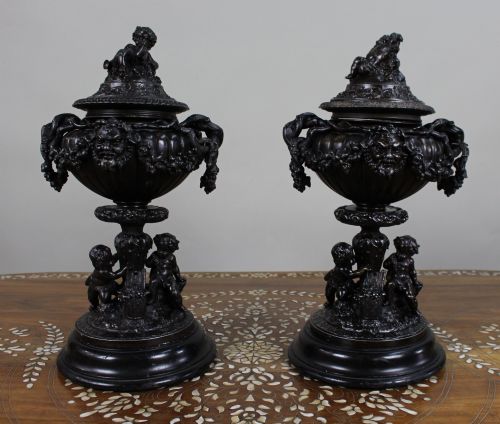
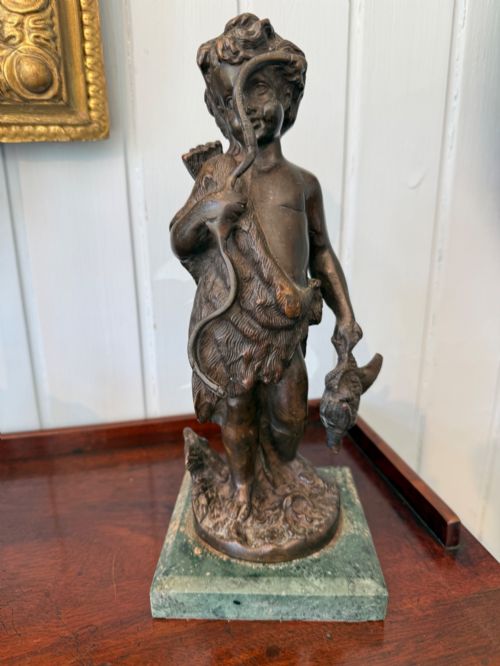
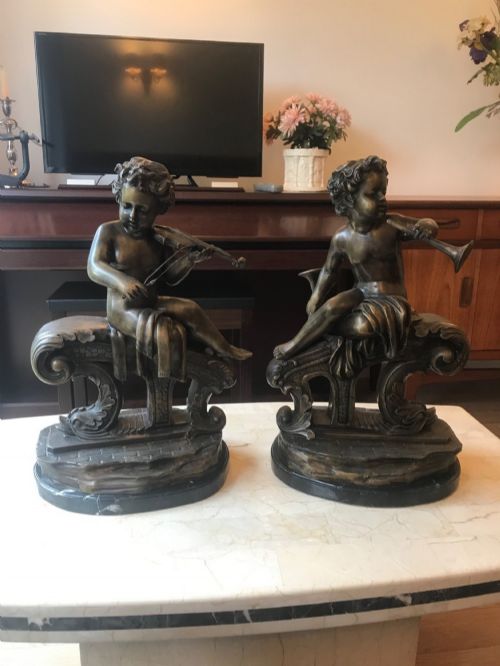
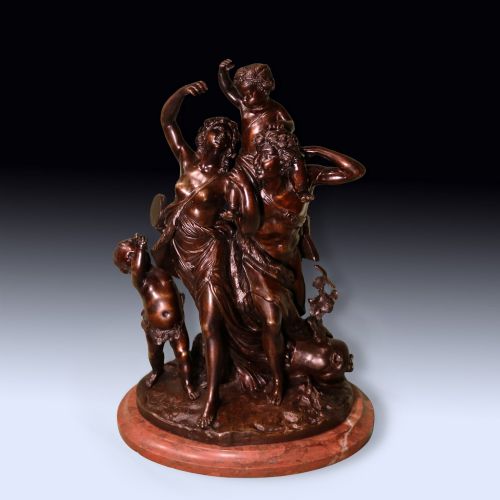
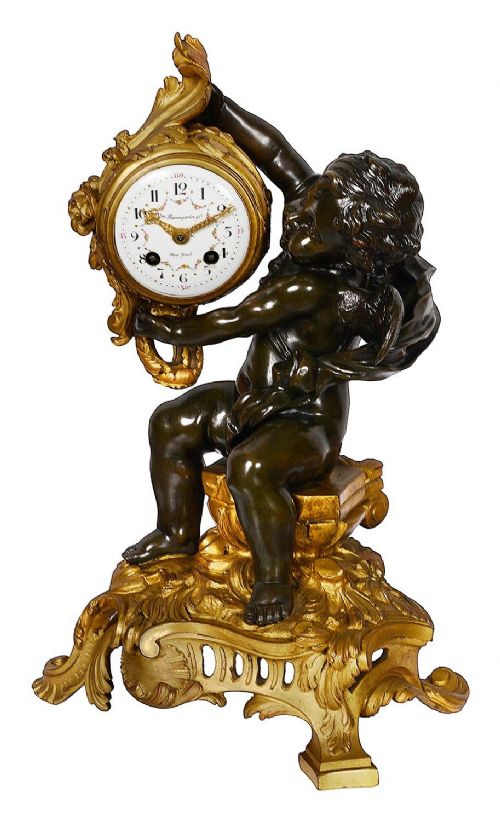
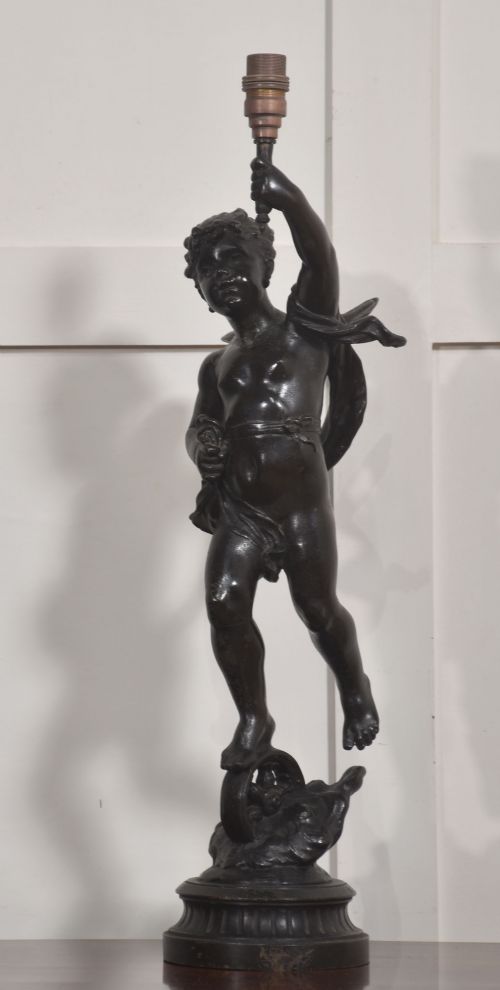
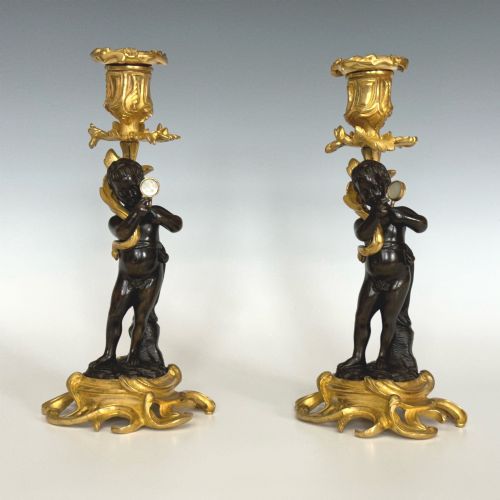
A patinated bronze putto takes the form of a small winged child, often depicted as a cherub, cupid or amorino engaged in musical, hunting or classical pursuits. These figures appear widely as standalone sculptures, table lamps, candlesticks and chenets.
The pieces on this page stem predominantly from nineteenth-century France, alongside Italian Grand Tour models and occasional English foundry works. They manifest in decorative domestic objects, functioning variously as clock mounts, wall lights and centrepiece figures.
Makers and sculptors referenced in the evidence include Claude Michel Clodion, August Moreau, François Redmond, Georges Van De Voorde and Charles Cumberworth. These artists supplied the models that found enduring favour in French Empire, Rococo Revival and Neoclassical interiors.
How they were made
Foundries produced these items using the lost-wax method or sand casting, pouring molten bronze into moulds to capture the subtle contours of infant limbs and feather details. Artisans then applied chemical patination treatments to achieve dark brown, green or bronzed surface finishes.
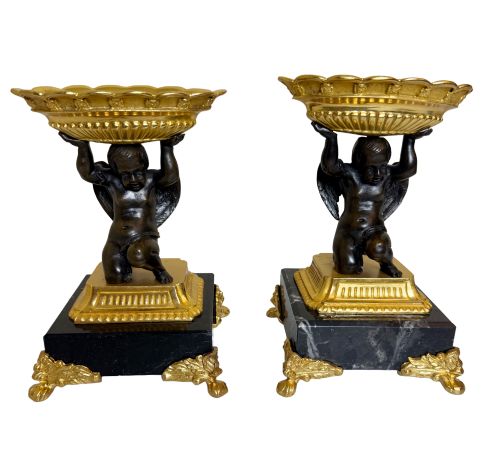
Gilt bronze, or ormolu, frequently accompanies patinated bronze elements, providing contrasting golden highlights through mercury gilding or electroplating. Secondary materials such as white marble bases, fluorspar, enamel, wood and glass integrate into the design of tazzas, lamps and candelabra.
Several putti figures abandon classical gravity entirely to wrangle domestic spaniels, cats and musical triangles.
What varies in quality
Compositional balance and the harmony of mixed materials dictate the grade of an object. Integrated assemblies combining patinated bronze figures with finely turned marble plinths and gilt ormolu mounts demonstrate greater manufacturing ambition.
Clodion·Aug Moreau·Georges Van De Voorde·Charles Cumberworth
The Patinated Bronze Putto Glossary
- Patinated bronze
- A copper alloy treated with chemical solutions to produce a controlled surface colour or dark protective finish. This layer protects the underlying metal while accentuating sculptural depth.
- Putto
- A plump, naked male child figure, frequently winged, derived from classical art and Renaissance revivals. In later decorative contexts, these figures merge with depictions of cherubs and cupids.
- Ormolu
- Finely ground high-purity gold amalgamated with mercury and applied to a bronze base, then heated to drive off the mercury. The technique creates a durable golden surface layer on decorative mounts.
- Chenet
- A decorative iron or bronze firedog placed at the hearth to support logs. French examples frequently incorporate cast figures and ornate scrollwork.
- Grand Tour
- The nineteenth-century practice where travellers acquired small bronze sculptures and architectural models in Italy as educational souvenirs. These items reproduced classical antiquities for domestic display.
Patinated Bronze Putto: Frequently Asked Questions
What is a putto?
A putto is a representation of a small, winged infant figure originating in classical sculpture and revived during the Renaissance and nineteenth century. Artists employed these motifs to evoke mythological themes of love and merriment.
In decorative metalwork, they appear as standalone figures or as supporting elements in functional items like candlesticks and clocks.
How were they used?
These bronze figures served primarily as decorative ornaments within domestic interiors, often integrated into functional objects. They ornamented mantel clocks, supported candle nozzles on candelabra, and anchored the bases of oil lamps.
Larger versions stood alone as mantel sculptures or served as architectural bookends on library shelves.
How do I clean bronze?
Maintenance requires only gentle dusting with a soft, dry cloth to prevent the accumulation of grit within the recessed details of the casting. Avoid abrasive cleaners, oils and chemical polishes that can strip away the historic patination.
Preserving the original surface skin maintains the visual character developed over generations.
How do I date a piece?
Dating relies on examining the casting technique, the style of the base materials, and foundry signatures or cachets where present. Nineteenth-century pieces frequently display French neoclassical or rococo revival traits combined with characteristic marble plinths.
Comparing the handling of the bronze surface against known foundry output helps narrow the period of production.