

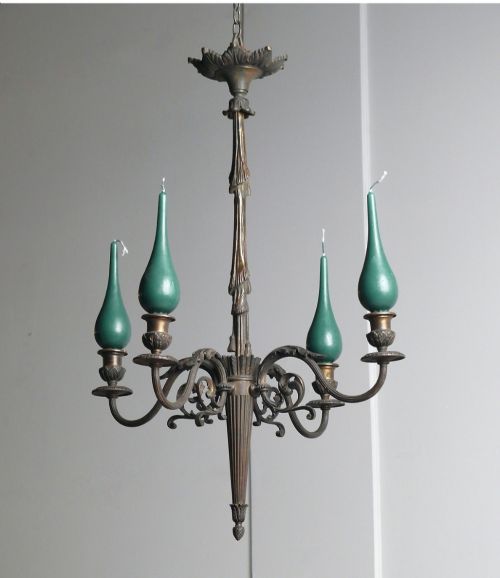
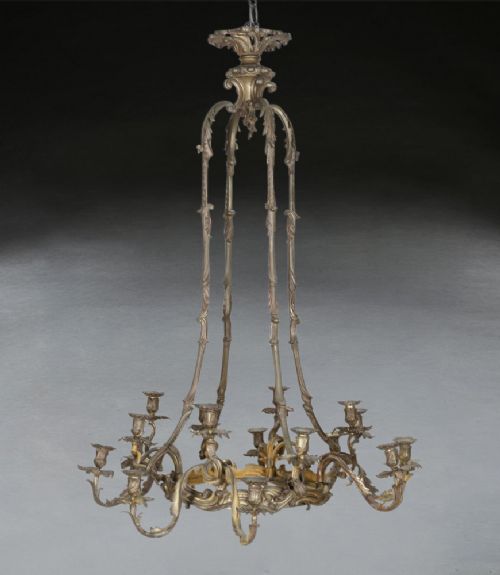

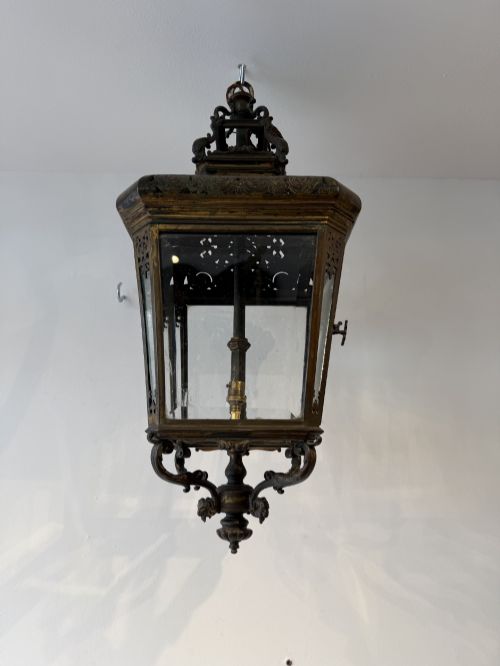


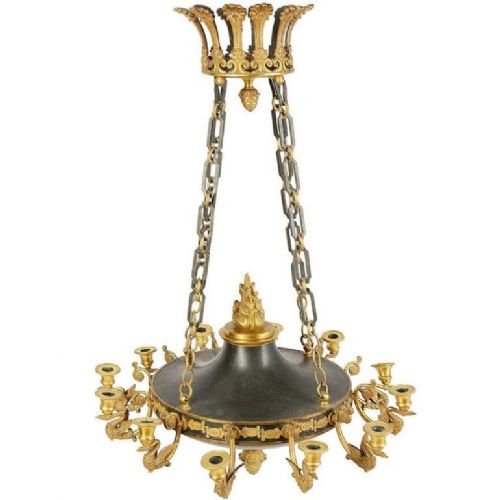


Patinated Bronze Pendant Light
These patinated bronze pendant light designs bring industrial depth and warmth to a room, offering both focused illumination and historic character.
Patinated Bronze Pendant Light
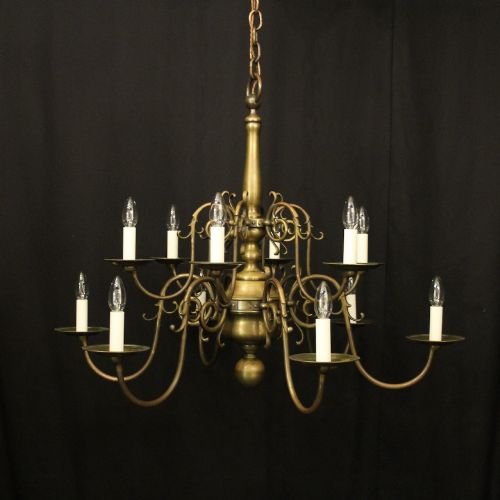
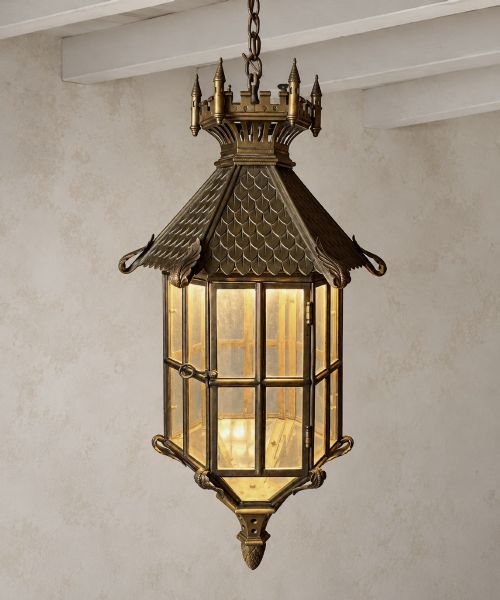
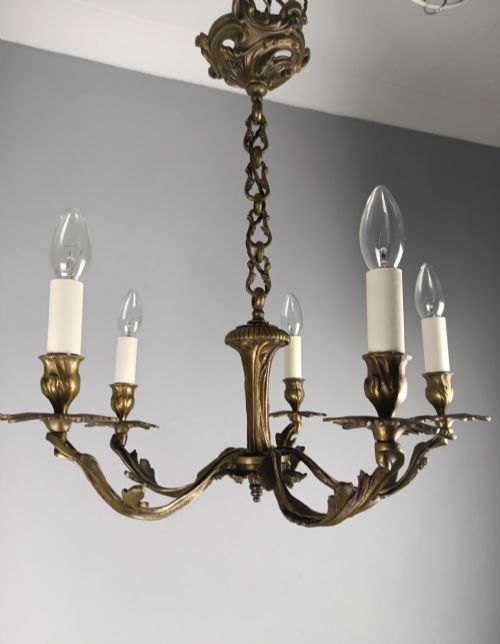
A patinated bronze pendant light brings deep metallic character to a room through dark, aged surfaces that develop rich tones over decades. When searching for a patinated bronze pendant light, buyers encounter variations ranging from single-bulb lanterns to multi-tiered chandeliers spanning several styles.
The selections on this page draw from the nineteenth and early twentieth centuries, including the nineteen-twenties and nineteen-thirties. Pieces frequently reflect French design influences, such as Empire, Rococo, and chateau aesthetics, alongside Arts and Crafts and Art Deco interpretations.
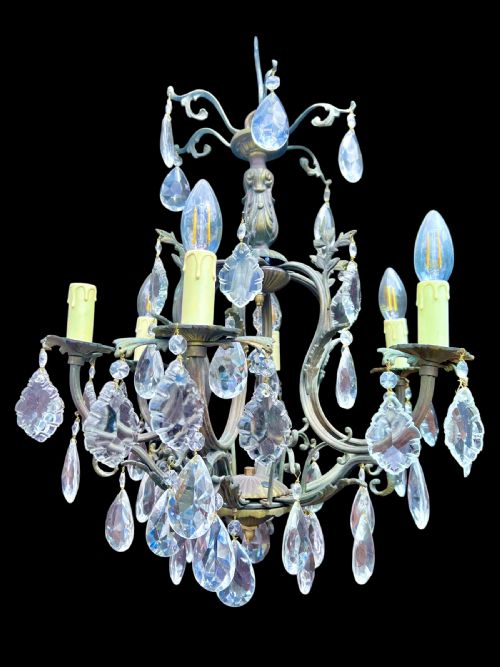
Forms vary from hall lanterns and ceiling lighting to grand multi-light chandeliers and up-light lampshades. Many incorporate glass or crystal elements alongside metal frames, creating balanced fixtures for high-ceilinged spaces.
Materials and construction methods
Makers utilised bronze, gilt bronze, and patinated bronze as the primary structural metals for these hanging lights. Brass, crystal, and frosted or opalescent glass frequently appear as complementary materials to diffuse light and enrich the visual texture.
Foundry casting techniques shaped the heavier frames, while hand-finishing processes created the distinctive dark surfaces associated with patination. Metal armatures support multi-tiered configurations, securing glass shades and crystal drops safely within the hanging structure.
Patinated Bronze Pendant Light Retail Price Guide 2026
Typical asking prices for patinated bronze pendant light among the pieces listed under this phrase on Sellingantiques today, from the lower quarter to the upper quarter. They describe what is for sale here now, not the wider market.
Early twentieth-century makers occasionally wired lanterns through hollow bronze branches to keep cables hidden from view.
Judging quality and craftsmanship
Quality rests in the crispness of the bronze casting and the depth of the patinated surface. Finer examples display deliberate weight in their armatures and precise detailing along the metal framework.
The integration of secondary materials, such as opalescent glass or cut crystal, distinguishes standard commercial fixtures from superior examples. Proportion and structural balance also dictate the overall success of multi-light fixtures.
The Patinated Bronze Pendant Light Glossary
- Patination
- The natural or chemical ageing process that darkens bronze surfaces over time. This process creates a stable, protective layer that enhances the visual depth of the metal.
- Empire
- A nineteenth-century design style drawing on classical Roman and Greek motifs. Pieces from this period feature formal symmetry and architectural details.
- Opalescent glass
- Milky, translucent glass that diffuses light with a soft glow. It appears frequently in twentieth-century lighting designs to reduce glare.
- Hall lantern
- An enclosed hanging light traditionally used in entranceways and corridors. These fixtures often feature glass panels held within a metal frame.
Patinated Bronze Pendant Light: Frequently Asked Questions
Where should I hang a bronze pendant light?
These fixtures suit entrance halls, dining spaces, and rooms with generous ceiling heights where suspended lighting serves as a focal point. Their darkened metal tones anchor a room's decorative scheme.
Ensure adequate clearance beneath the fixture, particularly in high-traffic areas or above furniture pieces.
How do I clean patinated bronze safely?
Dust the metal gently with a soft, dry cloth to remove everyday particles without disturbing the aged surface layer. Avoid harsh chemical cleaners or abrasive pads that can strip the patination.
Glass and crystal elements can be cleaned with mild soapy water, provided moisture does not reach the historical wiring or metal joints.
What is the difference between bronze and brass?
Bronze is an alloy primarily composed of copper and tin, known for its strength and dark, rich tonal capabilities when patinated. Brass contains copper and zinc, yielding a brighter, more golden hue.
Many antique fixtures combine both metals, using bronze for structural weight and brass for smaller decorative components.
How can I date an antique chandelier?
Dating relies on stylistic markers, casting techniques, and the presence of period-specific glass or wiring components. Pieces from the nineteenth century often show neoclassical or gothic revival influences, while nineteen-twenties items lean toward cleaner geometric lines.
Examining construction joints and fixing screws provides further clues regarding the manufacturing era.