

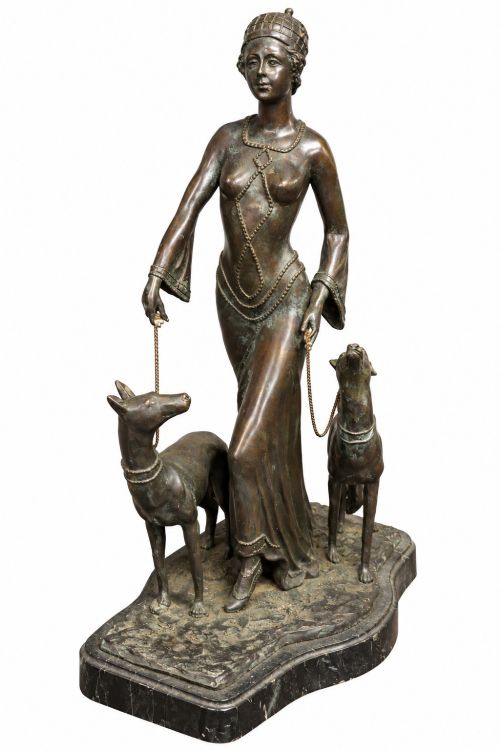
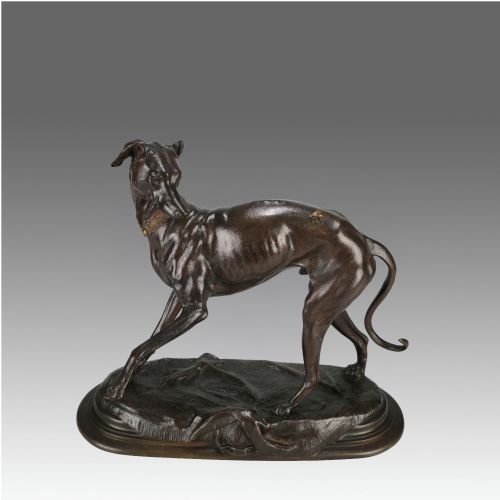


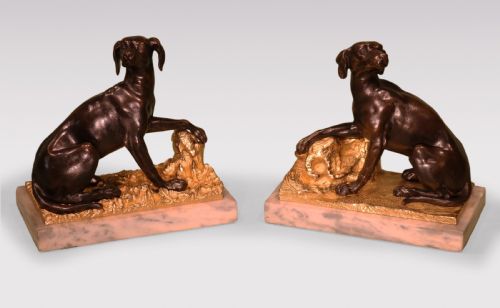


Patinated Bronze Hound
These patinated bronze hound sculptures capture the athletic tension of the chase, prized by collectors for their striking animalier forms.
Patinated Bronze Hound
A patinated bronze hound represents the pinnacle of animalier sculpture, capturing the muscular build and alert posture of hunting dogs. These pieces range from Victorian portrayals to Art Deco interpretations, reflecting changing artistic tastes across the nineteenth and twentieth centuries.
Buyers encounter subjects spanning greyhounds, setters, and basset hounds, often posed individually or as part of hunting groups alongside game. The most common examples on this page date from the nineteenth century and the early twentieth century, reflecting the peak of European animal sculpture.
The physical stance of each hound is central to its appeal, whether depicted standing, resting, or in full pursuit of prey. These sculptures serve as sculptural table ornaments or fireside statues, utilising metal casting techniques to preserve lifelike animal anatomy.
Materials and casting methods
Foundries utilised traditional lost-wax casting or sand-casting methods to shape the molten metal into complex hound figures. The primary material is bronze, though related items incorporate spelter, cast iron, or ormolu mounts to enhance decorative detail.
Makers applied chemical patination to the bronze surfaces to achieve deep brown, black, or verdigris tones that accentuate the musculature. Bases frequently feature contrasting materials such as marble or onyx, providing a stable foundation for the heavier metal sculptures.
Patinated Bronze Hound Retail Price Guide 2026
Typical asking prices for patinated bronze hound among the pieces listed under this phrase on Sellingantiques today, from the lower quarter to the upper quarter. They describe what is for sale here now, not the wider market.
Listings feature bronze, spelter, and cast iron materials combined with marble and onyx bases across the nineteenth and twentieth centuries.
Factors distinguishing quality
The precision of the chasing work separates standard foundry output from superior artistic achievements. Skilled artisans spent hours hand-finishing the cast bronze to define fur texture, facial expressions, and the subtle contours of the hound's physique.
The depth and richness of the patination indicate the standard of production, with layered chemical treatments outlasting simple surface paints. Furthermore, the presence of a distinct artist signature or foundry mark elevates the historical interest of the sculpture.
Alfred Barye·Auguste Nicholas Cain·Arthur Waagen·Geo Maxim·Antoine Louis Barye·Joseph Francois Victor Chemin·John Willis Good·Cox & Sons
The Patinated Bronze Hound Glossary
- Animalier
- A nineteenth-century artistic movement dedicated to the realistic portrayal of animals. Sculptors in this tradition focused heavily on anatomical accuracy and dynamic movement.
- Patination
- The surface coloration applied to metal through chemical processes or natural ageing. It protects the bronze underneath while creating varied tonal qualities.
- Lost-wax casting
- A historic method where a molten metal is poured into a mould created from a wax model. This technique allows for exceptional detail in intricate animal sculptures.
- Ormolu
- Gilded bronze ornamentation applied to decorative objects or furniture mounts. In hound sculptures, it often highlights bases or accompanying game elements.
Patinated Bronze Hound: Frequently Asked Questions
How do I clean patinated bronze?
Dust the sculpture gently with a soft, dry brush to prevent the accumulation of dirt within the crevices. Avoid chemical cleaners or polishing agents, which can strip away the original chemical patination.
Apply a very thin coat of microcrystalline wax occasionally to protect the metal surface from moisture and handling oils. Buff the wax off completely with a clean cloth to maintain a natural, satin sheen.
What is an animalier bronze?
An animalier bronze is a nineteenth-century sculpture depicting animals in realistic or dramatic poses. These works were particularly popular in France and Britain among collectors of sporting art.
The genre values anatomical precision and lifelike behaviour over stylised representation. Artists often observed animals in menageries or hunting fields to capture their true posture.
Are these sculptures solid bronze?
Most nineteenth and twentieth-century animalier sculptures are cast as hollow forms to reduce weight and metal usage. Foundry workers used bronze for durability while keeping the interior hollow through core supports.
Alternative metals like spelter were occasionally used for less expensive figures during economic periods. Checking the weight and base helps differentiate solid bronze from plated or alternative alloy castings.
Why do hounds have different base stones?
Foundries mounted bronze hounds onto marble or onyx bases to provide visual contrast and physical stability. Heavier stone plinths balanced the forward momentum or outstretched forms of running greyhounds.
Different periods favoured specific stone types, helping to date the assembly of the piece. The fit between the bronze feet and the stone surface indicates the original construction standard.