



Patinated Bronze Group
A patinated bronze group brings together multiple figures in metal, offering dynamic compositions from the nineteenth and early twentieth centuries.
Patinated Bronze Group
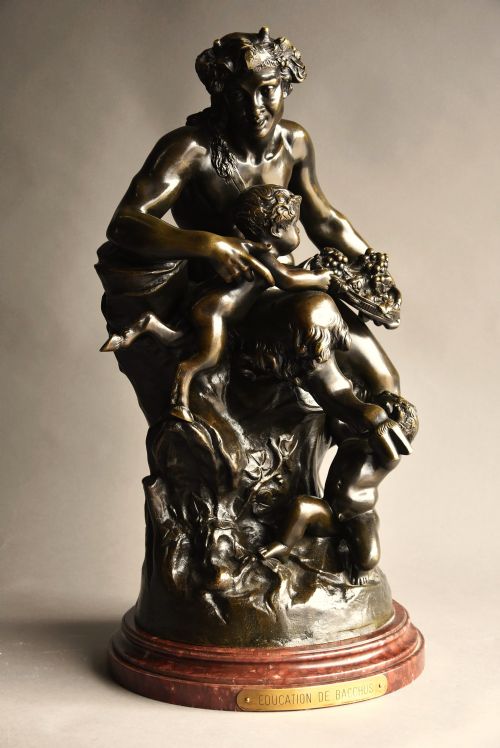
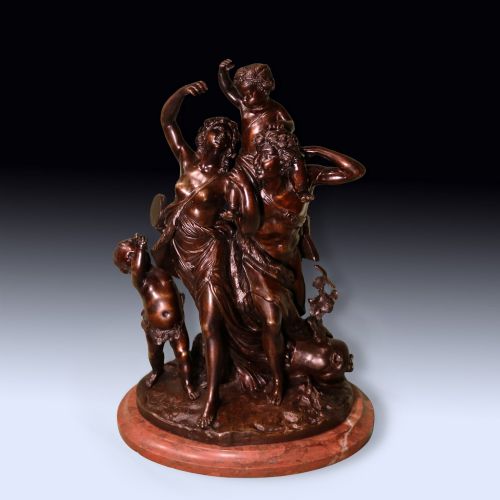
A patinated bronze group depicts multiple human figures, animals, or mythological subjects cast together in a single sculptural composition. These works range from classical interpretations and animalier studies of wildlife to Art Deco figures and Japanese Meiji period okimono.
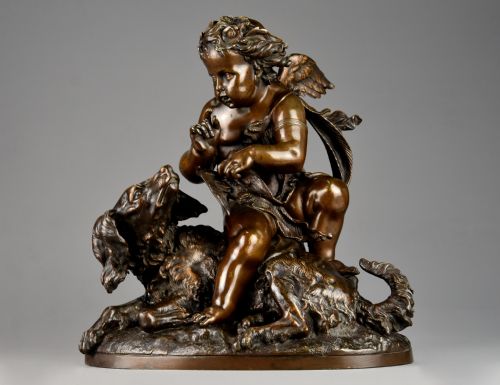
Nineteenth century French foundries dominate the selection, often drawing on classical mythology, rural scenes, or romantic narratives. Animalier subjects involving hunting dogs, tigers, and bears also appear frequently across the periods represented.
Materials and technique
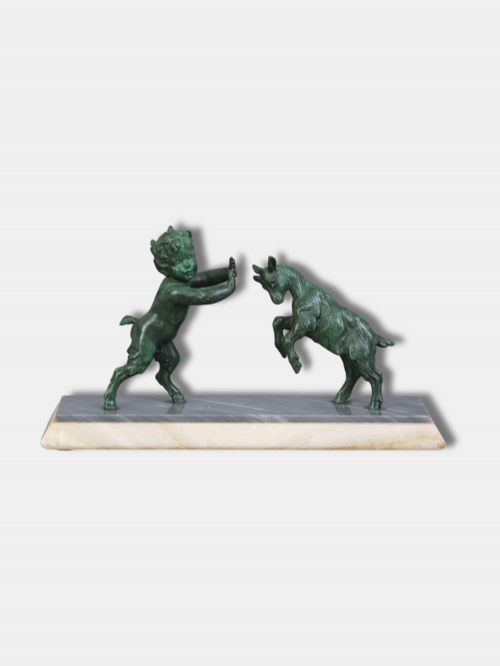
Foundries utilised the lost wax casting method to capture intricate details in molten bronze before applying chemical patination to achieve dark brown, green, or multi-toned surface finishes. Spelter appears as an alternative metal material in several twentieth century pieces, particularly from the Art Deco period.
Many sculptures incorporate integrated or fitted bases made from marble, onyx, hardwood, or slate to support the weight and balance of the metal figures.
Several bronzes capture elaborate moments of animal combat, including elephants fighting tigers and bears wrestling over food.
The spectrum of quality
Quality rests in the crispness of the chasing and the depth of the finished patina, where finer casts retain sharp musculature, facial expressions, and textile textures without obscuring detail under heavy chemicals. Weaker examples show softer tool marks, blurred casting seams, and flat surface coloration.
The sophistication of the composition and the reputation of the foundry or sculptor determine the standing of an individual casting within its period.
Claude Michel Clodian·Emile Carlier·E. Drouot·Kaniya Kuniharu·Auguste Nicholas Cain·G. Gardet·Vannetti·H. Bal·Chiparus·P. J. Mene·Xavier Raphanel·Alfred Dubucand·Charles Cumberworth·John Willis Good·Emile Laporte
The Patinated Bronze Group Glossary
- Patination
- The chemical treatment applied to the surface of metal to create colour, tone, and aged effects. This process enhances the visual depth of the cast.
- Animalier
- A nineteenth century sculptural style focusing on realistic depictions of animals, often in motion or combat. Artists in this tradition studied anatomy closely.
- Spelter
- A zinc alloy used as a less expensive substitute for bronze, common in twentieth century decorative figures. It is lighter and softer than true bronze.
- Okimono
- A Japanese decorative object intended for display, often carved from ivory or cast in bronze with meticulous detail. These pieces frequently portray daily life or natural subjects.
- Lost wax casting
- A method of metal casting in which a molten metal is poured into a mould that has been created by means of a wax model. This allows for complex undercuts and fine details.
Patinated Bronze Group: Frequently Asked Questions
What is a patinated bronze group?
A patinated bronze group is a multi-figure sculpture cast in bronze and treated with chemical solutions to produce a specific surface colour and tone. These works often portray mythological narratives, human laborers, or animals interacting in dynamic scenes.
They reflect the artistic movements of the nineteenth and early twentieth centuries, particularly French and Japanese foundry traditions.
How do I distinguish bronze from spelter?
Bronze is heavier, denser, and colder to the touch than spelter, with a more resonant sound when tapped gently. Spelter is a zinc-based alloy that was frequently used for Art Deco figural groups and shows a softer, lighter metal underneath any surface coating.
Looking closely at the underside or areas where the patina has worn can reveal the underlying metal composition.
What does animalier mean in these sculptures?
Animalier refers to a nineteenth-century artistic focus on the realistic portrayal of animals, particularly predators, prey, and domestic beasts in naturalistic settings. Sculptors in this genre produced detailed studies of movement, tension, and combat.
These pieces capture bears, tigers, hounds, and stags with careful attention to anatomical accuracy.
Where should I place a bronze group at home?
These sculptures require stable surfaces such as heavy sideboards, desks, or mantelpieces that can support the considerable weight of metal and stone bases. Placing them away from direct heat sources and moisture protects the chemical patina from degradation over time.
Good lighting from a side angle helps reveal the fine chasing and surface texture of the cast.