

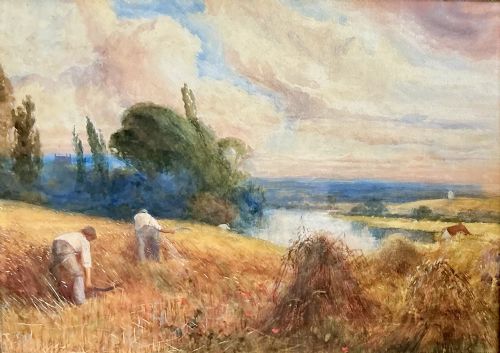


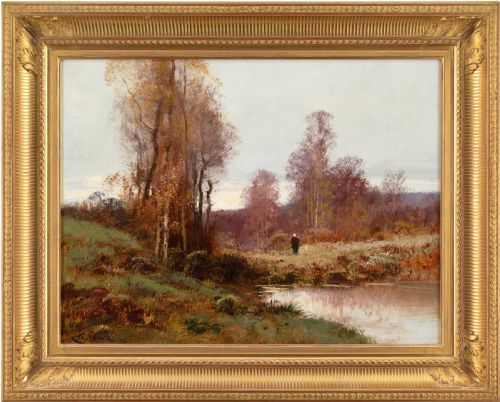


Pastoral River Landscape Art
Pastoral river landscape art captures the quiet charm of rural waterways through the traditional mediums of canvas and paper.
Pastoral River Landscape Art
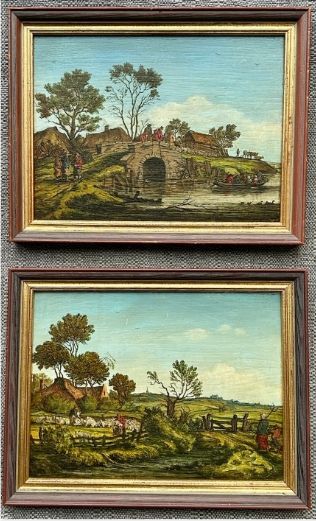
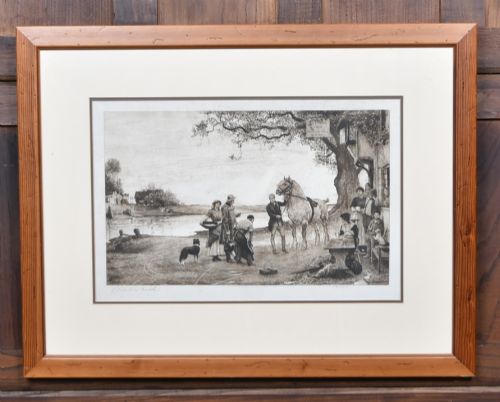
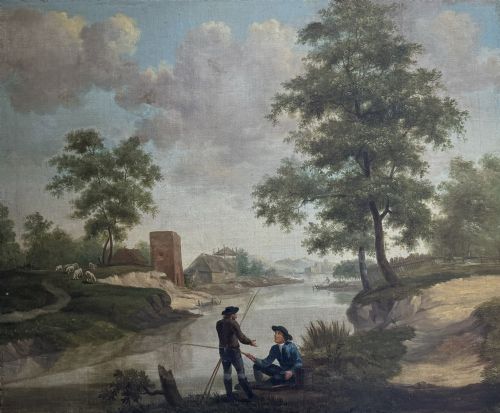
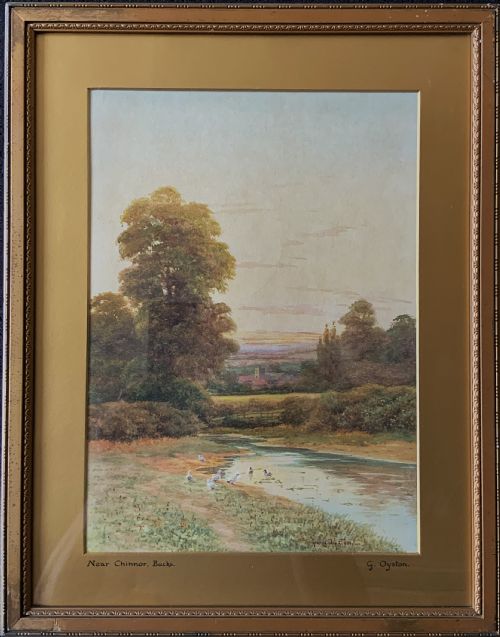
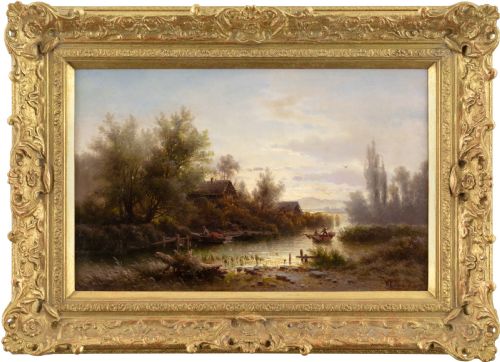
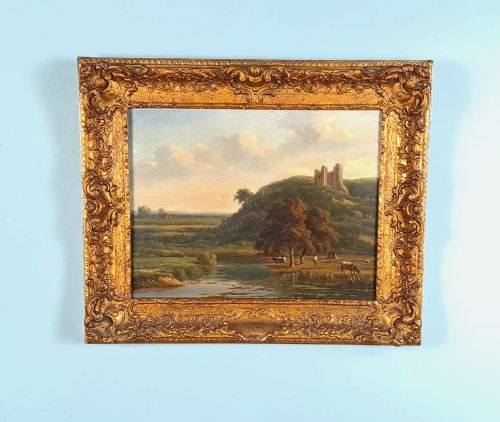
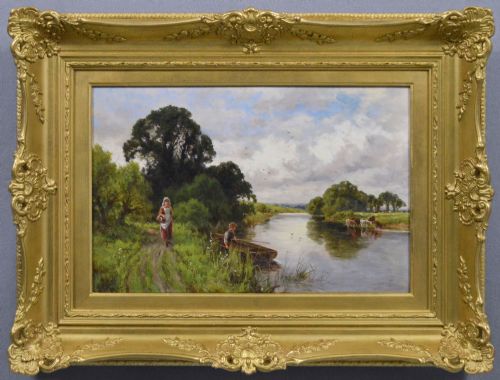
When you search for pastoral river landscape art, you find works capturing rural waterways, country bridges, and riverbanks with figures, cattle, or boats. The pieces available span the nineteenth century and the early twentieth century, showing British, Welsh, and continental scenes.
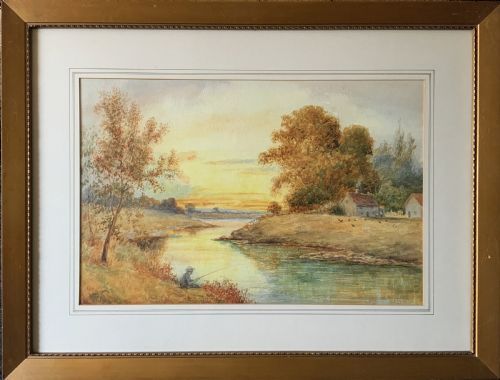
You are most likely to encounter framed watercolour paintings and oil paintings on canvas or wood panels. These vary from intimate watercolours of fenland folk and river estuaries to large oils depicting Welsh mountain rivers and pastoral afternoon scenes.
How They Were Made
Artists painted these river scenes using oil paint or watercolour applied to canvas, wood panels, paper, or board. Canvases were often stretched and mounted within ornate giltwood and gesso frames.
The working method combined direct observation of nature with studio composition, using transparent washes of watercolour or rich, layered brushwork in oil paint to build depth in the water and foliage.
Listings feature works from the Victorian period through to the early twentieth century, utilising oil paint, watercolour, canvas, and giltwood.
What Varies in Quality
Quality rests on the sureness of the brushwork and the artist's ability to render light reflecting off water and atmospheric distance in the sky. Superior works demonstrate confident handling of perspective and naturalistic colour harmony rather than rigid formulaic composition.
The material support and framing also distinguish the range, as original wood panels, robust canvas stretches, and period giltwood frames preserve the physical integrity of the piece better than later alterations.
Robert W. Macbeth·George Oyston·Albert Rieger·Henry H Parker·Frederick Hines·John Horace Hooper·Charles Clair·Cornelius Pearson·Thomas Baker of Leamington·Henry John Kinnaird·Alfred Augustus Glendening Jnr·William Sydney Cooper·George Vicat Cole·Robert John Hammond·Sidney Richard Percy·Robert Thorne Waite·Walter J Watson·James Gunson Atkinson·Alfred Grey·Benjamin Williams Leader·Peter Deakin·Harold Lawes·Maud Raphael Jones·William Manners·Thomas James Lloyd
The Pastoral River Landscape Art Glossary
- Oil on Canvas
- Pigment mixed with drying oil applied to a woven fabric stretched across a wooden frame. This method allows for rich texture and deep colour blending.
- Watercolour Painting
- Pigments suspended in a water-based solution applied to paper. It creates luminous, translucent washes of colour typical of nineteenth-century British works.
- Giltwood
- Wood carved and coated with a thin layer of gold leaf or gilt powder. It provides the decorative border for traditional picture frames.
- Gesso
- A paint mixture consisting of a neutral binder mixed with chalk, gypsum, or pigment. It served as a smooth preparation base for wooden panels and frame mouldings.
- British Impressionism
- A late nineteenth and early twentieth century painting style focused on everyday subjects and natural light. Artists captured fleeting outdoor effects with visible brushstrokes.
Pastoral River Landscape Art: Frequently Asked Questions
What subjects appear in pastoral river landscape art?
These works typically show rivers, streams, and estuaries accompanied by rural elements such as stone bridges, cottages, locks, and weeping willows. Figures fishing, harvesting, or driving cattle feature frequently along the banks.
The compositions emphasise tranquil rural life rather than industrial scenes, capturing specific locations across Britain, Wales, and Europe during the nineteenth and early twentieth centuries.
How do I care for antique oil and watercolour paintings?
Oil paintings on canvas require stable indoor humidity and protection from direct sunlight to prevent the paint surface from cracking or fading. Dust should be removed gently from the canvas and frame using a soft, dry brush.
Watercolour paintings on paper are especially sensitive to light and must be hung away from direct sun exposure. Framing under conservation glass helps protect the delicate paper surface from atmospheric moisture.
What framing is typical for these nineteenth-century paintings?
Period frames are predominantly made of wood decorated with gesso mouldings and finished in giltwood leaf. These heavy frames provide structural support and complement the traditional aesthetic of the artwork.
Many pieces retain their original frames, which show age-appropriate wear that matches the historic character of the canvas or watercolour within.