
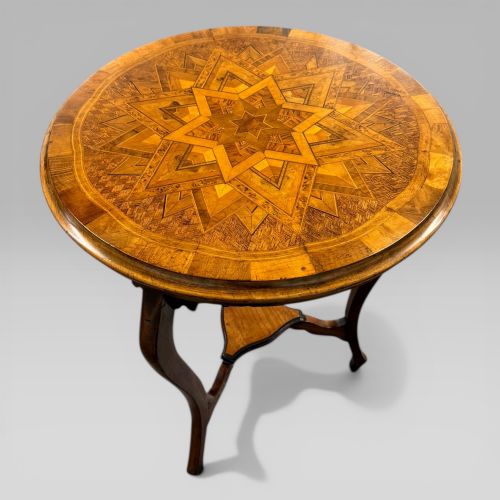


Parquetry Tripod Table
A parquetry tripod table brings geometric precision to a classic pedestal form, prized for intricate wood mosaics.
Parquetry Tripod Table
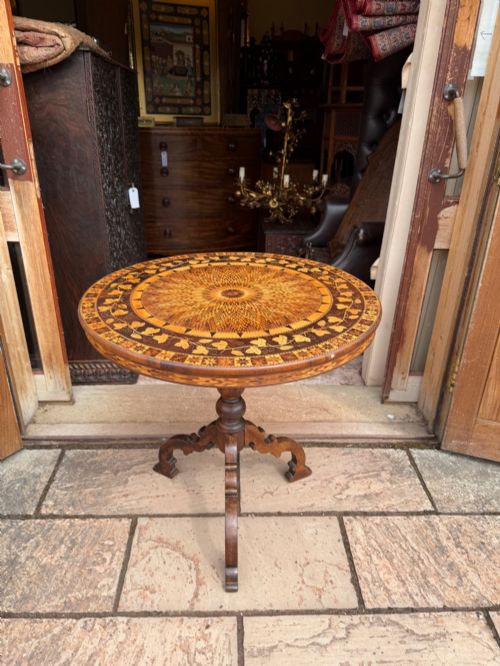
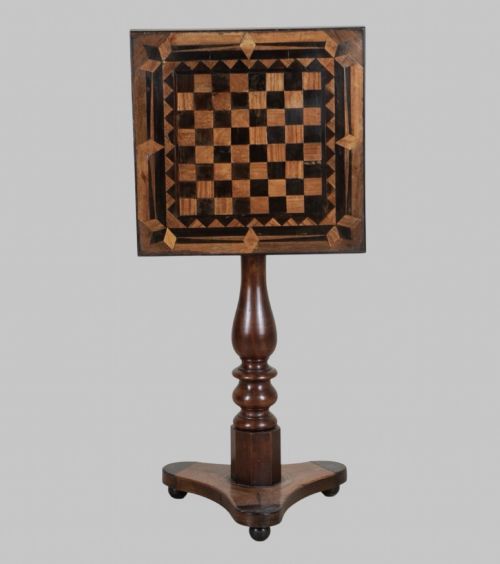
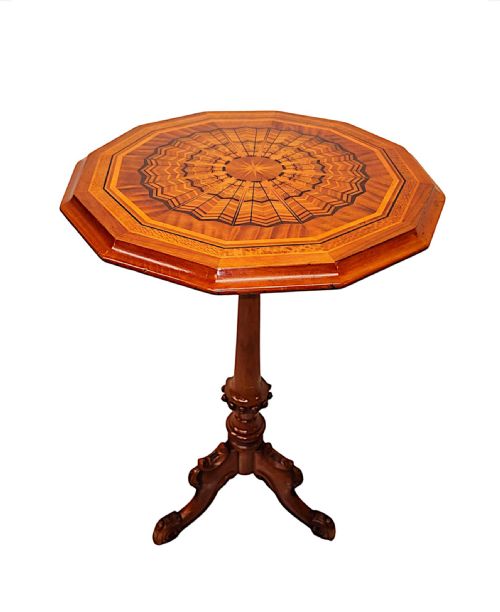
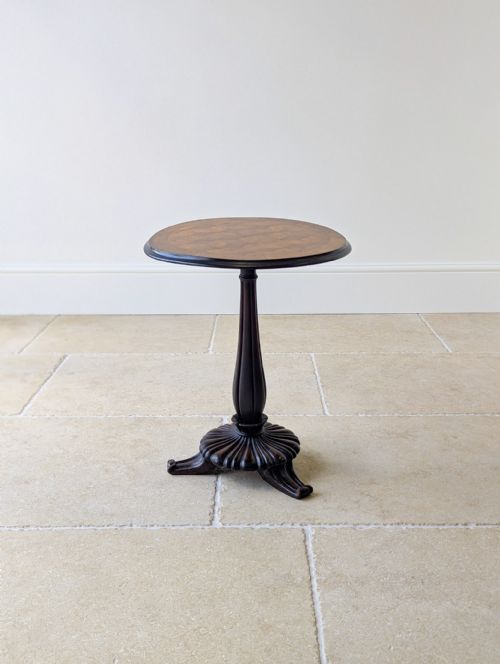
A parquetry tripod table combines a geometric wood-inlaid top with a central pillar supported by three feet. When searching for a parquetry tripod table, buyers encounter examples originating primarily from the Georgian, Victorian, and nineteenth-century periods. These pieces serve functional roles as occasional, wine, side, or games tables within domestic interiors.
The format relies on a circular, octagonal, or hexagonal surface balanced upon a turned pedestal base. Walnut, mahogany, oak, and rosewood frequently form the structural framework and bases of these pieces. Makers utilised diverse timbers to create distinct geometric patterns across the tabletop surface.
Regional variations appear across the selection, encompassing Italian Sorrento work, French nineteenth-century design, and Victorian colonial production. Tables range from plain oak and walnut versions to highly elaborate specimen wood creations. Each piece demonstrates the specific stylistic preferences of its workshop and period of origin.
Materials and Construction
Cabinetmakers constructed these tables using solid foundational timbers such as oak, mahogany, walnut, and rosewood for the tripod bases and framing. Veneers of contrasting woods including boxwood, olive wood, and satinwood were then applied to create complex geometric arrangements. Brass elements occasionally appear on hinges or fittings for tables with folding or tilting tops.
The parquetry surface relies on precision cutting of small timber pieces to form repeating patterns like star motifs, sunbursts, and cubes. Artisans glued these individual veneer tiles onto a stable secondary wood base before scraping and polishing the top flat. The resulting surface highlights the natural grain and colour variations of the distinct wood species utilised.
The listings show parquetry tripod tables executed in walnut, mahogany, oak, and rosewood, spanning the Georgian and Victorian eras.
Judging Quality and Execution
The standard of a parquetry tripod table rests upon the precision of the geometric inlay and the selection of woods. Finer examples display tight joints between individual veneer segments with minimal filler, whereas lesser pieces show wider gaps or uniform timber usage. The complexity of the parquetry design, such as multi-wood sunbursts or detailed specimen wood panels, separates standard production from exceptional craftsmanship.
Structural integrity of the central pillar and the three legs dictates durability and overall balance. Superior tables maintain a tight union between the tabletop and the pedestal, ensuring the surface remains level without wobble. The quality of the turning on the column and the carving on the tripod feet further distinguish workshop origins.
Gillows·Anton Seuffert·Almerico Gargiulo
The Parquetry Tripod Table Glossary
- Parquetry
- A geometric mosaic of wood pieces used for surface decoration. This technique creates repeating patterns such as cubes, triangles, and squares across tabletops.
- Marquetry
- The art of forming decorative designs from fitted wood veneers that depict pictorial scenes or floral motifs. It differs from parquetry through its use of curved and pictorial lines rather than strict geometry.
- Tripod Base
- A pedestal support resting upon three feet. This construction prevents wobbling on uneven floors.
- Specimen Wood
- Timbers gathered from various domestic and exotic trees to showcase distinct colours and grain patterns. Makers combined these woods to produce contrasting mosaic surfaces.
- Tilt Top
- A tabletop mechanism hinged to the pedestal column. This allows the surface to fold vertically for storage against a wall.
Parquetry Tripod Table: Frequently Asked Questions
What is a parquetry tripod table?
A parquetry tripod table is a small stand featuring a geometric wood-inlaid top supported by a central pillar and three legs. These tables functioned historically as wine tables, occasional tables, or games surfaces.
Craftsmen built them using diverse timbers like walnut, mahogany, and oak, applying contrasting veneers to create patterns. They suit modern living spaces as accent pieces beside seating.
How do I style a tripod table?
These tables fit easily beside armchairs, sofas, or in hallways due to their compact footprint and stable three-legged base. Their decorative geometric tops provide a focal point when displayed with a lamp or small object.
Avoid placing them in direct sunlight to protect antique wood veneers and polished finishes from fading. Their light weight also allows them to move between rooms as needed.
How do I tell Victorian from Georgian tables?
Georgian tables generally exhibit restrained classical proportions, simpler mahogany or walnut timbers, and understated pedestal turnings. Victorian examples often incorporate heavier pedestal designs, darker rosewood or walnut, and more elaborate specimen wood parquetry.
Construction techniques also shift over time, with machine-sawn components appearing increasingly by the mid-nineteenth century. Examining the secondary woods underneath helps confirm the period of manufacture.
What is the difference between parquetry and marquetry?
Parquetry consists exclusively of geometric patterns formed by interlocking pieces of wood veneer. It relies on mathematical symmetry and angular shapes like cubes or stars.
Marquetry employs similar veneer techniques to create pictorial representations, such as flowers, landscapes, or scrolls. Many nineteenth-century tables combine both methods across the same tabletop surface.