




Parquetry Rosewood Desk
A parquetry rosewood desk is a fine surface for correspondence, displaying intricate geometric wood patterns and rich dark grain.
Parquetry Rosewood Desk
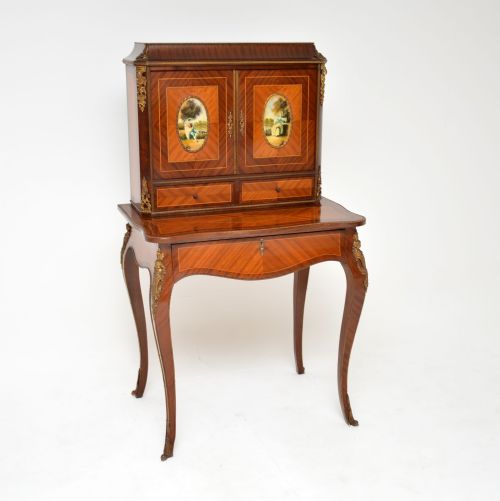
When you search for a parquetry rosewood desk, you encounter pieces that range from Victorian writing tables to French revival bonheur du jour forms. These surfaces were built to serve domestic writing and correspondence, often featuring compartments or drawers.
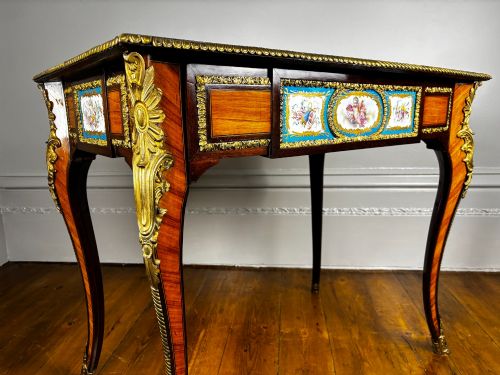
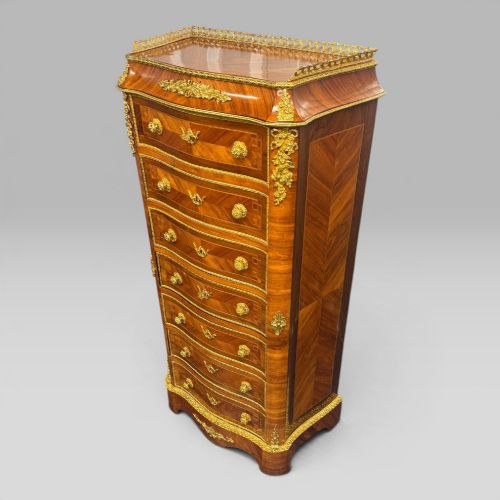
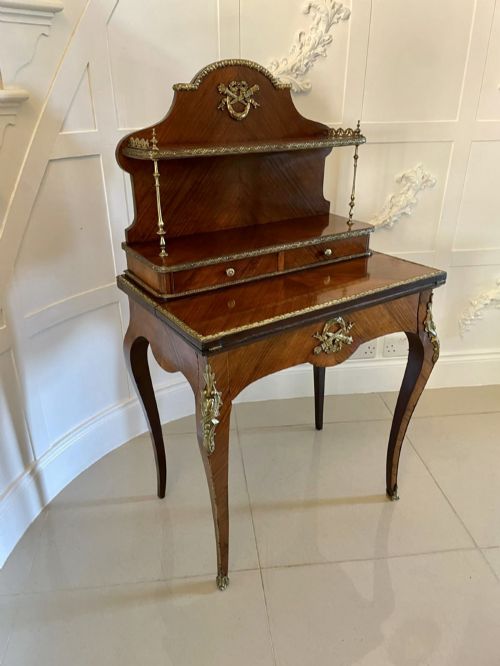
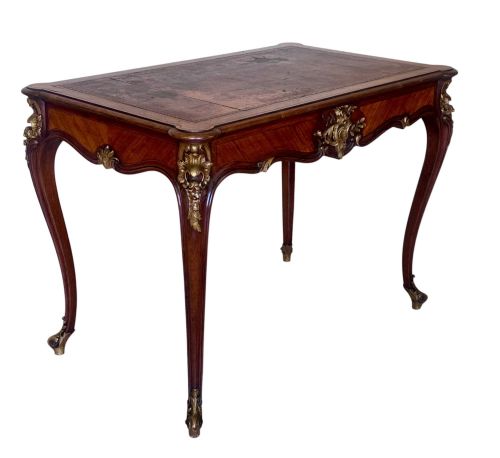
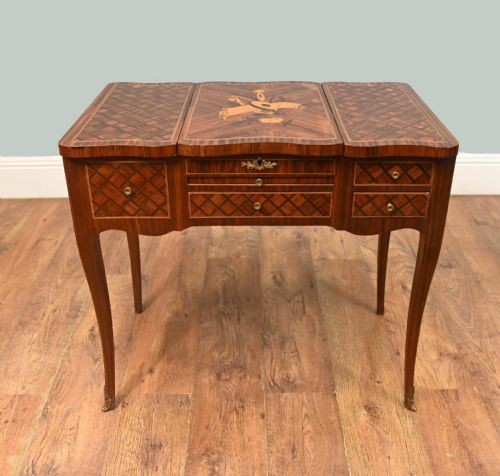
The versions most common on this page combine rosewood veneers with geometric wood patterns, frequently taking the form of a bonheur du jour, a writing table, or a bureau plat. Many date from the nineteenth century, reflecting revival styles such as Louis XV and Louis XVI.
Makers utilised various secondary woods and decorative mounts alongside the primary rosewood veneer to create these sophisticated items. The forms vary from compact ladies' writing desks to larger centre tables adapted for written work.
Materials and construction methods
Cabinetmakers constructed these pieces using solid timbers overlaid with choice veneers, applying rosewood and kingwood in geometric parquetry patterns. Marquetry inlay and tulipwood accents frequently complement the primary surface design.
Gilt bronze and ormolu mounts adorn many examples, cast and chased to accentuate the corners, legs, and drawer edges. Brass details and leather writing inserts also appear across the surviving pieces.
Internal compartments often feature secret drawers and fitted stationery sections, constructed with traditional joinery methods suited to high-status nineteenth-century workshops.
Parquetry Rosewood Desk Retail Price Guide 2026
Typical asking prices for parquetry rosewood desk among the pieces listed under this phrase on Sellingantiques today, from the lower quarter to the upper quarter. They describe what is for sale here now, not the wider market.
Listings feature rosewood, kingwood, ormolu, and leather across pieces dating from the eighteenth century to the 1940s.
Factors determining quality
The precision of the geometric parquetry layout separates standard production from exceptional work, as tight joints and balanced grain patterns require considerable skill. Finer examples display harmonious contrast between the rosewood and secondary timbers like kingwood.
The quality of the cast ormolu and gilt bronze mounts dictates the overall standing of a piece. Crisp chasing and heavy gilding indicate a workshop of higher repute than loose, poorly finished metalwork.
Proportion and structural integrity define the best pieces, where the internal drawer construction matches the elegance of the external veneer.
CH. Jeanselme & Co·Donald Ross·Maurice Dufrêne
The Parquetry Rosewood Desk Glossary
- Parquetry
- Geometric wood mosaic work formed by small veneer pieces laid down in repeating patterns. It creates the characteristic surface decoration seen on these writing desks.
- Bonheur du jour
- A small light lady's writing desk featuring a raised cabinet or tier of pigeonholes and small drawers above the main surface. This form emerged in France during the eighteenth century.
- Ormolu
- Gilt bronze ornamentation applied to furniture mounts, feet, and handles. It provides a metallic contrast to the dark rosewood grain.
- Bureau plat
- A flat-topped writing table with drawers in the frieze, unsupported by a superstructure above. These tables stand freely in the centre of a room.
- Kingwood
- A dense, heavily grained exotic timber prized for its contrasting colour. Cabinetmakers paired it with rosewood to enhance parquetry designs.
Parquetry Rosewood Desk: Frequently Asked Questions
What is a parquetry rosewood desk used for?
These pieces served as dedicated writing surfaces for letters, accounts, and private correspondence in period homes. Their compartmentalised tops and drawers kept stationery and writing implements close at hand.
Today, they function as striking focal points in a study or drawing room, offering a practical writing surface with distinct historical character.
How do I identify a bonheur du jour?
A bonheur du jour is distinguished by its small scale and the raised cabinet section positioned at the back of the writing surface. This upper tier typically contains small drawers and pigeonholes for letters.
They were designed primarily for women to use in private chambers or boudoirs during the eighteenth and nineteenth centuries.
What is the difference between parquetry and marquetry?
Parquetry consists of geometric wood pieces arranged in repeating patterns such as cubes, chevrons, or triangles. It relies on the natural grain and colour of the timbers to form the design.
Marquetry, by contrast, depicts pictorial scenes, flowers, or scrollwork using varied veneer species assembled into figurative compositions.
How should I care for a rosewood desk?
Keep the wood away from direct sunlight and heat sources to prevent the rosewood veneer from drying out or splitting. Gentle dusting with a dry, soft cloth maintains the finish without harsh chemical polishes.
Maintain stable humidity levels in the room to protect both the timber substrate and the delicate parquetry work.