


Parquetry Marble Top Table
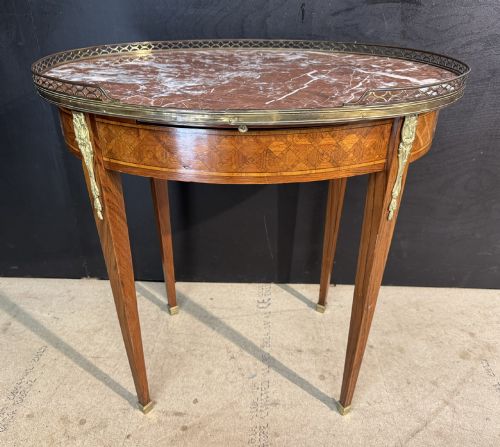
A parquetry marble top table combines geometric wood veneers with a solid stone surface, bringing continental elegance to a room.
Parquetry Marble Top Table
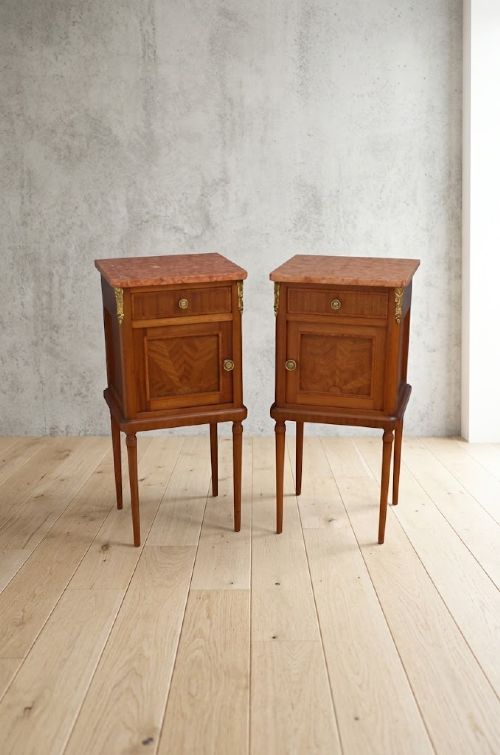
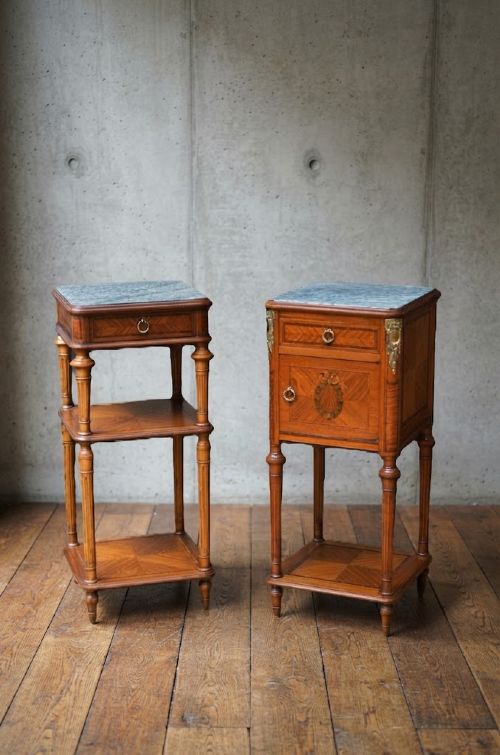
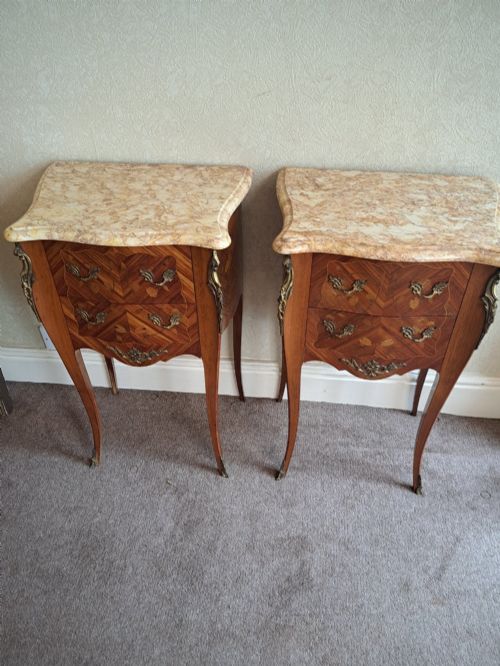
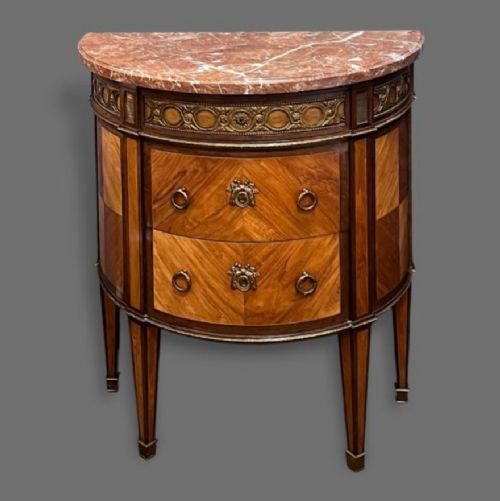
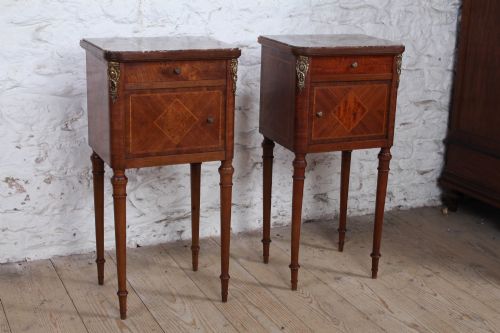
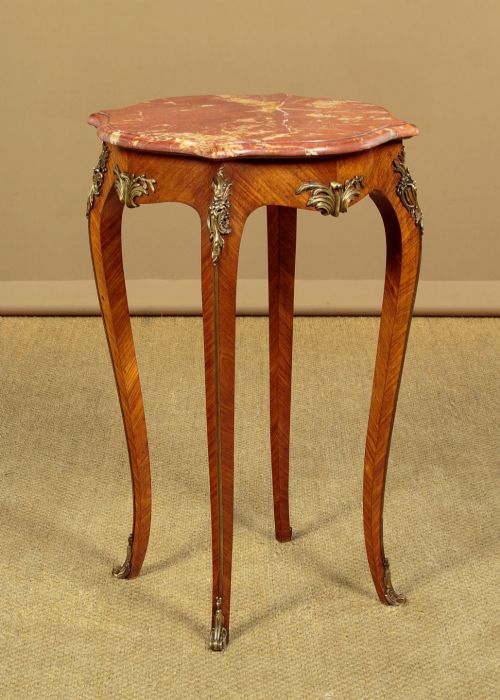
When you search for a parquetry marble top table, you encounter a selection spanning the nineteenth and early twentieth centuries, predominantly featuring French design influences such as Louis XV and Louis XVI styles. The most common form in this category is the bedside cabinet or nightstand, often found in matched pairs alongside side tables, commodes, and wine tables.
The architectural lineage draws heavily from continental aesthetics, incorporating serpentine fronts, bombe profiles, and demi-lune shapes designed for domestic utility. Alongside smaller tables, larger centre tables and guéridons appear, utilising the same characteristic combination of polished stone and patterned wooden veneers.
Materials and Construction
Cabinetmakers constructed these pieces using a carcase of native or imported timber, overlaid with geometric veneers of kingwood, walnut, satinwood, and fruitwood to create the parquetry patterns. Slabs of marble, fitted precisely to the upper surface, provided a durable and decorative top resistant to everyday use.
Mounts in ormolu and brass frequently accent the corners, handles, and legs, highlighting the structural lines of the French-inspired designs. Joinery techniques relied on traditional hand-cut joints, supporting the weight of the stone tops while maintaining slender proportions in the legs and aprons.
Listings feature walnut, kingwood, and satinwood veneers paired with marble tops across nineteenth-century and early twentieth-century periods.
Assessing Quality
The standard of a parquetry marble top table rests on the precision of the wood mosaic and the integration of the stone slab. Superior examples display tightly fitted geometric veneers with continuous grain alignment across curves and corners, rather than simple printed or painted surface decoration.
Subtlety in the cast ormolu mounts and the weight and figuring of the marble distinguish finer items from standard commercial production. The crispness of the carving on wooden mouldings and the overall stability of the frame indicate the original workshop's competence.
L.Martin·Linke
The Parquetry Marble Top Table Glossary
- Parquetry
- A geometric mosaic of wood pieces used for decorative surfaces. It creates patterned tabletops and cabinet fronts using contrasting timber tones.
- Ormolu
- Gilded bronze applied as mounts and feet on furniture. This decorative metalwork is typical of nineteenth-century French cabinetmaking.
- Guéridon
- A small round table supported by a central pillar or a set of legs. These originated in seventeenth-century France and continued into later revival periods.
- Chevet
- A French bedside table or cabinet. These small pieces often include a single drawer and cupboard space below.
- Bombe
- A swelling, outward-curved commode or cabinet shape. This contour requires skilled veneer work to follow the complex three-dimensional curves.
Parquetry Marble Top Table: Frequently Asked Questions
How do I clean the marble top?
Wipe the stone surface using a soft cloth dampened with warm water and mild, non-acidic soap. Avoid harsh chemicals and abrasive pads to protect the polish.
Dry the marble thoroughly afterwards to prevent water marks. Sealers can be applied periodically to guard against stains from daily use.
What is the difference between parquetry and marquetry?
Parquetry uses geometric blocks of wood to form repeating patterns like cubes, chevrons, and triangles. It relies on regular angles and straight lines.
Marquetry employs varied veneer shapes to create pictorial scenes, floral sprays, or scrolls. Both techniques appear frequently on these tabletops and cabinets.
Can I use a bedside cabinet in a living room?
These compact cabinets function well as lamp tables or side tables beside seating areas. Their enclosed storage holds small items out of sight.
The finished backs and polished marble surfaces on many examples allow them to sit away from walls as free-standing room furniture.