




Oval French Lamp Table
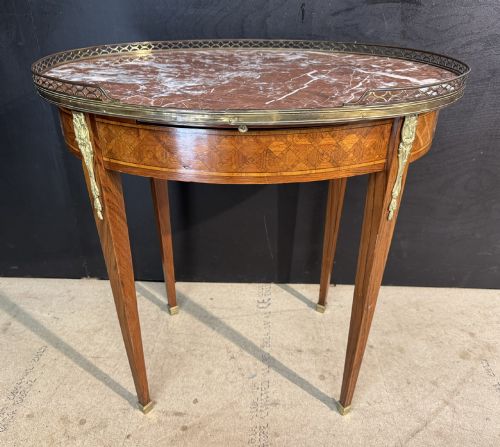
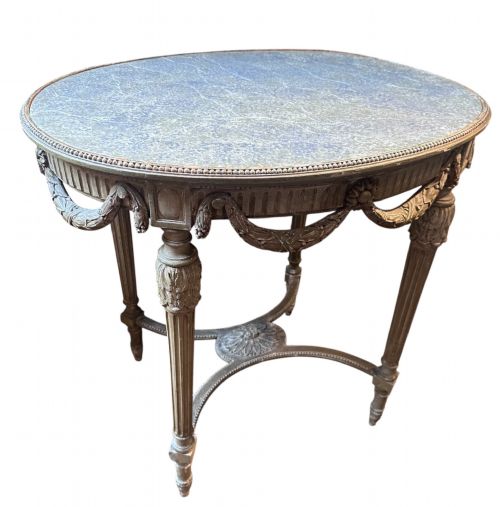
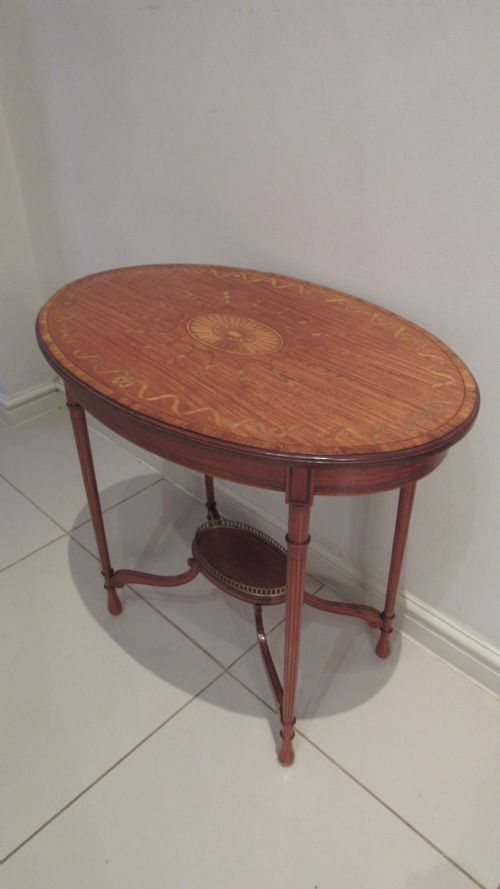
An oval french lamp table brings refined continental utility to a room, offering a compact surface framed in fine timbers and cast mounts.
Oval French Lamp Table
An oval french lamp table sits quietly beside a sofa or armchair, serving as a functional surface with distinct decorative presence. When exploring this selection, buyers encounter occasional tables, side tables, and centre tables spanning the nineteenth and early twentieth centuries.
The prevailing aesthetic draws heavily upon Louis XV and Louis XVI styles, alongside French Empire and chateau influences. Pieces frequently exhibit slender cabriole legs, parquetry tops, and shaped aprons typical of continental cabinet-making traditions.
Origins trace directly to French workshops and Paris makers, with designs prioritising serpentine or oval surfaces. These small tables adapt easily to contemporary domestic settings while retaining their period character.
Materials and construction methods
Cabinet-makers relied on dense exotic timbers such as kingwood, mahogany, rosewood, and satinwood, often arranged in intricate parquetry or marquetry patterns. Ebonised finishes and figured walnut also appear across the selection, providing diverse surface textures and rich natural grains.
Marble tops, particularly white or veined varieties, feature prominently alongside inset wooden panels. These heavy stone surfaces sit within rebated wooden frames, sometimes edged with cast brass galleries.
Mounts in gilt bronze and ormolu enhance the structural lines, appearing at corners, knees, and sabots. Hoof feet and chased brass applications demonstrate the precise metalworking standards applied to these tables.
Materials recorded across the selection include mahogany, rosewood, kingwood, marble, brass, and ormolu.
Assessing quality and craftsmanship
The distinction between standard examples and superior pieces rests largely on the complexity of the timber work and the crispness of the bronze mounts. Hand-chased ormolu mounts with deep relief show greater artisan investment than plain cast brass replacements.
Parquetry and marquetry demand precise geometric execution; tighter joints and well-chosen grain matching separate exceptional tables from simpler ones. The integrity of the underlying carcase wood and the snug fit of inset marble tops further define the tier of craftsmanship.
Haentgos Freres Paris
The Oval French Lamp Table Glossary
- Parquetry
- Geometric wood mosaic work formed by small veneer pieces laid down in repeating patterns. It creates durable and decorative tabletops.
- Ormolu
- Gilt bronze ornamentation applied to furniture mounts and feet. The technique involves a mercury amalgam finish over bronze.
- Etagere
- An open tiered piece of furniture used for display or holding small objects. These often incorporate brass supports and multiple wooden shelves.
- Sabot
- A metal shoe fitted to the foot of a table leg. It protects the timber from wear and adds a decorative termination.
- Marquetry
- Pictorial or ornamental inlay using various coloured woods applied to a carcase. It differs from parquetry through its curving floral or pictorial motifs.
Oval French Lamp Table: Frequently Asked Questions
What is an oval french lamp table used for?
These pieces function primarily as small side or occasional surfaces for holding lighting, books, or decorative objects. Their compact oval footprint allows them to fit neatly beside seating without overwhelming smaller spaces.
Historically, similar small tables served varied domestic roles in Parisian salons and boudoirs. Today, they continue to provide convenient surface area while introducing period elegance to an interior.
How do I identify a Louis XV style table?
Louis XV style tables typically display pronounced curves, asymmetric flowing lines, and cabriole legs terminating in scroll or hoof feet. Marquetry and parquetry veneers often soften the structural corners.
Ormolu mounts on these pieces emphasise the organic, sweeping contours rather than strict symmetry. This style emerged during the eighteenth century but saw widespread revival periods throughout the nineteenth century.
Are marble top tables difficult to maintain?
Marble surfaces require simple routine care, generally involving only a soft damp cloth to remove dust and daily marks. Avoiding acidic liquids prevents etching on polished stone tops.
The heavy stone simply rests within the timber frame on many examples, allowing for careful lifting if transport or deep cleaning becomes necessary.
How can I distinguish nineteenth century pieces?
Nineteenth-century pieces often reflect revivals of earlier court styles, utilising machine-cut veneers alongside traditional hand-finishing techniques. Examining the interior secondary timbers and construction joints helps reveal the manufacturing period.
Maker signatures, stamps, or paper labels occasionally survive beneath the top or along the rails, offering direct documentary evidence of origin and date.