


Parquetry Ladies Desk
A parquetry ladies desk brings geometric elegance and refined writing surfaces into the home, shaped by nineteenth-century French and Victorian tastes.
Parquetry Ladies Desk
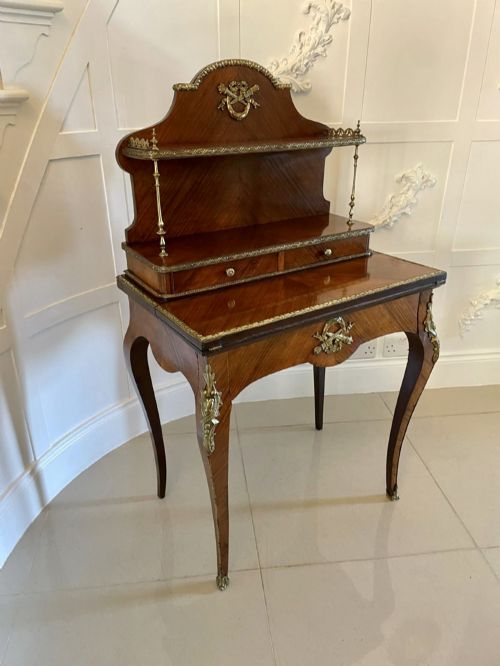
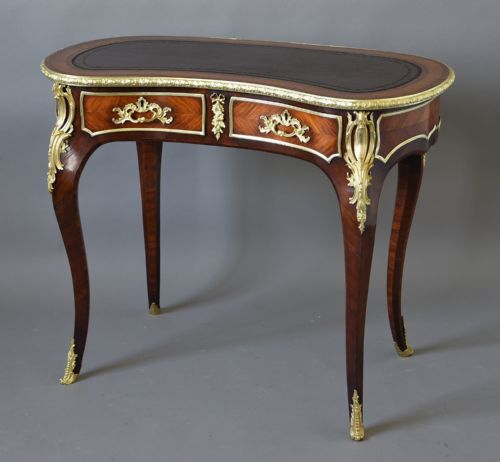
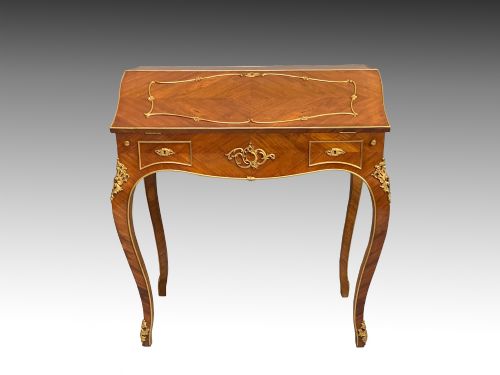
A parquetry ladies desk is a compact writing surface, often taking the form of a bonheur du jour, writing table, or bureau de dame. These pieces were designed for personal correspondence and light administrative duties in private chambers or drawing rooms.
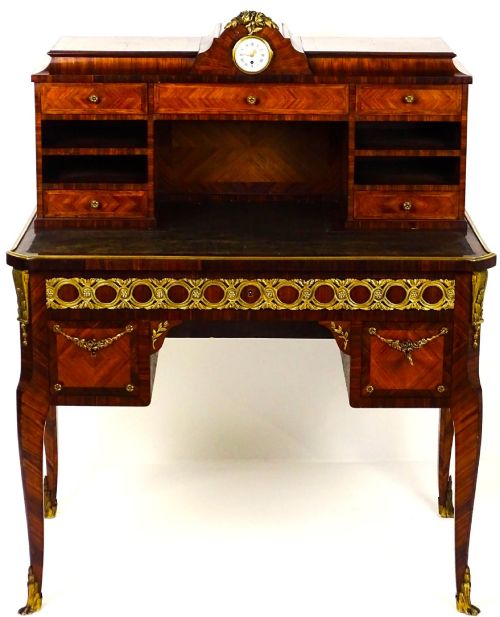
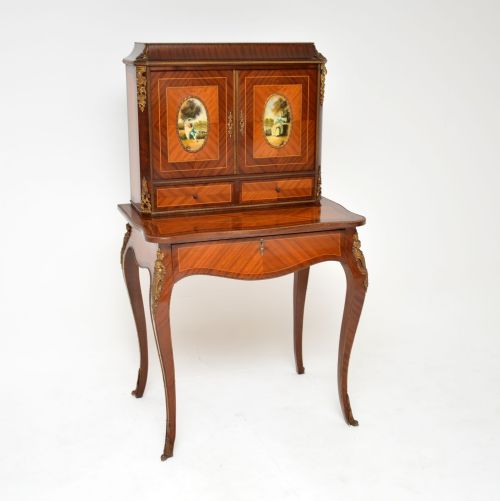
The versions most commonly met on this page span the nineteenth century, including Victorian interpretations and revival styles such as Louis XV and Louis XVI. They frequently combine writing surfaces with small shelving, drawers, or cabinetry above the main desk top.
The evidence shows these forms originating largely from French workshops and English makers influenced by continental designs. They serve today as functional writing spaces and decorative focal points in domestic interiors.
Materials and construction methods
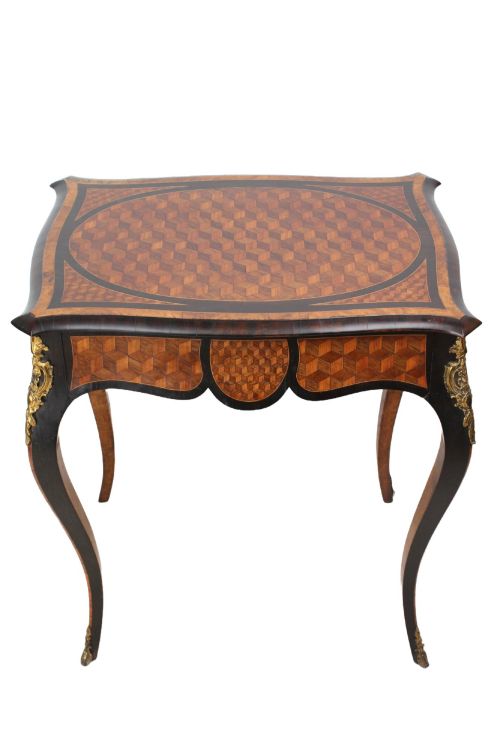
Makers constructed these desks using dense foundational timbers like kingwood and rosewood, onto which intricate geometric parquetry veneers were meticulously laid. This technique creates patterned wood surfaces that catch the light from different angles.
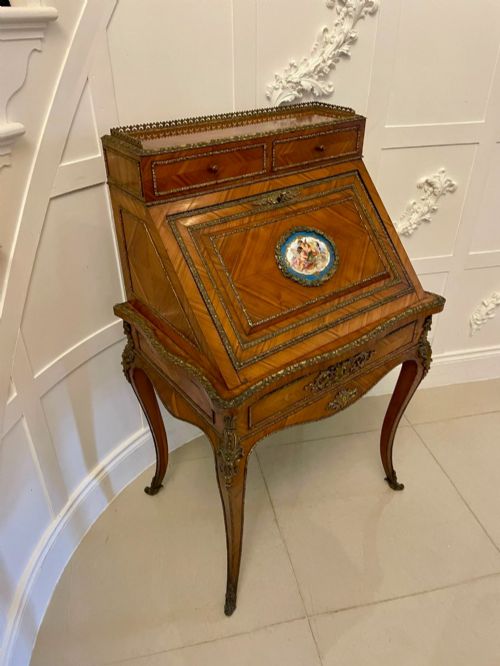
Metal embellishments, specifically ormolu and gilt bronze mounts, define the edges, legs, and drawer surrounds. Porcelain plaques, leather inserts, and painted panels occasionally integrate into the cabinetry to enhance the visual richness of the piece.
Listings feature eighteenth-century examples alongside Victorian interpretations, demonstrating enduring demand for French revival furniture forms.
Distinguishing quality across the range
The refinement of the parquetry pattern and the precision of the veneer work set exceptional desks apart from standard examples. Closely fitted joints and smooth movement in the drawers demonstrate the skill of the original cabinetmaker.
The quality and weight of the ormolu mounts, along with the inclusion of hand-painted porcelain plaques or Sevres panels, indicate a higher tier of production. Maker attribution, such as pieces associated with established firms, further distinguishes the top of the range.
JAS Shoolbred·Paul Sormani
The Parquetry Ladies Desk Glossary
- Parquetry
- A geometric mosaic of wood veneer arranged in patterns such as cubes or chequers. This technique decorates the primary surfaces of the desk.
- Kingwood
- A dense, richly grained tropical timber used extensively for fine cabinetmaking during the nineteenth century. It provides the dark, figured background for parquetry work.
- Ormolu
- Gilt bronze mounts cast and chased to embellish furniture frames and corners. These metal fixtures highlight the structural lines of the desk.
- Bonheur du jour
- A small writing desk featuring a tiered superstructure with shelves, drawers, or a cabinet above the writing surface. The phrase translates from French as day's happiness.
- Bureau plat
- A freestanding writing table fitted with one or more drawers in the frieze. These tables typically feature finished backs for placement in the centre of a room.
- Vernis Martin
- A type of simulated Japanese lacquer developed in France, used on decorative panels. It adds lustrous colour and pictorial detail to the cabinetry.
Parquetry Ladies Desk: Frequently Asked Questions
What is a bonheur du jour?
A bonheur du jour is a light, elegant writing desk featuring a small cabinet or shelving superstructure above the writing surface.
These pieces emerged in eighteenth-century France and remained popular through the Victorian revival periods for correspondence and letter-writing.
How do I care for kingwood veneer?
Kingwood veneer requires gentle dusting with a soft, dry cloth and protection from direct sunlight and extreme temperature changes.
Avoiding silicone polishes preserves the natural finish and prevents the wood from drying out over time.
Where were these desks placed?
These desks were designed for private sitting rooms, boudoirs, or drawing rooms where ladies managed personal correspondence.
Freestanding models were often positioned away from walls to display the finished parquetry on all sides.
How do I distinguish revival styles?
Louis XV revival pieces display flowing asymmetrical curves and naturalistic ormolu mounts, whereas Louis XVI revival items feature stricter symmetry and neoclassical straight lines.
Examining the complexity of the parquetry and the crispness of the bronze casting helps identify the specific aesthetic influence.