


Parquetry Geometric Side Table
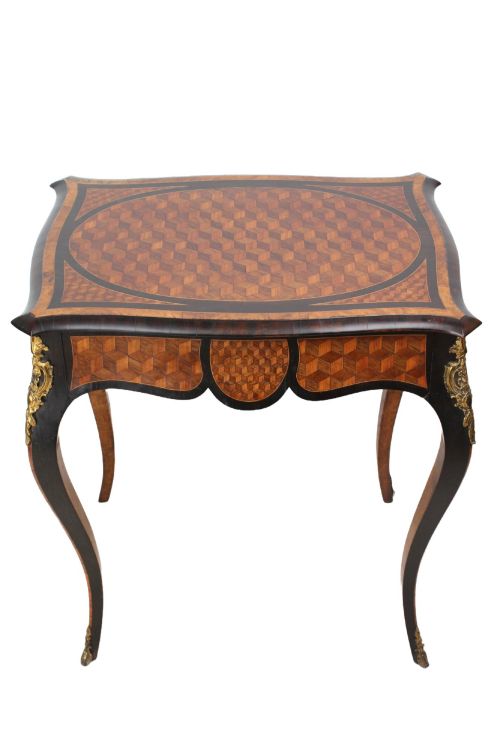
A parquetry geometric side table brings together meticulous timber placement and practical surface area, offering a distinctive focal point for any room.
Parquetry Geometric Side Table
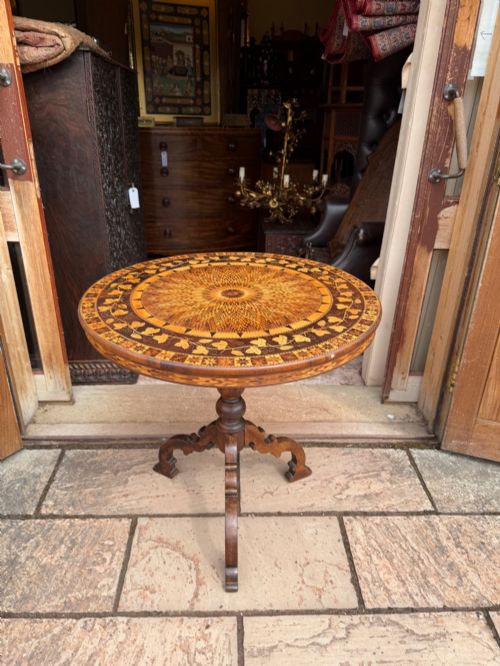
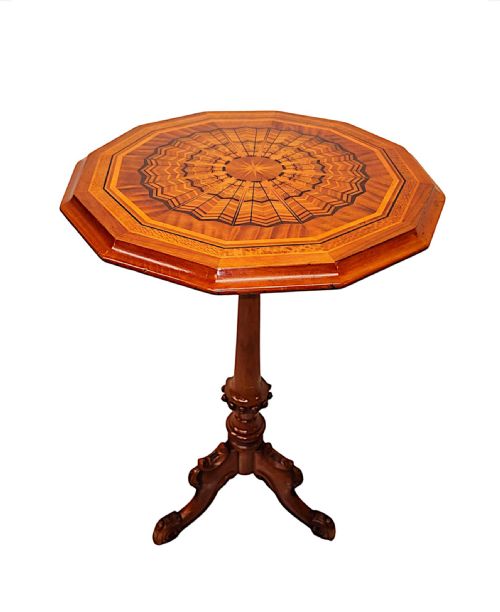
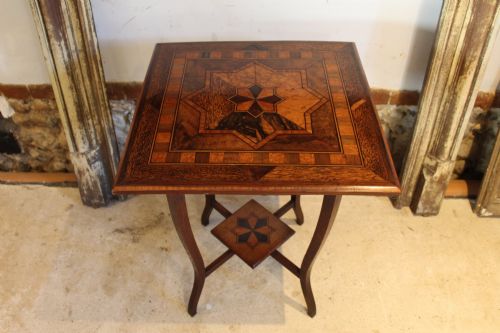
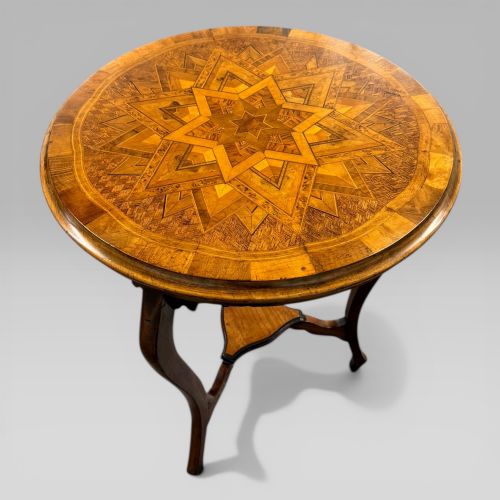
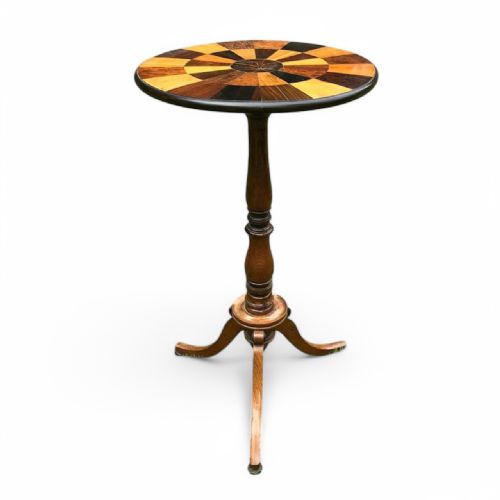
A parquetry geometric side table is a small surface built to display intricate wood veneers arranged in angular, repeating patterns. When searching for a parquetry geometric side table, buyers encounter formats ranging from round pedestal occasional tables to square or octagonal hall and centre tables.
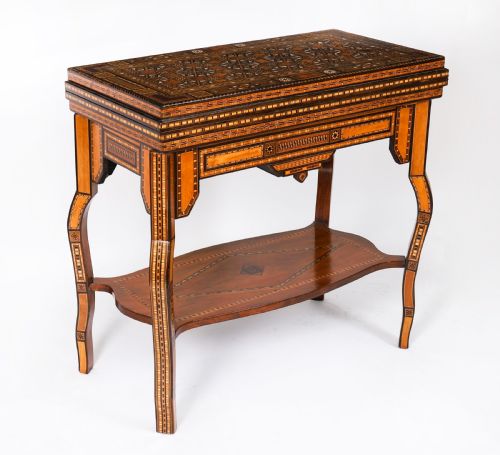
The pieces appearing on this page span several centuries, with nineteenth-century Victorian examples appearing most frequently alongside twentieth-century items. Makers utilised diverse forms such as folding games tables, compact bedside units, and occasional lamp tables.
Origins vary widely across the selection, encompassing English workshops, French regional makers, Italian Sorrento pieces, and colonial New Zealand native timber productions. Walnut, oak, and mahogany frequently form the sturdy structural bases beneath the detailed geometric tops.
Construction and Materials
Craftsmen built these tables using a solid structural frame of oak, walnut, or mahogany to support the decorative upper surfaces. Geometric tops rely on precisely cut slices of contrasting timbers laid out in repeating patterns.
Makers selected a broad palette of contrasting woods including rosewood, satinwood, fruitwood, and specialised specimen woods. Individual veneer pieces were fitted tightly together by hand before being glued to a stable secondary backing.
Certain examples incorporate brass fittings, turning techniques on central pedestals, or tripod legs to provide stability. The meticulous arrangement of timber grains allows natural light to catch different sections of the geometric design at varying angles.
A remarkably inventive Victorian combination piece merges a geometric parquetry table with a fully functional smokers' cabinet.
Assessing Quality and Execution
Quality in these pieces rests primarily on the precision of the veneer work and the tightness of the geometric joints. Superior examples display seamless alignment where individual wood pieces meet, showing no unsightly gaps or thick filler.
Provenance and attribution to known makers elevate certain tables above standard production pieces. Master craftsmen achieved complex pictorial or geometric harmony that remained stable across decades of environmental changes.
JAS Shoolbred·Gillows·Anton Seuffert
The Parquetry Geometric Side Table Glossary
- Parquetry
- Geometric mosaic woodwork formed by small veneer pieces laid down in repeating patterns to decorate a surface. It creates distinct visual depth through the contrast of different timber species.
- Specimen Wood
- Timbers gathered from various global sources, often exotic, used collectively in a single piece of furniture. Their contrasting natural colours highlight the intricate patterns of the tabletop.
- Occasional Table
- A small, portable table designed for specific, intermittent use within a room rather than a permanent dining or workspace. These often take the form of lamp tables or bedside stands.
- Pedestal Table
- A standalone table supported by a single central column rising from a stable foot or tripod base. This design allows maximum legroom around the perimeter of the surface.
- Veneer
- A thin layer of fine wood applied over a coarser secondary timber base to provide a decorative exterior. Master cabinetmakers sliced these sheets precisely by hand during earlier centuries.
Parquetry Geometric Side Table: Frequently Asked Questions
How do I date a parquetry table?
Dating relies on examining the secondary timbers used in the internal frame, the hand-cut nature of the veneers, and the overall construction style. Nineteenth-century examples often feature dense walnut or mahogany bases combined with distinct Victorian design motifs.
Earlier seventeenth-century pieces display heavier oak structures and simpler, robust geometric layouts. Comparing the specific joinery techniques to documented historical periods helps narrow down the decade of creation.
Were these tables used for games?
Many surviving examples double as multifunctional surfaces designed to accommodate card playing, chess, or backgammon alongside standard daily use. Cleverly hinged tops often fold open or lift off to reveal specialised playing surfaces inlaid directly into the wood.
Compact dimensions made these pieces easy to move near a hearth or window for evening entertainment. The incorporation of hidden compartments or drawers further aided the storage of gaming pieces.
How should I care for a geometric veneer top?
Maintenance requires keeping the timber away from direct sunlight and extreme humidity fluctuations to prevent the delicate veneers from lifting. Regular dusting with a soft, dry cloth preserves the natural lustre without building up heavy chemical residues.
Occasional application of appropriate furniture wax helps nourish the older wood surfaces. Avoiding placement near active heat sources protects the historical glue beneath the intricate geometric patterns.
What is the difference between marquetry and parquetry?
Parquetry specifically utilises geometric, angular shapes like squares, triangles, and diamonds to create repeating abstract patterns across a surface. Marquetry involves curved, pictorial designs that often depict flowers, landscapes, or scrolling foliage.
While both techniques employ thin wood veneers applied to a sturdy base, their visual effects differ entirely. Geometric parquetry emphasises mathematical precision and timber contrast.