


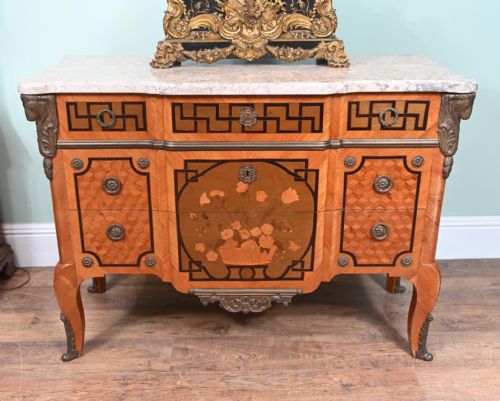


Parquetry French Sideboards
Parquetry french sideboards bring geometric wood patterns and marble surfaces together, offering sturdy storage with distinct continental character.
Parquetry French Sideboards
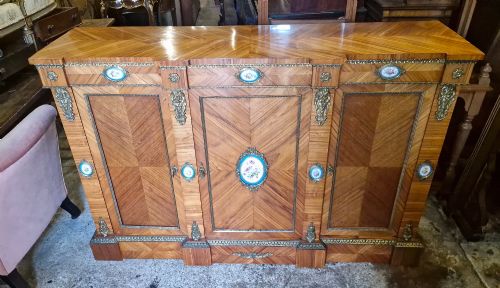
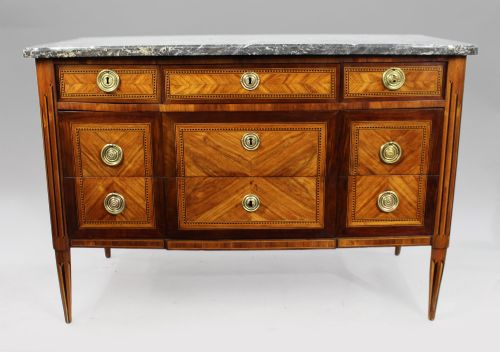
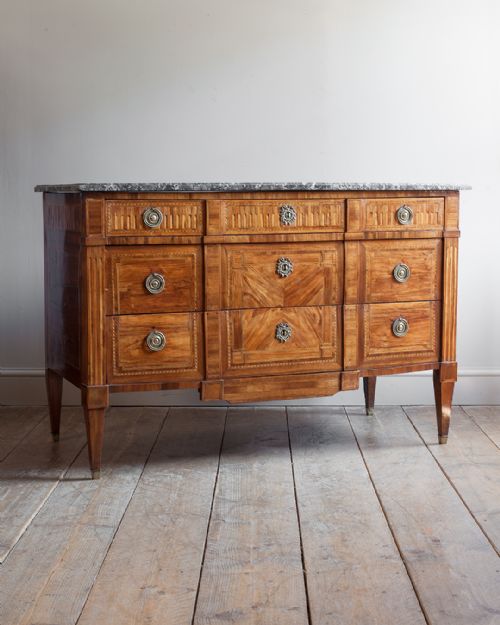
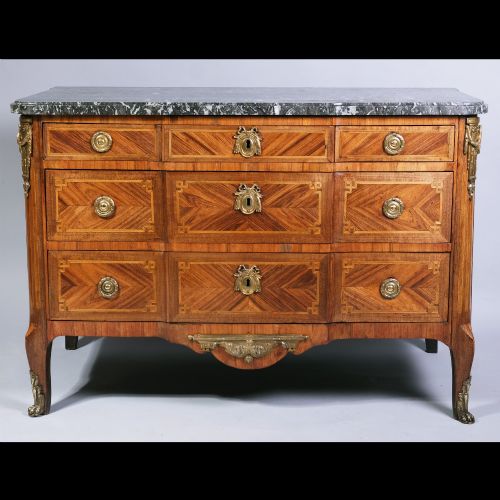
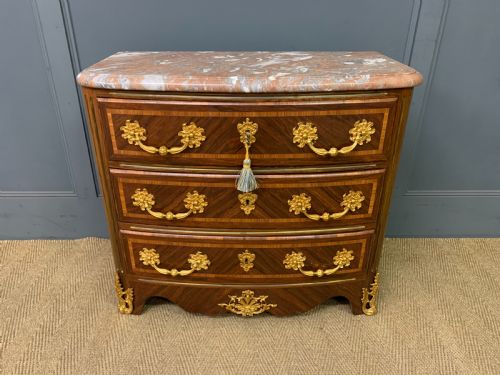
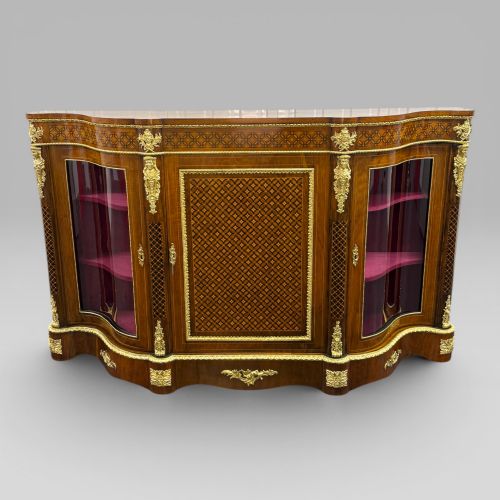
Parquetry french sideboards encompass a variety of case furniture designed for storage, appearing frequently as marble-topped commodes, side cabinets, and credenzas.
The pieces span the eighteenth, nineteenth, and early twentieth centuries, drawing heavily on Louis XV and Louis XVI styles alongside later revivals.
Buyers seeking parquetry french sideboards typically encounter low chests of drawers and cabinets featuring geometric wood veneers and stone surfaces.
How they were made
Cabinet makers built these pieces using foundational timbers like walnut, mahogany, oak, and satinwood, applying decorative veneers of kingwood and tulipwood in precise geometric patterns.
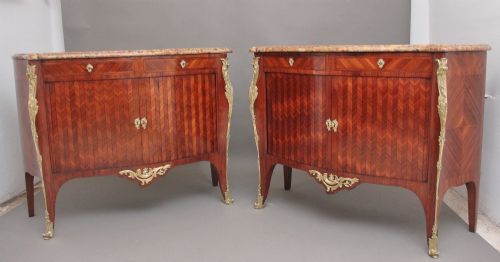
Slabs of marble, including scagliola varieties, formed the upper surfaces, while cast brass and ormolu mounts added structural embellishment to corners and feet.
Parquetry French Sideboards Retail Price Guide 2026
Typical asking prices for parquetry french sideboards among the pieces listed under this phrase on Sellingantiques today, from the lower quarter to the upper quarter. They describe what is for sale here now, not the wider market.
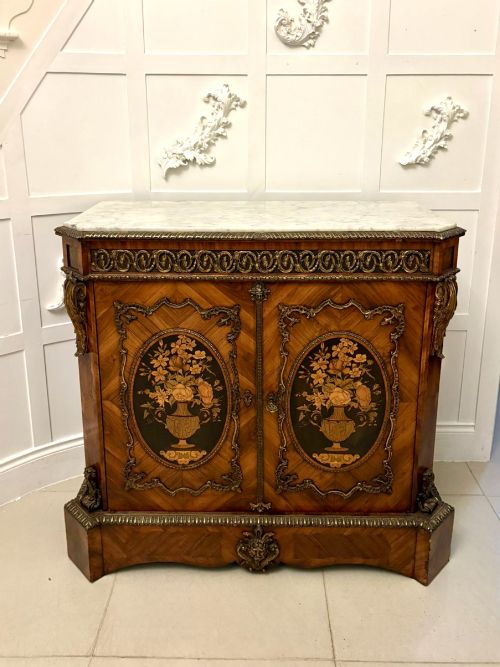
Several cabinets manage to conceal multiple drawers behind two simple doors, maintaining a smooth uninterrupted veneer front.
What varies in quality
The precision of the veneer work and the complexity of the geometric parquetry layout separate standard examples from finer outputs.
The weight and casting definition of the ormolu mounts, together with the thickness and finish of the marble top, indicate the standard of production.
Maison Gagneau·Paul Sormani·Edmond Poteau
The Parquetry French Sideboards Glossary
- Parquetry
- A geometric mosaic of wood pieces used for decorative surfaces. It creates patterned tabletops and drawer fronts.
- Ormolu
- Gilded bronze applied as mounts and decorative hardware. This technique adds metallic contrast to the wooden frame.
- Commode
- A low chest of drawers or cabinet with legs. These pieces typically feature decorative veneer and stone tops.
- Kingwood
- A dense, dark exotic timber with rich grain patterns. Cabinet makers utilised it for contrasting borders and main veneers.
- Bombe
- A swelling, convex contour on the front and sides of a cabinet. This curved shape defines specific eighteenth-century forms.
Parquetry French Sideboards: Frequently Asked Questions
How do I spot a Louis XV style piece?
Louis XV pieces typically display curved serpentine lines, cabriole legs, and asymmetrical mounts. These elements create a flowing visual movement across the front and sides.
Cabinet makers often paired these organic shapes with floral marquetry or lighter wood veneers to soften the overall appearance of the cabinet.
Are marble tops original to these sideboards?
Most marble tops on these cabinets are original to the piece, cut specifically to follow the contours of the wooden carcase. They provided a durable, decorative surface for serving or displaying objects.
Replacement marble is sometimes found on nineteenth-century revivals where the original stone suffered accidental breakage over time.
What is the difference between parquetry and marquetry?
Parquetry uses small geometric pieces of wood to create repeating patterns like cubes, chevrons, or squares. It relies entirely on straight lines and angles.
Marquetry employs veneers to form pictorial scenes, urns, or floral sprays, incorporating curves and varied timber colours for illustration.
How do I care for kingwood and walnut surfaces?
Maintain the timber by keeping the piece away from direct heat sources and strong sunlight, which can fade the natural wood tones. Regular dusting with a dry cloth prevents dirt build-up.
Apply a microcrystalline wax sparingly once or twice a year to nourish the polish without leaving a heavy residue on the parquetry.