





Parquetry End Tables
Parquetry end tables bring geometric timber work to living spaces, offering practical surfaces through intricate wood patterns that catch the eye.
Parquetry End Tables
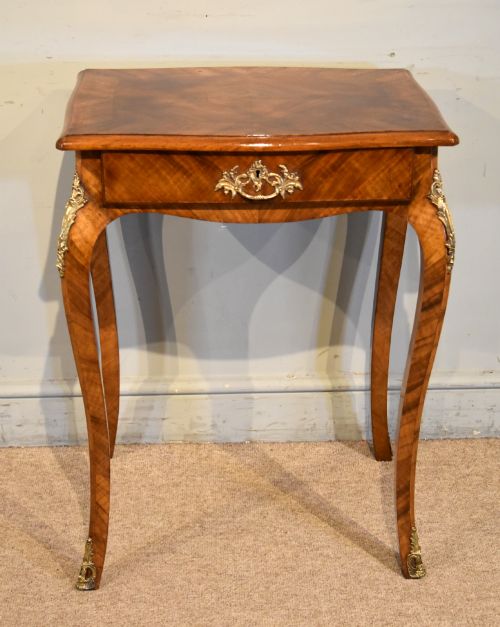
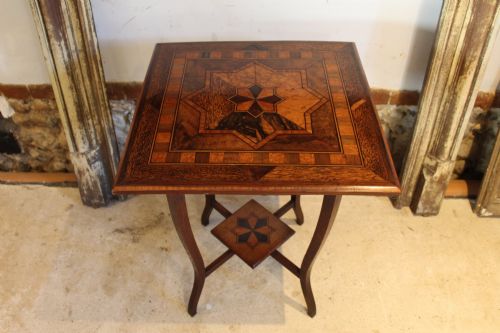
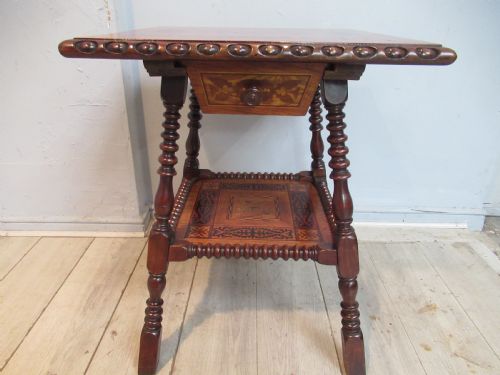
Parquetry end tables encompass side tables, bedside tables, and lamp tables adorned with geometric wood mosaics. You will frequently encounter nineteenth century and early twentieth century examples drawing on French Louis styles.
These pieces function as compact side surfaces, often shaped in kidneys, rectangles, or nests. Walnut, kingwood, and satinwood frequently form the foundation of these versatile occasional tables.
How they were made
Craftsmen built these tables using timber veneers carefully arranged in geometric patterns across the top surface. Woods such as kingwood, satinwood, and walnut provided contrasting natural tones for the detailed parquetry designs.
Many examples incorporate brass and ormolu mounts to accent the wooden structures. Some pieces combine the geometric veneer work with floral inlay or porcelain plaques for added visual texture.
Parquetry End Tables Retail Price Guide 2026
Typical asking prices for parquetry end tables among the pieces listed under this phrase on Sellingantiques today, from the lower quarter to the upper quarter. They describe what is for sale here now, not the wider market.
Materials recorded across the inventory include brass, kingwood, walnut, ormolu, satinwood, mahogany, and rosewood.
What varies in quality
The precision of the veneer work dictates the refinement of each piece, distinguishing simple surfaces from intricate compositions. Tighter joints and more complex geometric arrangements show greater skill in the workshop.
The choice of underlying woods and secondary materials influences the overall character of the table. Rich timbers like kingwood and rosewood paired with cast ormolu mounts indicate higher ambition in manufacture.
Charles Topino
The Parquetry End Tables Glossary
- Parquetry
- A geometric mosaic of wood veneers used for decorative surfaces, commonly seen on table tops. It relies on precise cutting and fitting of different timber species.
- Kingwood
- A dense, richly figured wood favoured by cabinetmakers for fine furniture. Its dark contrasting grain suits detailed veneering work.
- Ormolu
- Gilded bronze used for decorative mounts and accents on furniture. It frequently appears on pieces styled after French periods.
- Satinwood
- A light-coloured tropical timber prized for its lustrous sheen and smooth texture. It provides bright contrast in multi-wood inlay designs.
- Nest of tables
- A set of graduated occasional tables designed to fit neatly beneath one another. They save floor space while offering multiple surfaces when needed.
Parquetry End Tables: Frequently Asked Questions
What is parquetry?
Parquetry is a technique where small pieces of wood veneer are fitted together to create geometric patterns on furniture surfaces. This method creates decorative designs like cubes, chevrons, and diagonals.
Cabinetmakers use contrasting timber colours to give these patterns a three-dimensional appearance on table tops.
Where should I place an end table?
These tables fit easily beside a sofa, armchair, or bed to hold lamps, books, and small decorative objects. Their compact proportions make them useful in tighter spaces where larger furniture does not fit.
Matching the wood tone to existing room elements helps the piece integrate naturally into your interior.
How do I clean a veneered table?
Dust the surface regularly with a soft, dry cloth to prevent dirt accumulation in the veneer joints. Avoid using harsh chemical cleaners or excessive water, which can damage old timber and lift the veneer.
Applying a suitable furniture wax occasionally helps preserve the sheen of the wood.
What periods do these tables come from?
The pieces span the nineteenth century and the mid-twentieth century, with styles often reflecting earlier French designs like Louis XV and Louis XVI. Victorian and Edwardian examples are common.
Design influences range from ornate revival styles to cleaner twentieth century proportions.