
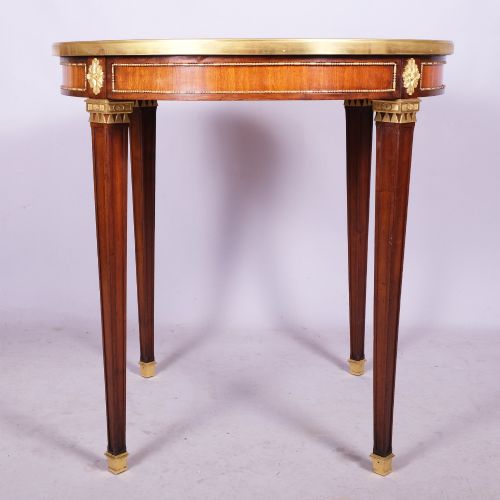
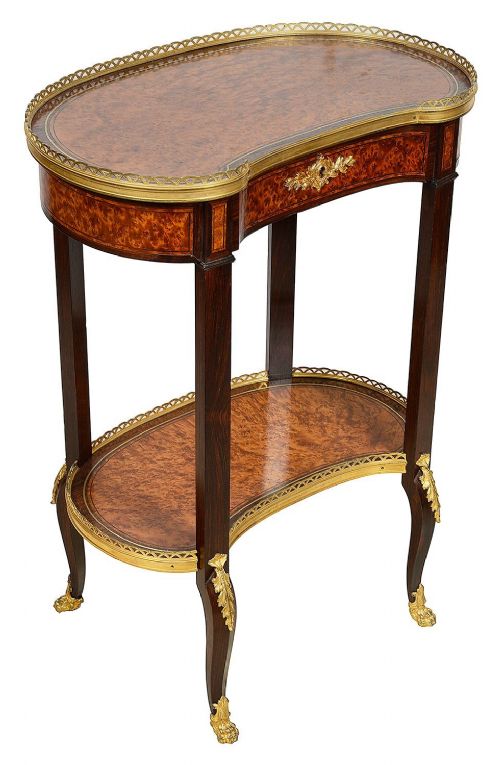
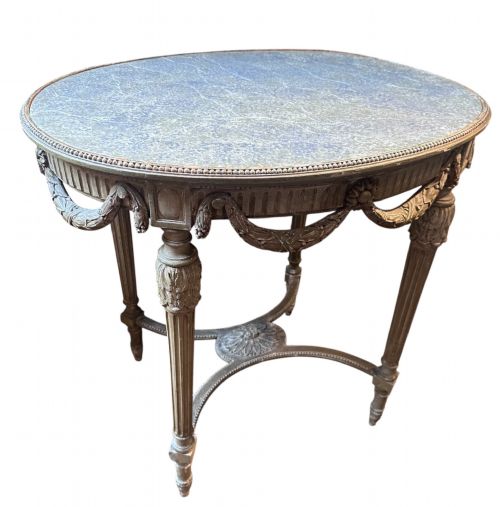

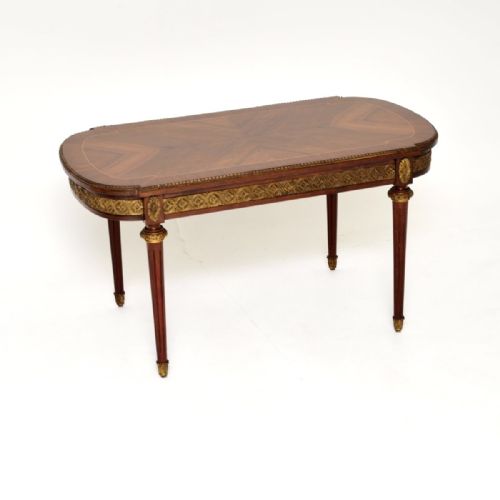


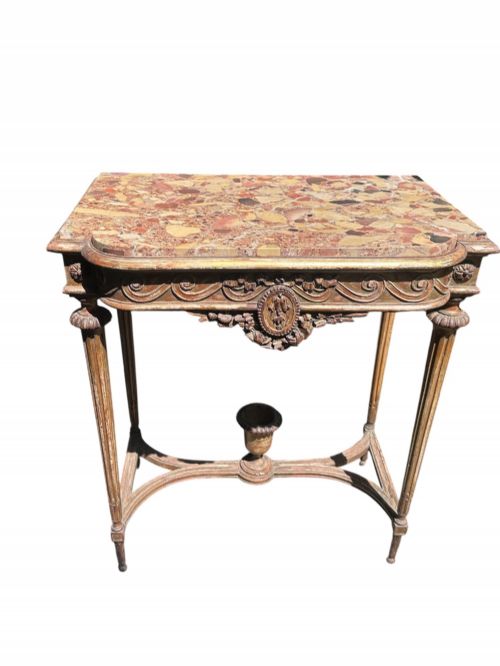
Louis XVI Occasional Table
These pieces bring refined French neoclassical proportion to domestic spaces, offering a compact surface suited to lamps, drinks or display.
Louis XVI Occasional Table
A louis xvi occasional table provides a smaller surface than a formal dining piece, taking the form of side tables, gueridons, and bedside stands. These items emerge primarily from nineteenth-century revival periods, channelling neoclassical restraint through symmetrical lines and restrained ornamentation.
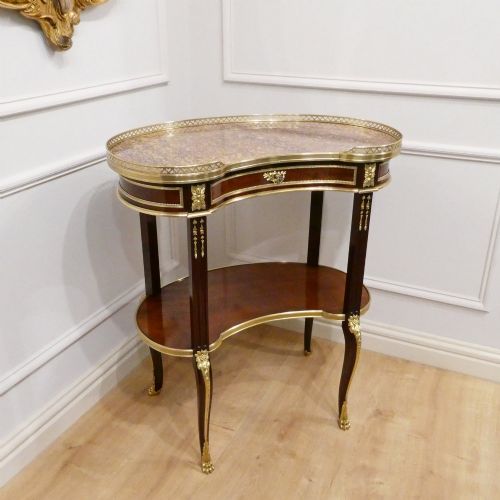
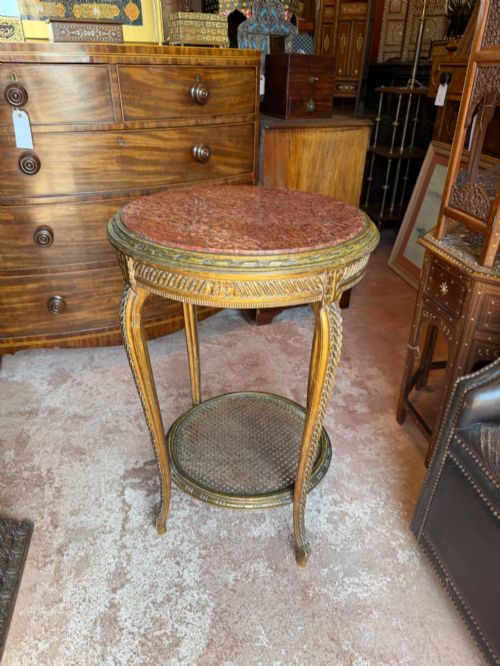
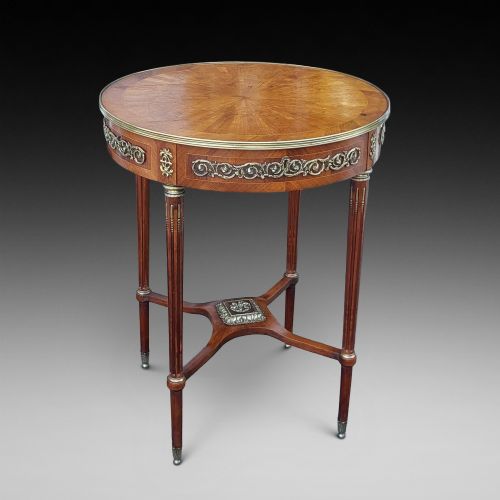
Makers often shaped these surfaces into round, oval, or square configurations, frequently incorporating marble tops surrounded by pierced brass galleries. Examples span from simple mahogany side tables to elaborate kingwood pieces with marquetry inlays.
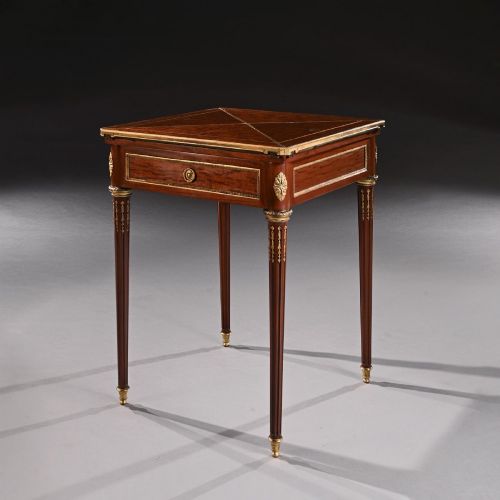
The selection includes specialised forms such as envelope card tables, bijouterie cases with glass panels, and bouillotte tables designed for card games under candlelight.
Materials and construction
Cabinetmakers constructed carcass frames from timbers such as mahogany, walnut, rosewood, and satinwood, frequently applying veneers of kingwood and tulipwood to create intricate marquetry patterns. Hardwoods provided structural stability while exotic veneers supplied surface visual interest.
Cast ormolu and brass mounts define the aesthetic, applied to corners, legs, and aprons to accentuate structural joints. White and coloured marble slabs inset into wooden tops required precise stone-cutting techniques to fit galleried rims.
Louis XVI Occasional Table Retail Price Guide 2026
Typical asking prices for louis xvi occasional table among the pieces listed under this phrase on Sellingantiques today, from the lower quarter to the upper quarter. They describe what is for sale here now, not the wider market.
Materials documented across the listings include mahogany, walnut, rosewood, kingwood, tulipwood, satinwood, brass, ormolu, onyx, and white marble.
Gradations of quality
The refinement of the ormolu mounts separates standard production from exceptional examples, with chased and gilded bronze displaying sharper detail than cast brass. Hand-cut marquetry using multiple contrasting timbers demonstrates greater labour investment than simpler veneering.
Structural integrity reveals itself in the joinery of legs and the weight of inset marble or onyx tops. Tables carrying signatures or attributions to prominent Parisian workshops generally command higher regard for their execution.
Maison Millet·Antoine Lampre·Tehan·A Hugnet Paris·F Linke
The Louis XVI Occasional Table Glossary
- Gueridon
- A small circular table on a central pillar or three legs, frequently topped with marble and edged with a brass gallery.
- Ormolu
- Gilded bronze mounts applied to furniture for decorative accent, characteristic of French neoclassical cabinetwork.
- Marquetry
- Decorative patterns formed by the insertion of pieces of veneer into a master wood structure.
- Bouillotte
- A small neoclassical table with a raised rim, designed originally for the card game of the same name.
- Bijouterie table
- A glass-topped display table intended for the exhibition of small valuables and trinkets.
Louis XVI Occasional Table: Frequently Asked Questions
Where should I place an occasional table?
These tables fit easily beside a sofa, armchair, or bed, providing a convenient surface for lamps, books, or small decorative items.
Their compact footprints allow them to inhabit empty corners or hallways without crowding a room.
How do I clean a marble top?
Wipe the surface gently with a soft damp cloth using mild soap, avoiding acidic cleaners that can etch the stone.
Dry the marble thoroughly afterwards to maintain its polish and prevent water spotting.
Are these tables genuinely eighteenth century?
Most pieces belonging to this category date from the nineteenth-century revival periods rather than the original reign of Louis XVI.
Nineteenth-century cabinetmakers drew heavy inspiration from eighteenth-century designs, utilising similar woods, mounts, and motifs.
What is a gallery top?
A gallery is a raised decorative rim, usually made of perforated brass or cast ormolu, encircling the edge of the table surface.
This feature historically prevented items from rolling off the table when moved or used.