
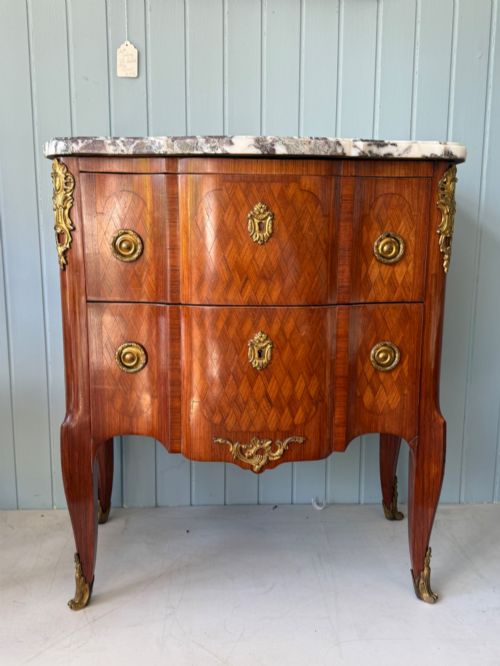
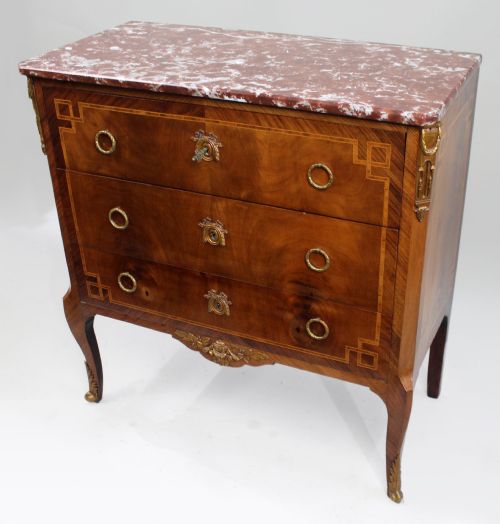
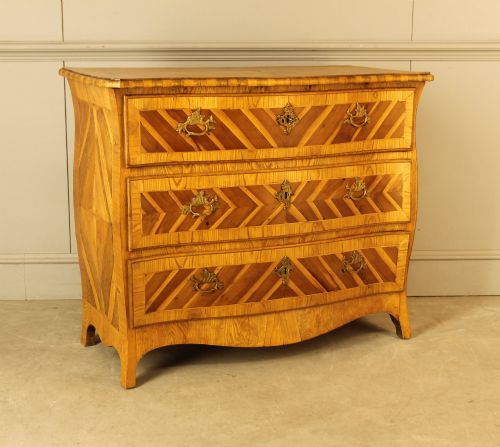
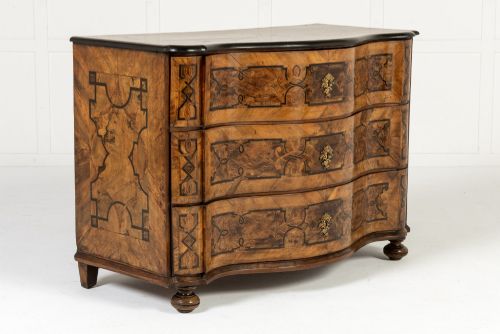
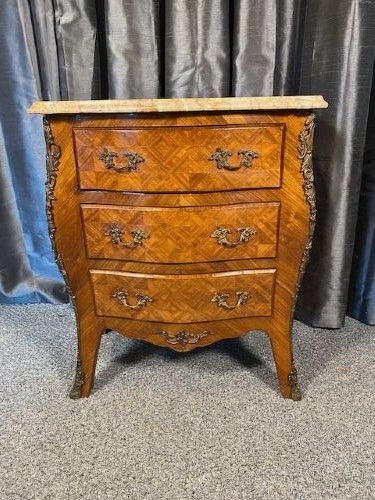
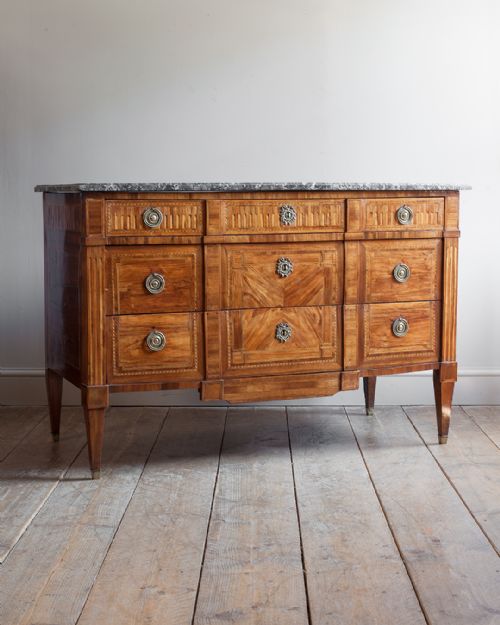
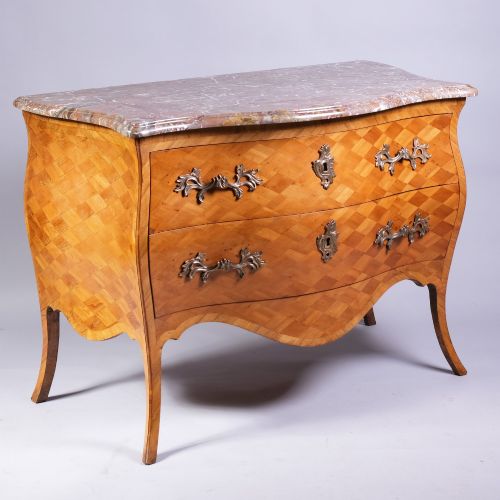
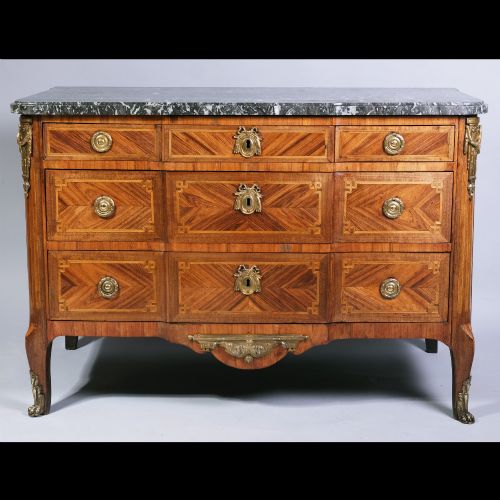
Parquetry Commode Chest
When you search for a parquetry commode chest, you are seeking a timber-fronted storage piece defined by geometric wood veneers and polished stone.
Parquetry Commode Chest
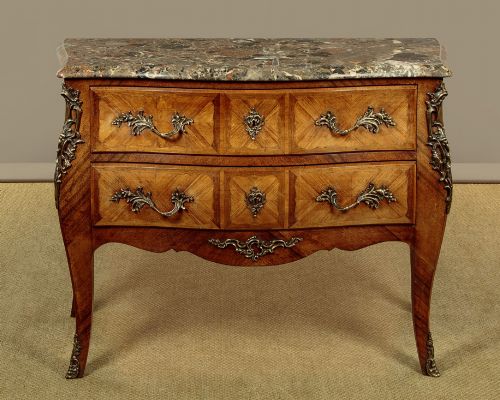
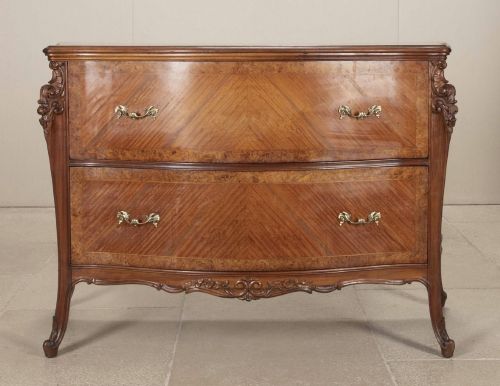
A parquetry commode chest functions as a low storage cabinet or drawer unit, frequently surfaced with fitted marble. These items appear across eighteenth, nineteenth, and early twentieth-century workshops, primarily drawing on French design traditions.
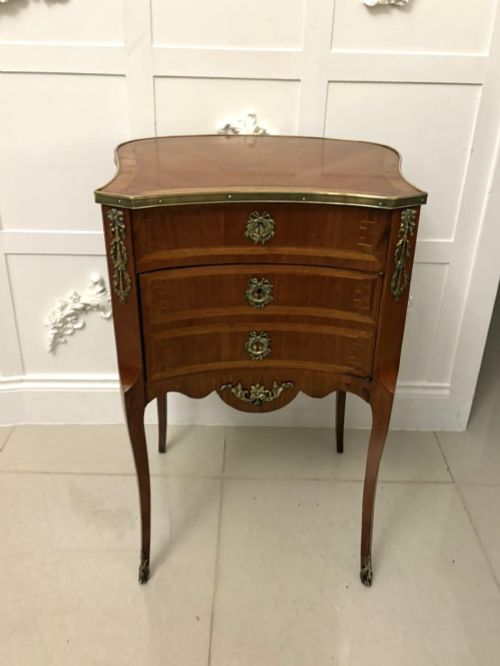
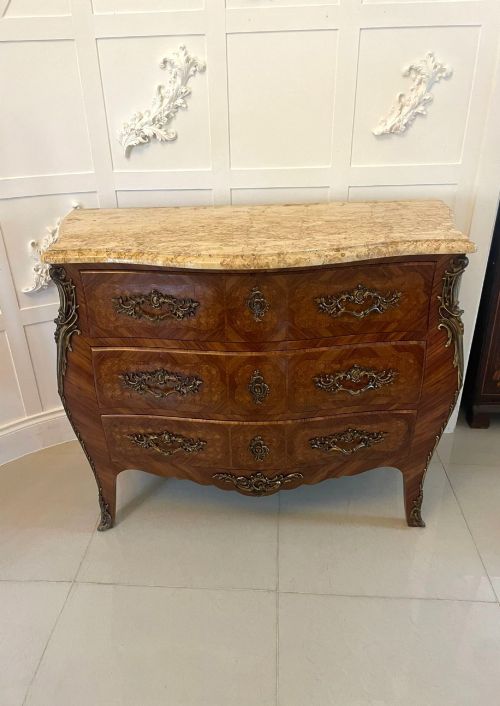
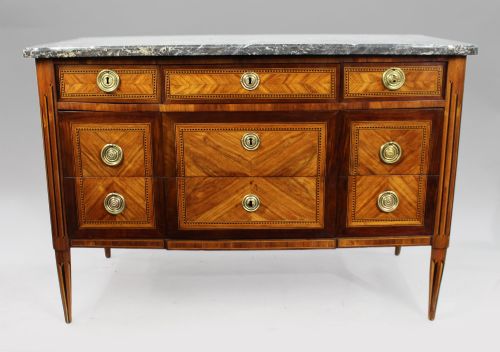
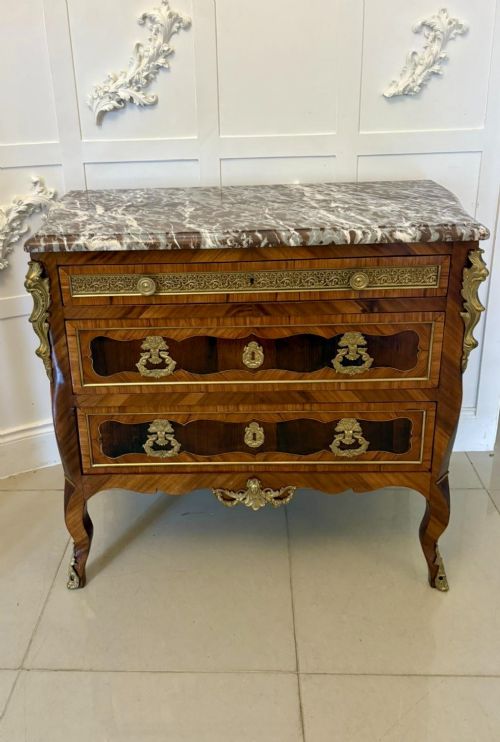
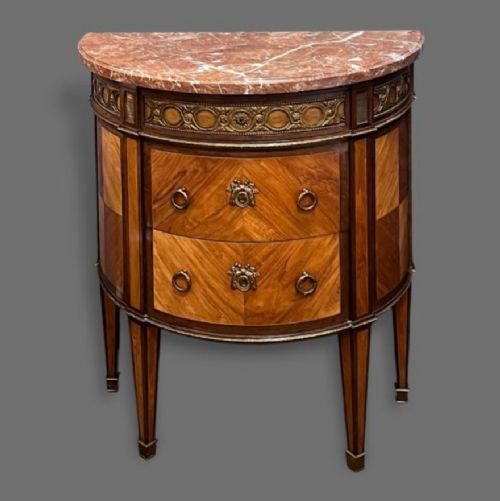
The physical format ranges from serpentine and bombé silhouettes to straight-fronted bedside cabinets and side tables. French Louis XV and Louis XVI aesthetics dominate the selection, bringing curved lines or restrained neoclassical geometry to domestic interiors.
How they were made
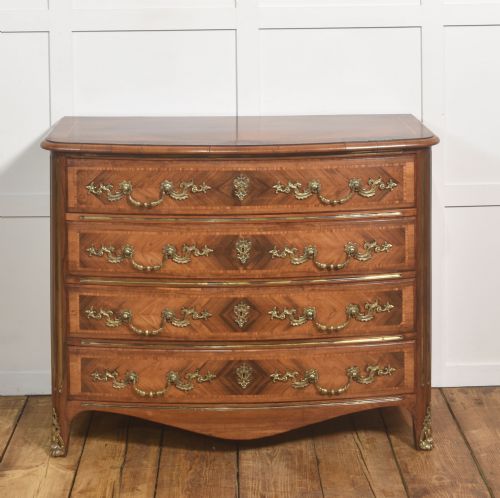
Cabinet makers constructed carcass frames from timbers such as walnut or fruitwood, subsequently applying decorative veneers of kingwood, tulipwood, and satinwood. Precise geometric arrangements formed the distinctive parquetry patterns across the drawer fronts and sides.
Finished surfaces frequently incorporate heavy slabs of marble, secured to the top of the cabinet. Gilded bronze and ormolu mounts accentuate the corners, handles, and apron feet of continental examples.
Listings feature eighteenth-century pieces alongside nineteenth-century revivals, utilising kingwood, tulipwood, walnut, and marble.
What varies in quality
The precision of the veneer work dictates the standing of an individual parquetry commode chest. Master workshops achieved tight geometric alignment and seamless grain matching across complex curves, whereas simpler pieces relied on repetitive, straightforward layouts.
The choice of secondary materials marks distinct tiers of production. Heavy cast ormolu mounts, thick original marble slabs, and dense exotic timber veneers separate ambitious continental commissions from more modest regional furniture.
Sormani
The Parquetry Commode Chest Glossary
- Parquetry
- A mosaic of geometric wood veneer pieces arranged to form patterns on furniture surfaces. This technique creates visual depth through contrasting timber tones.
- Commode
- A low French chest of drawers designed for domestic storage. These pieces typically stand on short legs and support a stone top.
- Bombe
- A swollen or bulging profile characteristic of eighteenth-century case furniture. This curved silhouette requires advanced woodworking skill to veneer accurately.
- Ormolu
- Gilded bronze used for decorative mounts and furniture hardware. The metal is cast and chased before receiving a gold wash.
- Serpentine
- A furniture front shaped with a central concave curve flanked by convex sweeps. This undulating line appears frequently on continental case pieces.
Parquetry Commode Chest: Frequently Asked Questions
Where did parquetry commodes originate?
Continental cabinet making traditions, particularly in France and Italy, established the primary forms for these decorative storage pieces. Workshops in Paris and regional centres refined the serpentine and bombé shapes during the eighteenth century.
Later revival periods in the nineteenth and early twentieth centuries continued these continental design templates for international markets.
Are all marble tops original?
Many surviving examples retain their heavy stone surfaces, which were cut specifically to follow the contours of the cabinet carcass. Edge profiles and mineral matching help indicate original integration.
Replacements occur due to the fragile nature of stone over centuries of domestic use.
How do I style a commode chest?
These low cabinets suit living rooms, hallways, or bedrooms where surface display space meets practical drawer storage. Placing mirrors or artwork above the marble top balances the visual weight of the timber base.
Their decorative wood veneers allow them to function as standalone statement pieces within modern or traditional interiors.
What is the difference between marquetry and parquetry?
Parquetry utilises geometric blocks of wood to construct repeating patterns like cubes or herringbone. Marquetry creates pictorial or floral scenes using varied veneer silhouettes.
Both techniques appear across these decorative storage cabinets, sometimes combined on the same drawer front.