
Kingwood Commode Chest
A kingwood commode chest brings sculptural French design and rich timber grain to an interior.
Kingwood Commode Chest
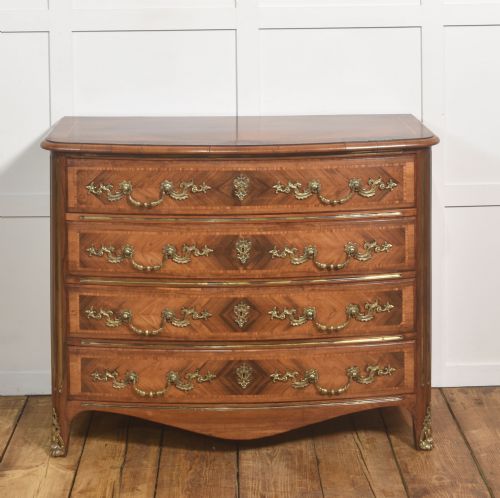
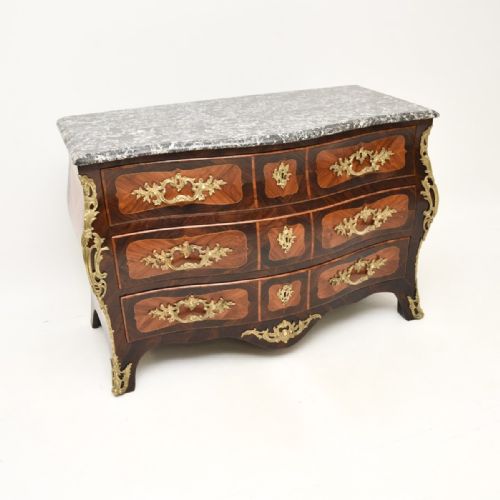
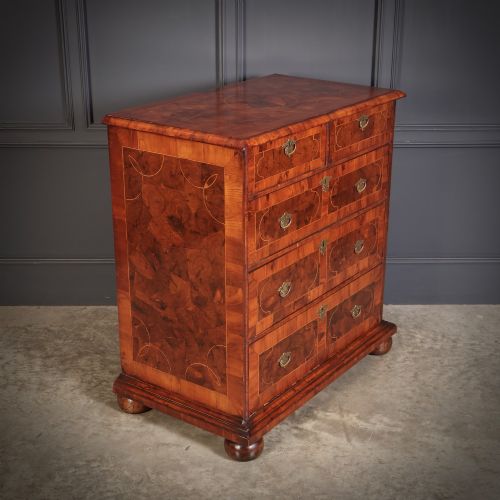
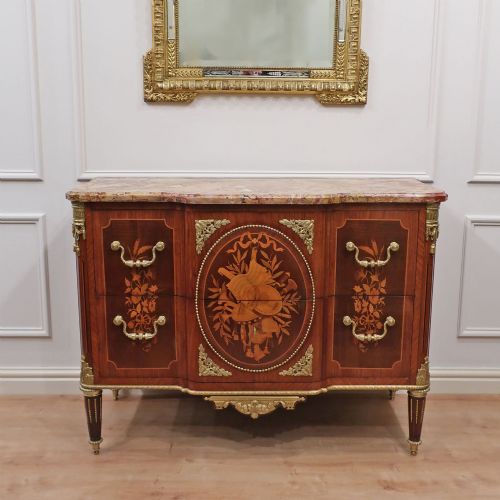
A kingwood commode chest functions primarily as a decorative storage lowboy or drawer unit, frequently topped with fitted marble slabs. These pieces emerge predominantly from French cabinet-making traditions, aligning with Louis XV and Louis XVI styles alongside later revival periods.
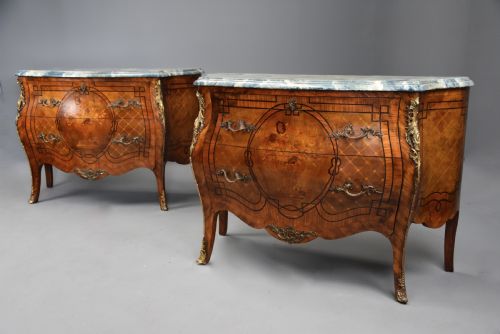
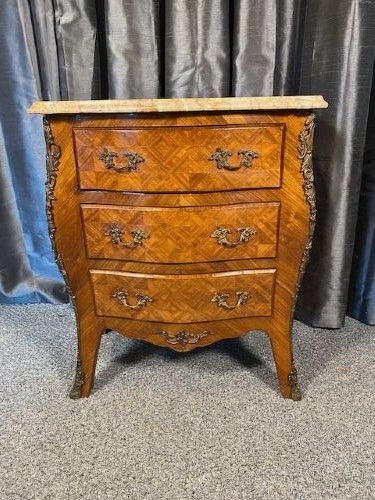
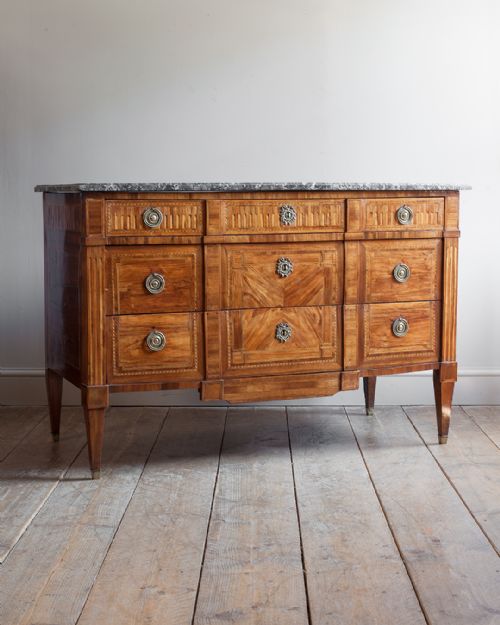
The inventory on this page spans from eighteenth-century originals to twentieth-century interpretations, taking shapes from straight serpentine fronts to swelling bombé profiles. Buyers encounter full-sized chests alongside smaller bedside cabinets and miniature furniture forms.
How They Were Made
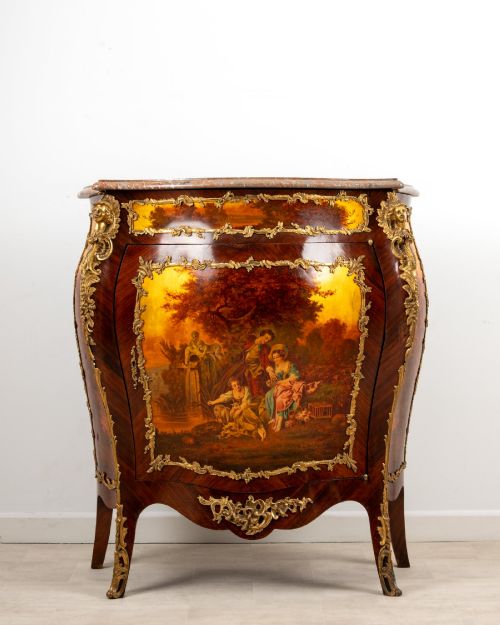
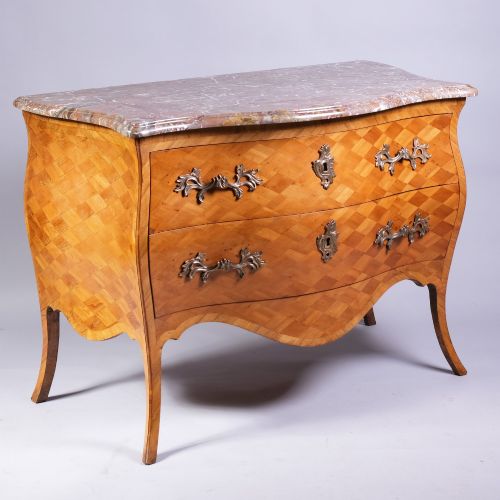
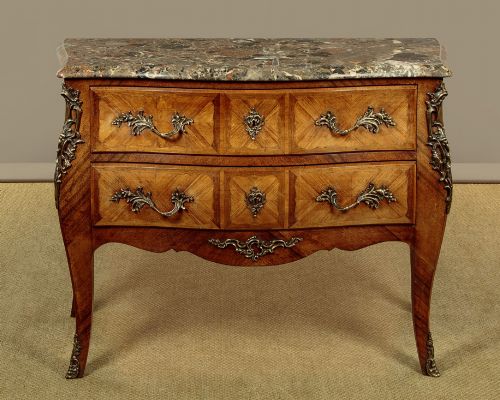
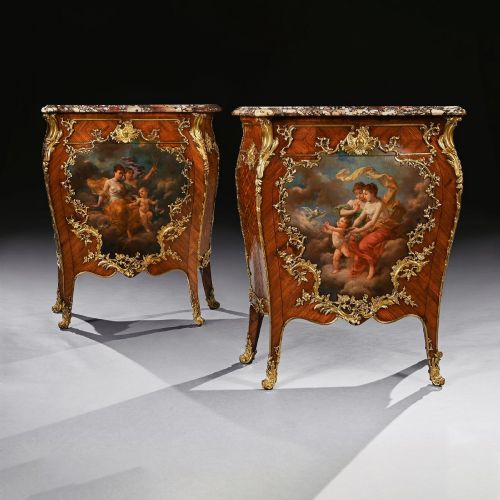
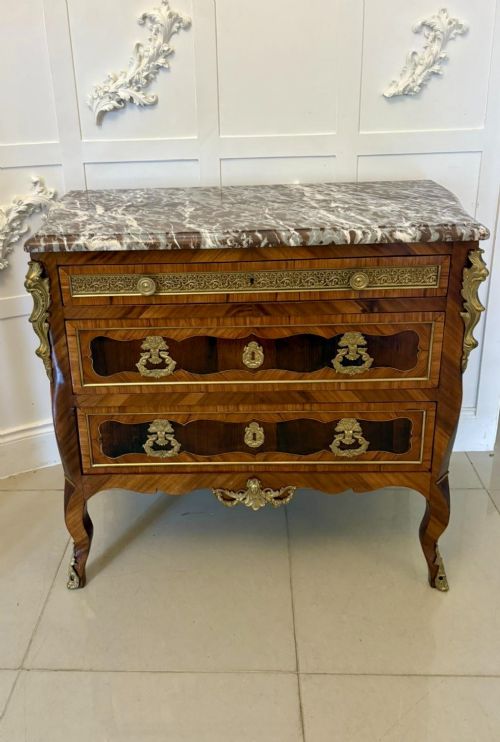
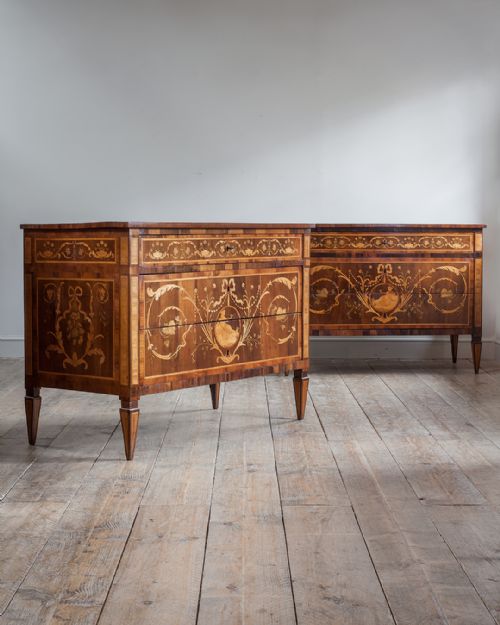
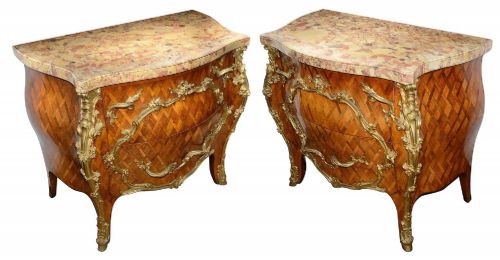
Craftsmen laid precious kingwood veneers in intricate parquetry and marquetry patterns over carcase woods like oak or pine, often incorporating floral motifs or geometric arrangements. Tops were customarily finished with heavy slabs of shaped marble.
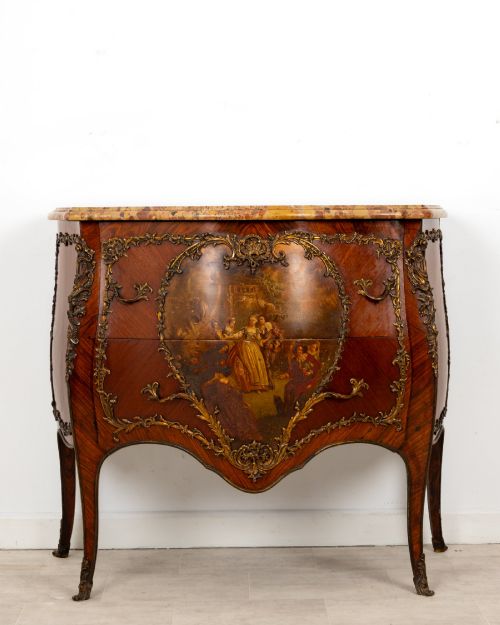
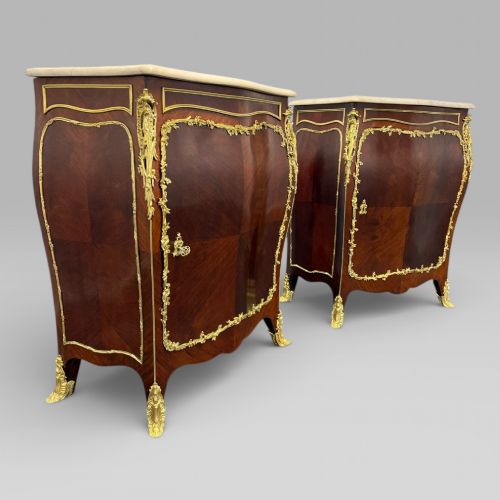
Cast ormolu and gilt bronze mounts accented the corners, handles, and aprons, while specific workshops utilised vernis martin painted panels to enrich the surface decoration.
Listings feature pieces incorporating kingwood, rosewood, walnut, marble, and gilt bronze across eighteenth to twentieth-century periods.
What Varies in Quality
Quality rests upon the precision of the veneer work and the crispness of the bronze or ormolu mounts fixed to the frame. Superior examples display seamless parquetry alignment across moving drawers and complex curved surfaces.
The weight and selection of the marble top, alongside the fluid execution of the bombé or serpentine timber shaping, separate standard production pieces from master workshop output.
Jacques Bircklé·E. Kahn·Sormani·Bruneau
The Kingwood Commode Chest Glossary
- Kingwood
- A dense, richly figured timber native to Brazil, prized for its dark violet-brown grain with lighter golden streaks. It was widely used by elite eighteenth-century French cabinet-makers.
- Bombe
- A swelling, outward-curving profile found on the sides and fronts of advanced case furniture. This curving form requires considerable skill in veneer application.
- Ormolu
- Gilt bronze decorative mounts applied to furniture edges and corners. High-grade examples feature hand-chiseled detailing after casting.
- Marquetry
- The art of forming decorative patterns using thin veneers of different coloured woods. It creates pictorial or geometric designs across the drawer fronts.
- Serpentine
- A shaped furniture front featuring a central concave curve flanked by two convex sweeps. This undulating line defines many classical commode designs.
Kingwood Commode Chest: Frequently Asked Questions
How do I care for marble tops?
Wipe marble surfaces regularly with a soft damp cloth and neutral soap, avoiding acidic cleaning agents that etch the stone.
Apply a protective stone wax periodically to maintain the polished finish against liquid rings.
Where were these pieces built?
Most pieces originate from Parisian workshops and regional French cabinet-makers working within established stylistic periods.
Selected examples also emerge from Italian and Swedish makers following continental design trends.
What rooms suit these chests?
These cabinets suit drawing rooms, bedrooms, and hallways as focal storage units beneath mirrors or artwork.
Compact bedside versions function well beside low sleeping berths.
How are periods identified?
Period attribution relies on construction methods, timber choice, mount design, and stylistic alignment with royal French reigns.
Revival pieces from later centuries adopt earlier forms whilst retaining nineteenth- or twentieth-century joinery traits.