




Paris Porcelain Figurine
A paris porcelain figurine brings nineteenth-century French cabinet display alive with glazed hard-paste ceramic, biscuit modelling and delicate hand-painted enamel detail.
Paris Porcelain Figurine
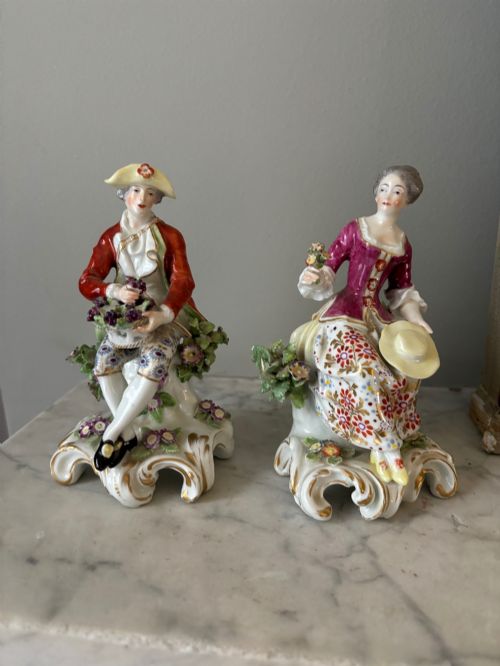
A paris porcelain figurine embodies the nineteenth-century taste for cabinet sculpture, taking the form of allegorical figures, street vendors, theatrical characters and romantic groups. These pieces emerge from the workshops of the French capital, spanning hard-paste bodies and unglazed biscuit porcelain.
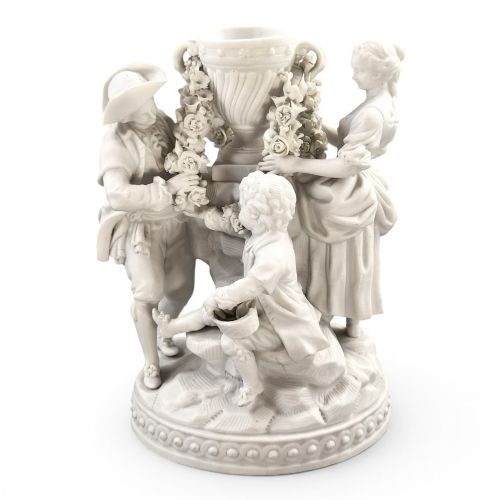
The objects seen on this page range from figures made by specific Parisian factories such as La Coutille to the celebrated revival pieces produced by Samson, which often emulate earlier English and continental models like Chelsea and Derby. Buyers encounter pairs and individual works featuring floral garlands, musical instruments and period costume.
Makers such as Letu and Mauger, Jacob Petit, and Vion et Baury contribute distinct sculptural forms, from figural perfume bottles to elaborate lace groups with harps. The selection reflects diverse nineteenth-century styles, including French Rococo Revival and Victorian Parian ware.
How they were made
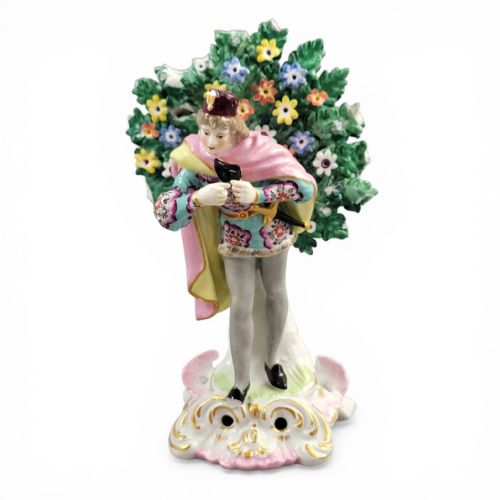
Makers utilised hard-paste porcelain and unglazed biscuit porcelain as the primary foundational materials for these sculptural objects. Moulds captured intricate details like facial expressions, drapery folds and naturalistic elements such as bocage foliage.
Surface decoration relied on hand-applied enamel colours, delicate gilding and gold leaf highlights to accentuate garments and accessories. Some workshops incorporated actual fabric dipped in slip before firing to create realistic lace effects on dresses and collars.
Listings feature hard-paste porcelain, biscuit porcelain, enamel, gold leaf, and gilt across nineteenth-century styles.
What varies in quality
Painted enamel work and the application of gold leaf dictate the visual depth of the surface, where precise brushwork and controlled gilding elevate the piece. The complexity of the composition, such as multi-figure groups with elaborate bocage backgrounds, also marks out more ambitious works.
Edme Samson·Bourdois and Bloch·Letu and Mauger·La Coutille Factory·Jacob Petit·Eugene Clauss·Vion et Baury
The Paris Porcelain Figurine Glossary
- Biscuit porcelain
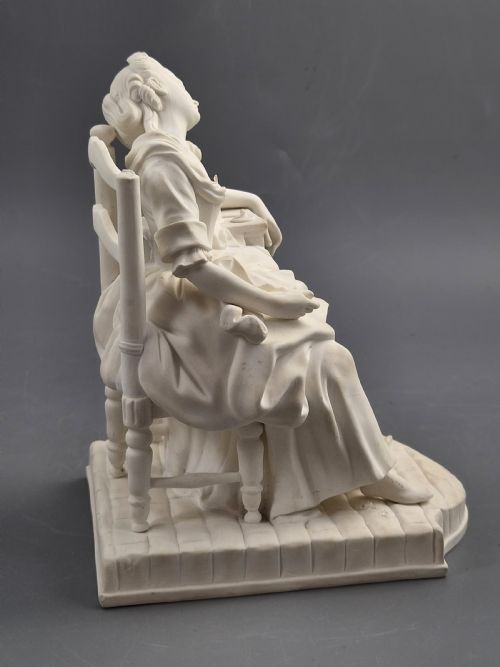
- Unglaved white porcelain fired to a matte finish that resembles marble and reveals fine sculptural detail.
- Hard-paste porcelain
- A durable ceramic composition fired at high temperatures using kaolin and petuntse, producing a dense white body.
- Bocage
- An ornamental background of carved leaves and foliage placed behind figures to simulate a natural outdoor setting.
- Gilding
- The application of gold leaf or gold paint to highlight borders, garments and decorative motifs on the ceramic surface.
Paris Porcelain Figurine: Frequently Asked Questions
What is a paris porcelain figurine?
A paris porcelain figurine is a decorative ceramic sculpture produced in nineteenth-century France, depicting human figures, animals and allegorical scenes. These pieces utilise hard-paste or biscuit porcelain with hand-painted enamel and gilt details.
Cabinet displays, mantlepieces and collector cabinets served as the primary locations for these ornaments. Makers frequently drew inspiration from eighteenth-century English and continental porcelain traditions.
How do I identify maker marks?
Maker marks on these figures appear on the underside in underglaze blue, iron red or impressed into the clay body. Factories like Samson often applied imitation marks from earlier porcelain houses such as Chelsea or Derby.
Examining the style of the modelling, the quality of the paste and the nature of the painting helps confirm attribution when marks are absent or disguised.
Are these figures glazed or unglazed?
These figures appear in both glazed hard-paste porcelain and unglazed biscuit porcelain formats. Glazed pieces feature glossy enamel surfaces, while biscuit porcelain offers a matte finish similar to carved marble.
Combinations of both finishes sometimes occur within a single sculptural group, particularly on Victorian Parian pieces and lace figures.
How should I clean my figurine?
Cleaning requires a soft, dry brush to remove dust from intricate areas like bocage foliage and lace trim. Moisture should remain strictly controlled to protect delicate enamel paints and gold leaf.
Harsh chemical cleaners and immersion in water must be avoided, especially on biscuit porcelain surfaces which absorb liquids easily.