




Papier Mache Tobacco Box
These papier mache tobacco box pieces offer tactile pockets of history, bringing portable artistry and personal charm directly to your collection.
Papier Mache Tobacco Box
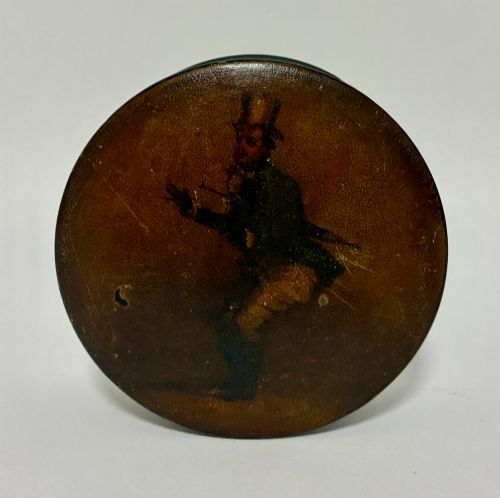
When you search for a papier mache tobacco box, you encounter small personal containers spanning the Georgian, 19th Century, and Edwardian periods. These portable receptacles often overlap with snuff boxes, cigarette cases, and lidded pots originating from various stylistic backgrounds.
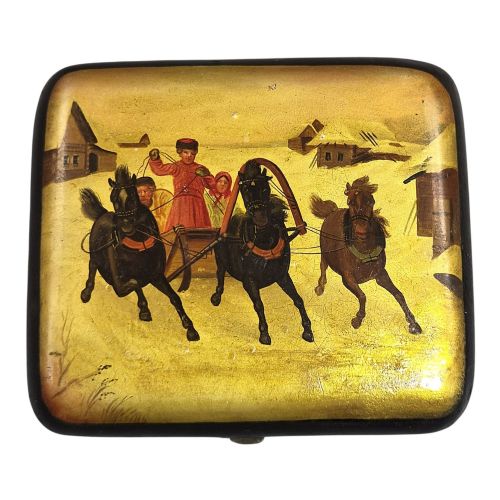
You are most likely to meet pieces shaped by Georgian and Victorian makers, alongside continental examples including French Empire, Biedermeier, and Imperial Russian works. Kashmiri craftsmanship also appears in these listings, showing global reach.
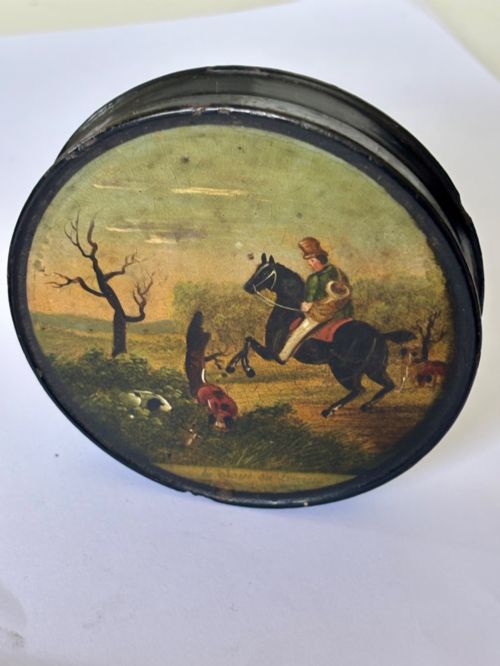
The forms range from flat pocket items to dome-shaped table snuff boxes and small lidded pots. Each container serves as a compact canvas reflecting historical design trends.
Materials and construction
These items rely on papier-mache as a foundational structure, built from layered paper pulp or sheets bonded and dried to form rigid, durable bodies. Lacquer coats these surfaces to provide a smooth, protective seal against handling.
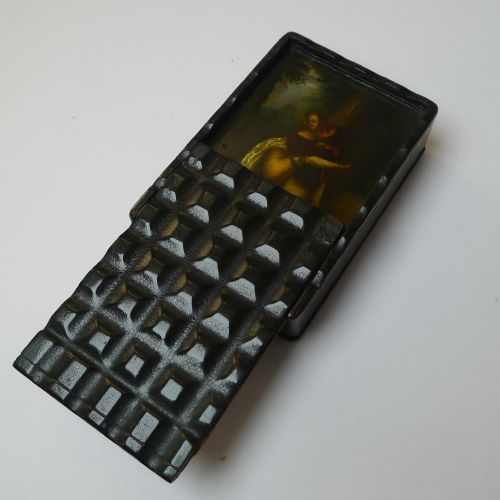
Decoration involves oil paint, pigment, and gold leaf applied by hand, sometimes incorporating mother-of-pearl inlays for shimmering detail. Artisans utilised these combined materials to create miniature painted scenes, hunting motifs, and concealed erotic artwork.
Some German pocket containers feature concealed erotic paintings hidden beneath sliding panels for private amusement.
Assessing quality and execution
Quality rests upon the crispness of the hand-painted details and the finesse of the lacquer finish. Superior examples display delicate brushwork and rich integration of gold leaf or mother-of-pearl.
Attribution to notable workshops like Stobwasser or the Vishnyakov factory elevates the standing of a piece. The structural integrity of the moulded papier-mache body and the precise fit of the lid also distinguish finer works.
Vishnyakov Workshop·Stobwasser
The Papier Mache Tobacco Box Glossary
- Papier-mache
- A composite material made from paper pulp or reinforced paper sheets mixed with glue, then moulded and dried. This substance forms the lightweight yet sturdy carcass of these small boxes.
- Lacquer
- A protective and decorative coating applied in multiple layers and polished to a hard finish. It guards the painted surfaces beneath from everyday wear.
- Stobwasser
- A renowned German manufacturing family known for high-quality lacquered papier-mache boxes. Their workshop style often influences or defines similar pieces from the period.
- Mother-of-pearl
- The iridescent inner layer of certain mollusc shells, embedded into the surface of boxes for decorative contrast. Artisans cut these thin pieces into geometric or pictorial shapes.
- Table snuff box
- A larger container designed to sit on a surface rather than fit into a pocket. These items accommodated loose tobacco or snuff for shared use in a room.
Papier Mache Tobacco Box: Frequently Asked Questions
How do I date a papier mache tobacco box?
Dating relies on examining the painting style, materials, and stylistic influences such as Georgian, French Empire, or Biedermeier. Structural characteristics and historical attribution markers also help narrow the timeframe.
Earlier pieces often display meticulous hand-painted detail and specific regional lacquer techniques associated with nineteenth-century production centres.
Who made these decorated boxes?
Specialised workshops and factories across Europe and Asia produced these items, with notable examples originating from German, Russian, and Kashmiri makers. Studios such as Stobwasser and the Vishnyakov workshop are particularly famous for their output.
Many pieces remain unmarked, reflecting a broader cottage industry of skilled painters and lacquer workers active during the Georgian and Victorian eras.
How should I care for a papier mache tobacco box?
Keep these items away from direct sunlight, excessive moisture, and rapid temperature changes to protect the delicate lacquer and paint layers. Dust them gently with a dry, soft cloth without using liquid cleaners.
Handling them with clean hands prevents body oils from degrading the historic surface finishes over time.