




Painted Lacquer Snuff Box
A painted lacquer snuff box is a pocket-sized container for tobacco that offers miniature artistry in lacquer and paint.
Painted Lacquer Snuff Box
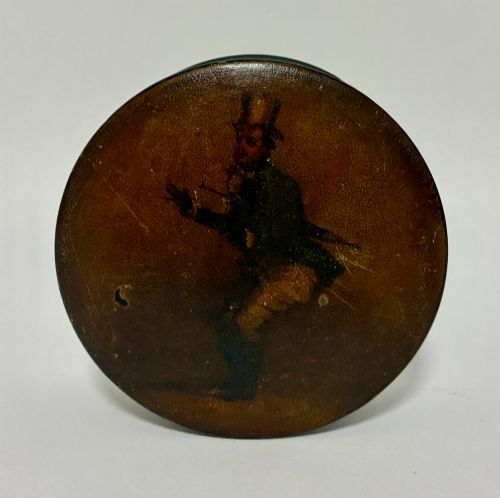
When you search for a painted lacquer snuff box, you find pocket containers and table boxes made during the Georgian and 19th Century periods. These objects served to hold snuff, tobacco, or cigarettes for personal use during social occasions.
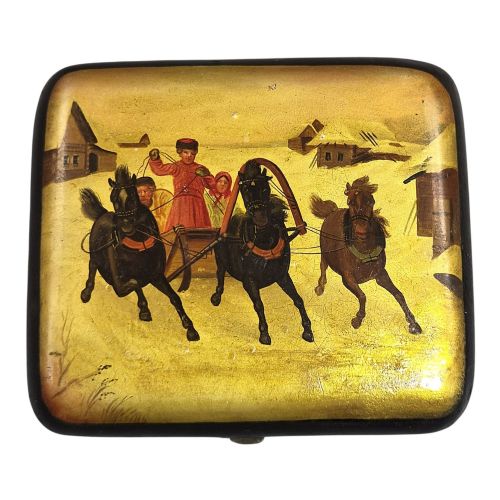
The versions most commonly met on this page include papier-mâché table snuff boxes and pocket boxes featuring hand-painted lids. Styles span across Georgian, Victorian, French Empire, Biedermeier, and Imperial Russian aesthetics.
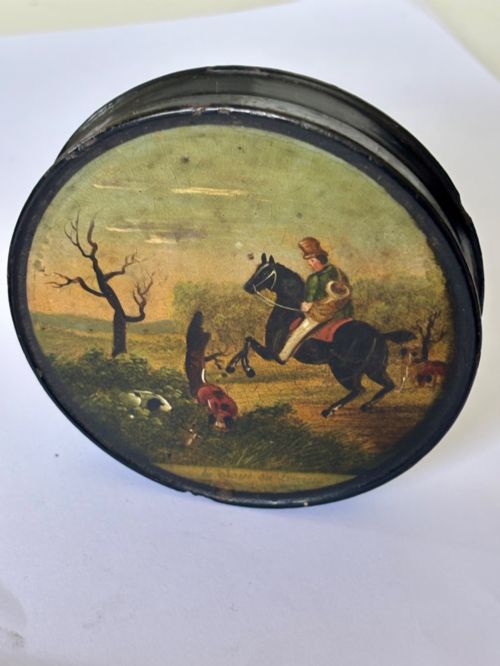
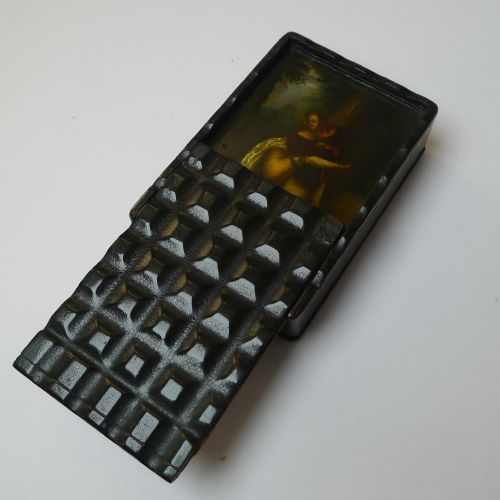
Makers often applied detailed figurative scenes, hunting motifs, or concealed erotic subjects to the lids of these small boxes. Formats vary from flat pocket rectangles to dome-shaped boxes and cigarette cases.
How they were made
Workers constructed the primary body using layered papier-mâché or tin, shaping the material into compact boxes before applying multiple coats of lacquer and varnish. This built a smooth, hard foundation capable of receiving detailed decoration.
Artists decorated the surfaces using oil paint and gold leaf, frequently applying hand-painted scenes directly onto the lacquered ground. Varnish layers protected the delicate miniature paintings from daily handling and wear.
German makers occasionally added sliding lids to conceal secret erotic paintings inside the box.
What varies in quality
The fineness of the hand-painted miniature on the lid separates standard boxes from superior examples. Skilled artists achieved remarkable detail in faces, foliage, and architectural backgrounds.
The depth and polish of the lacquer surface indicate the care taken during production. Boxes with smooth, glossy finishes and intact varnish layers demonstrate superior preservation of the original materials.
Vishnyakov Workshop·Stobwasser
The Painted Lacquer Snuff Box Glossary
- Papier-mâché
- A composite material made from paper pulp or reinforced paper sheets mixed with glue, then moulded and dried. This substance provided a lightweight yet durable base for lacquering and painting.
- Lacquer
- A durable resin-based coating applied in multiple layers to seal and protect the underlying material. It created a smooth, glossy surface ready for artistic decoration.
- Gold leaf
- Gold beaten into extremely thin sheets and applied to surfaces for ornamentation. It frequently highlighted borders and focal points on the box lids.
- Snuff box
- A small lidded container designed to hold powdered tobacco. These items became canvases for miniature painting during the Georgian and 19th Century periods.
Painted Lacquer Snuff Box: Frequently Asked Questions
What was a painted lacquer snuff box used for?
These boxes held finely ground tobacco known as snuff, which users inhaled for stimulation or fashionable display.
Gentlemen and ladies carried them in pockets or displayed them on tables during social gatherings as accessories of refinement.
How do I care for a papier-mâché box?
Keep the box away from direct sunlight and excessive moisture to protect the fragile lacquer and painted surfaces.
Dust gently with a dry, soft cloth and avoid using liquid cleaners or polishes that might damage the varnish.
Are all these boxes made of papier-mâché?
While the majority utilise papier-mâché as a core material, some examples employ painted tin for tobacco storage.
Both materials received similar decorative treatments involving lacquer, oil paint, and protective varnishes.
What styles appear on these boxes?
The designs reflect diverse regional tastes including French Empire, Biedermeier, Imperial Russian, and Georgian aesthetics.
Motifs range from hunting scenes and landscapes to concealed erotic subjects painted on the inner or outer lids.