




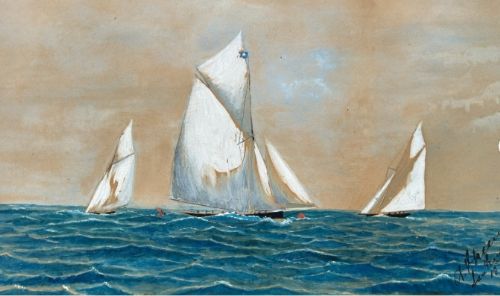


Paper Watercolour Marine Art
Paper watercolour marine art captures maritime life and coastal views on paper through delicate washes.
Paper Watercolour Marine Art
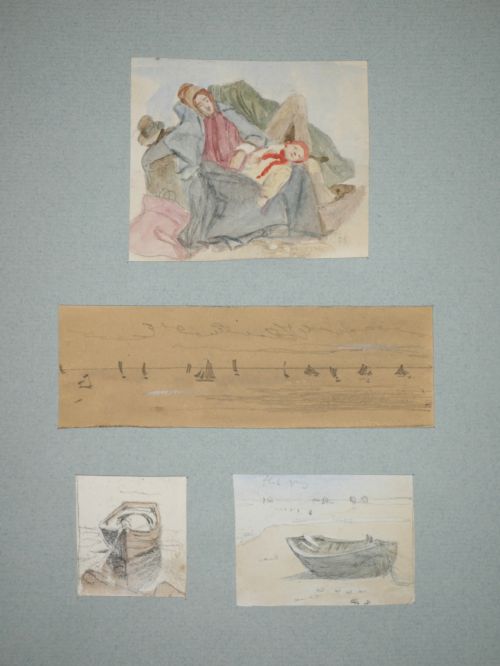
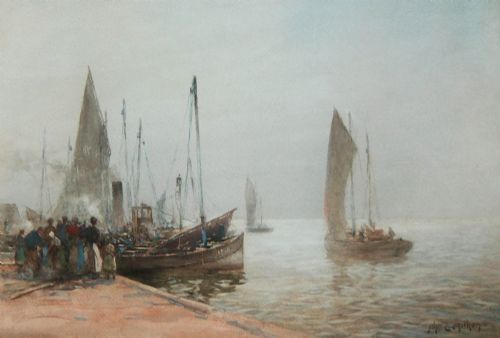
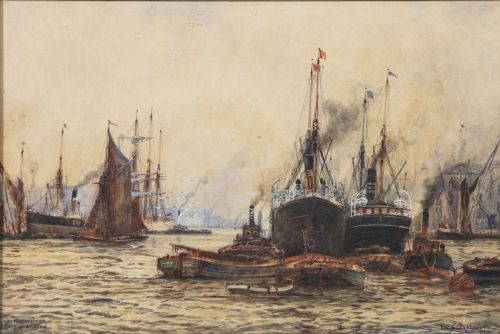
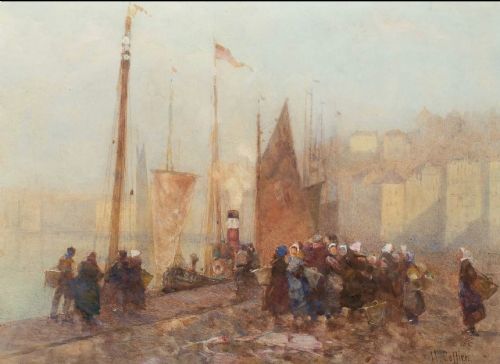
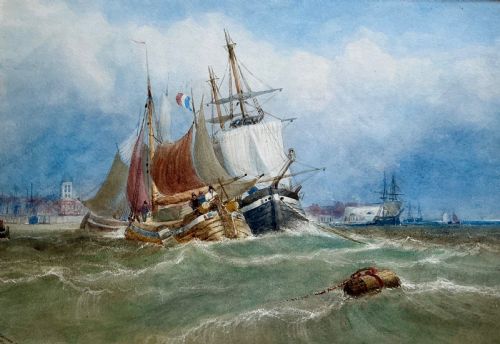
Paper watercolour marine art encompasses works created across the nineteenth and twentieth centuries, capturing coastal landscapes, bustling harbours, and ships at sea. These watercolours record maritime scenes from British and European shores, ranging from Victorian views to mid-century compositions.
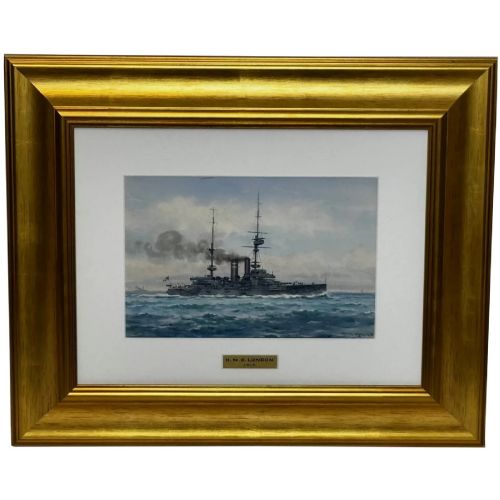
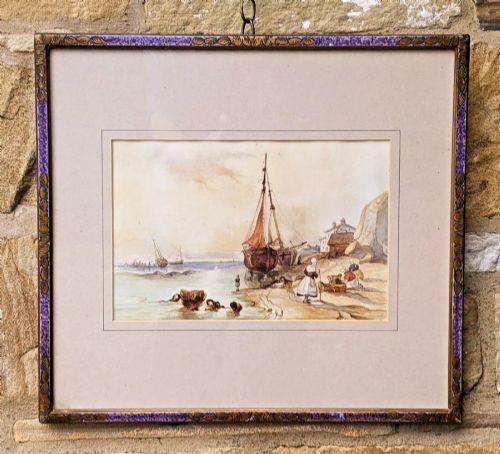
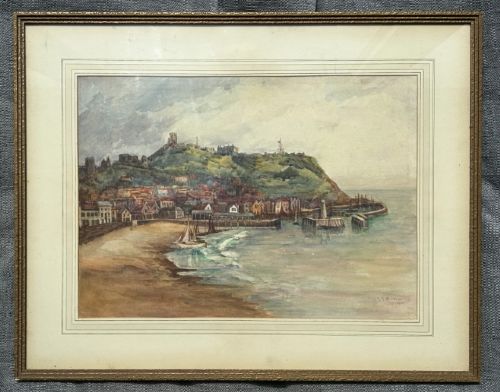
The pieces on this page are most commonly found in framed formats under glass, preserving delicate water-soluble pigments on paper supports. Subjects frequently feature local fishing fleets, naval vessels, and tidal estuaries observed by regional artists.
Collectors encounter diverse stylistic approaches, moving from detailed Victorian maritime realism towards the freer brushwork of British impressionism and mid-century modernism. Each sheet offers a direct encounter with the maritime environment as recorded by contemporary painters.
Materials and technique
Artists apply watercolour pigment suspended in water onto various grades of paper, often utilising ink for preliminary sketches or sharp definition. The fluid nature of the medium allows for transparent washes that render the shifting qualities of sea and sky.
Finished works are typically housed behind glass within wooden frames, protecting the paper surface from atmospheric moisture and handling. This traditional mounting method ensures the longevity of water-soluble pigments and delicate paper fibres.
Listings span the nineteenth and twentieth centuries, incorporating Victorian, Edwardian, and mid-century maritime art created in watercolour on paper.
Evaluating quality in marine watercolours
Quality rests upon the artist's ability to capture movement and light with confident, economic brushstrokes rather than overworked detail. Superior examples demonstrate a secure command of perspective within complex harbour or shipping scenes.
The condition of the paper surface and the preservation of pigment vibrancy significantly influence the standing of a piece. Works retaining their original tonal contrast without excessive fading command greater appreciation.
James Orrock·James Smetham·Frank Watson Wood·Frank William Scarbrough·Hector Caffieri·Henry Barlow Carter·William Frederick Settle·Alfred George Morgan·Commander Eric Tufnell·Thomas Bush Hardy·Edward Seago·Robert Leslie Howey·Tom Clough·William Tuck·F J Aldridge·John McDougal·Frank H Mason·George Hamilton Constantine·Frederick William Hattersley·James Thomas Watts·Samuel Owen·Frederick William Booty·Charles Harmony Harrison·Kate E Booth·R P Noble
The Paper Watercolour Marine Art Glossary
- Watercolour
- A paint consisting of a pigment suspended in a water-soluble vehicle. It is applied in translucent washes to paper supports.
- Seascape
- A work of art depicting the sea, coastal views, or maritime activities. These compositions focus primarily on marine environments and watercraft.
- Wash
- A thin, fluid layer of diluted watercolour pigment spread across the paper. It creates smooth expanses of tone for skies and water.
- Support
- The underlying physical material upon which the image is painted. In these listings, this is almost exclusively paper.
Paper Watercolour Marine Art: Frequently Asked Questions
How should I display paper marine watercolours?
Watercolours on paper require careful placement away from direct sunlight to prevent the pigments from fading over time. Hanging them in rooms with stable humidity levels protects both the paper support and the wooden frame.
Ensuring the framing uses conservation-grade materials prevents acidic mount burn from damaging the edges of the sheet. Proper placement preserves the subtle tonal gradations intended by the artist.
How do I identify the period of a marine painting?
Stylistic clues such as vessel types, rigging details, and clothing styles offer immediate indicators of when a maritime scene was recorded. Victorian works often show meticulous detail, whereas mid-century examples lean towards looser impressionistic interpretations.
Signatures, dates, and framing remnants additionally help anchor pieces within specific decades from the nineteenth century onward. Comparing handling techniques with known regional artists further clarifies the date of execution.
Are these paintings original works?
The listings on this page comprise original hand-painted watercolours created directly by the artists rather than mechanical reproductions. Each sheet bears the individual brushwork, pigment pooling, and pencil underdrawing characteristic of unique works on paper.
Signatures and monograms frequently authenticate the authorship of individual painters active during the nineteenth and twentieth centuries. Collectors receive singular artistic interpretations of marine environments rather than mass-produced prints.