



Paper Watercolour Coastal Painting
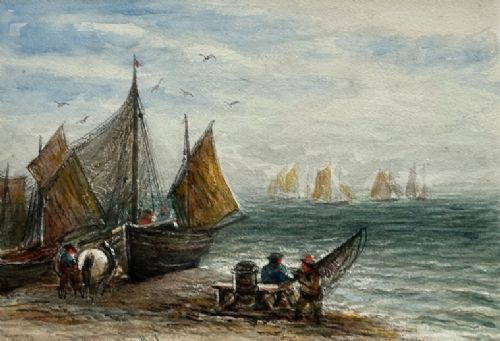
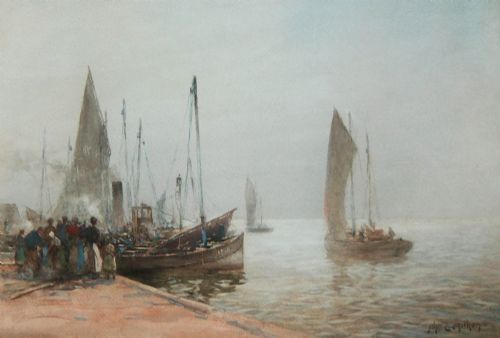
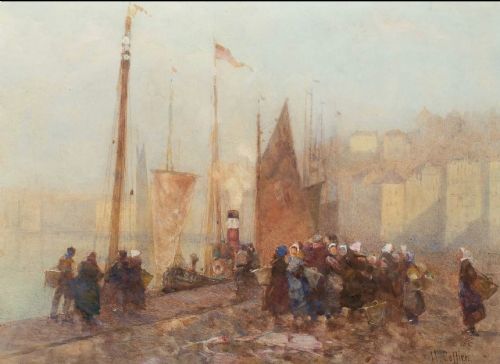
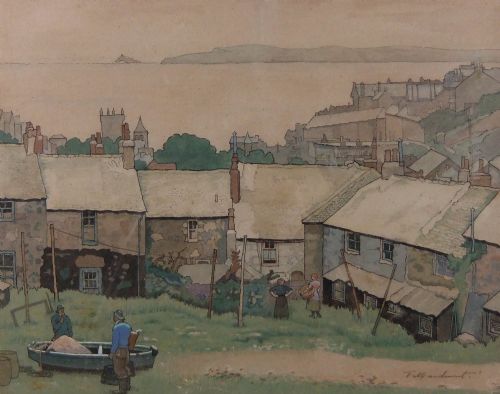
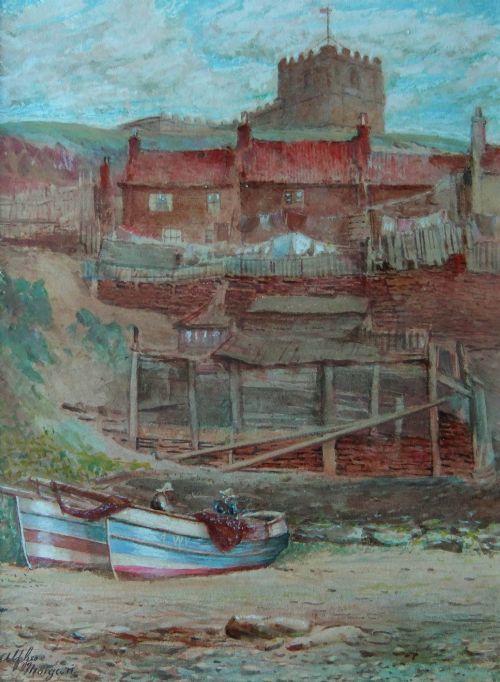
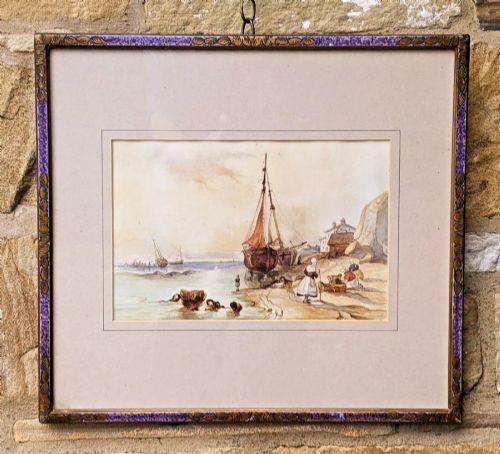
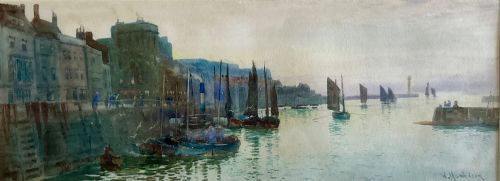
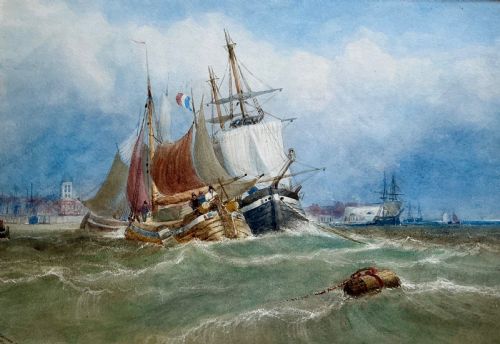
A paper watercolour coastal painting captures the motion of the tides, harbour walls, and fishing fleets through rapid wash and fine pigment.
Paper Watercolour Coastal Painting
A paper watercolour coastal painting typically portrays British and European shorelines, ranging from bustling Yorkshire harbours to quiet Norfolk inlets and continental ports. These works emerge predominantly from the nineteenth and early twentieth centuries, spanning the Victorian, Edwardian, and St Ives School movements.
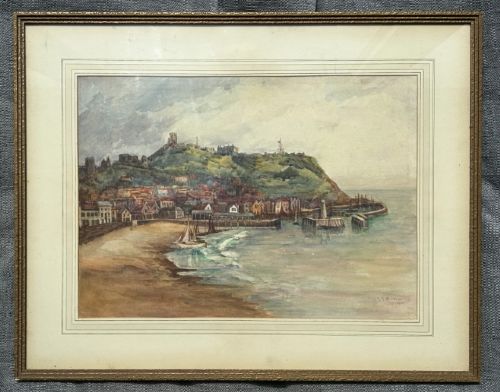
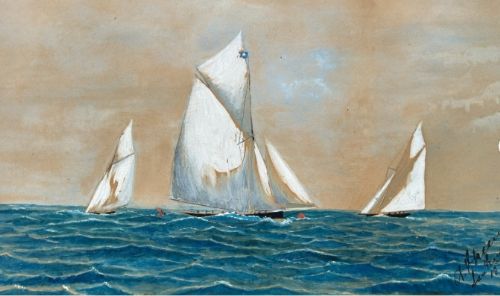
Most pieces on this page take the form of framed wall art depicting marine scenes, featuring sailing vessels, fishing boats, and coastal towns. Common subjects include specific locations such as Whitby, St Ives, and Cromer, rendered by artists recording maritime life.
The selection extends from late Victorian sketches to mid-century British impressionist watercolours on paper. Buyers encounter both small marine studies and finished topographical compositions executed in pigment and ink.
Materials and Technique
Artists apply watercolour pigment and ink onto paper supports, often utilising the white of the sheet to create highlights of foam and breaking waves. The medium allows for swift application on location, capturing transient effects of light and weather along the coast.
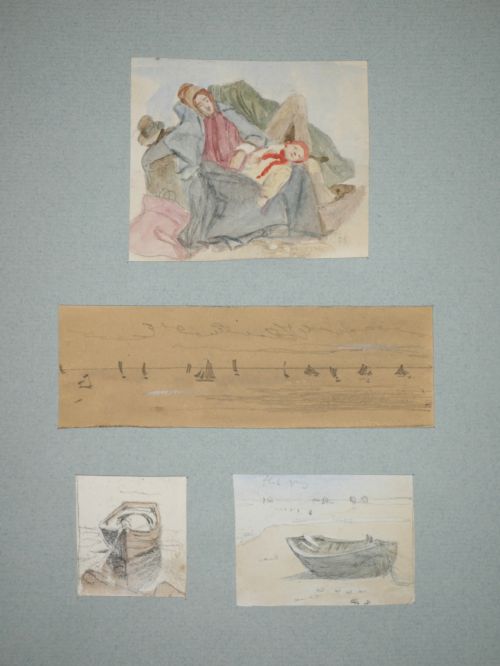
Finished works frequently combine brushwork with subtle pencil underdrawing, housed behind glass within wooden frames to protect the delicate surface from moisture and light damage.
The listings span works created between 1870 and 1950, employing watercolour pigment, ink, and woodblock print techniques upon paper.
Evaluating the Works
Quality rests upon the artist's economy of brushwork and ability to render the atmosphere of the shore without overworking the pigment. Stronger examples display confident washes that suggest movement in the sea and sky, while lesser pieces rely on rigid, static outlines.
Condition also distinguishes the selection, particularly the preservation of the paper support and the vibrancy of the watercolour pigments against fading. Original framing and clear provenance from recognised marine painters elevate the standing of an individual work.
James Orrock·James Smetham·James E. Aitken·Hector Caffieri·Thomas Maidment·Alfred G. Morgan·William Matthison·Henry Barlow Carter·George F Pennington·William Frederick Settle·Paul Delvaux·Thomas Bush Hardy·Sir Thomas Newenham Dean·Edward Seago·Arthur Tucker·Robert Leslie Howey·Tom Clough·Colin H Greenwood·John McDougal·James Watson·George Hamilton Constantine·Frederick William Hattersley·James Thomas Watts·John Mitchell·Samuel Owen
The Paper Watercolour Coastal Painting Glossary
- Watercolour
- A paint consisting of pigment suspended in a water-soluble vehicle, applied to paper to achieve translucent washes of colour.
- Coble
- A traditional type of open fishing boat native to the north-east coast of England, frequently depicted in regional marine art.
- St Ives School
- An art colony in Cornwall that drew painters to its coastal light, shaping British impressionist and modern marine painting.
- Works on Paper
- A category encompassing drawings, watercolours, and prints executed upon paper supports rather than canvas or panel.
- Seascape
- A thematic genre of art that depicts the sea, coastal views, shipping, and marine activities.
Paper Watercolour Coastal Painting: Frequently Asked Questions
How do I care for a paper watercolour coastal painting?
Keep the artwork out of direct sunlight to prevent the watercolour pigments from fading over time. Ensure it remains behind glass in a dry environment to protect the paper support from dampness.
Avoid hanging the piece in rooms with high humidity, such as kitchens or bathrooms. Professional framing with acid-free mounts helps preserve the longevity of the paper.
What subjects appear most often in these watercolours?
Harbours, fishing fleets, and coastal villages form the primary subjects across these maritime works. Scenes frequently capture daily maritime labour, including boats leaving port and fishermen spreading nets on the shore.
Topographical views of specific Yorkshire and Cornish coastal towns are particularly prevalent. Artists also recorded shipping traffic on rivers and open seas.
How can I tell the period of a watercolour?
Stylistic cues, artist signatures, and framing materials often point toward the date of execution. Victorian and Edwardian works tend to display detailed topographical accuracy, whereas mid-century pieces show looser impressionist brushwork.
Examine the paper itself for watermarks or discoloration consistent with nineteenth-century manufacture. Documentation and biographical dates of the artist provide further chronological anchors.
Were these paintings created outdoors or in a studio?
Many marine watercolours began as swift plein air sketches painted directly on the beach or harbour wall. Artists used the medium's portability to record fleeting weather and tidal changes on the spot.
More finished compositions were sometimes completed in the studio using these field sketches as reference. Both methods preserved the immediate atmospheric conditions of the British coastline.