
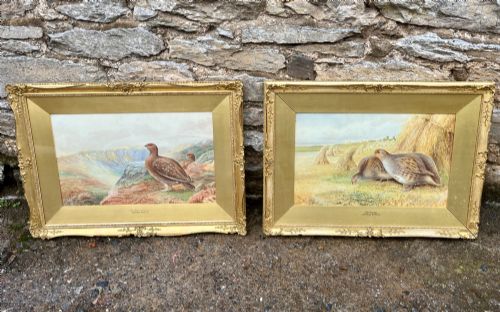
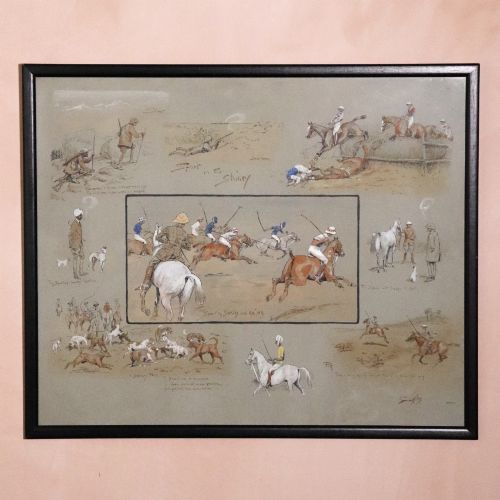
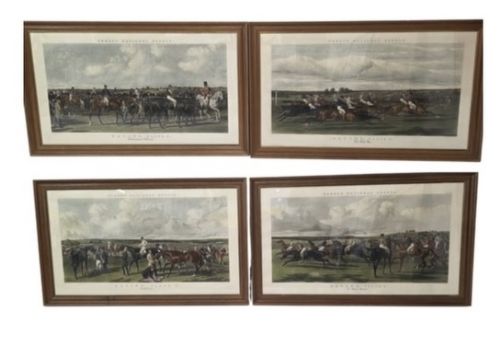
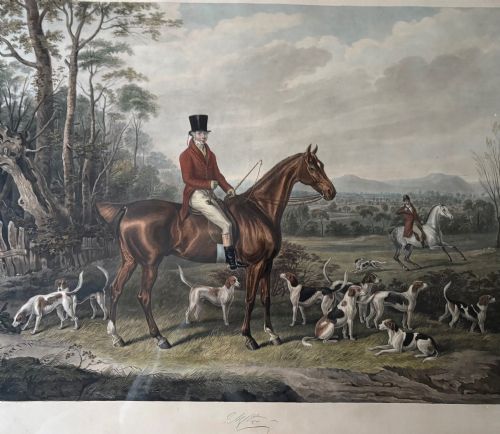


Paper Sporting Prints
Paper sporting prints capture the speed of the racecourse and the stillness of the shoot through ink and watercolour.
Paper Sporting Prints
Paper sporting prints record the pursuits of the field and track through centuries of changing illustration. When you search for paper sporting prints, you meet works spanning the Georgian, Regency, Victorian and Edwardian eras, framed under glass in wood or gilt. The subjects stretch from horse racing and fox hunting to cricket, golf, polo and angling.
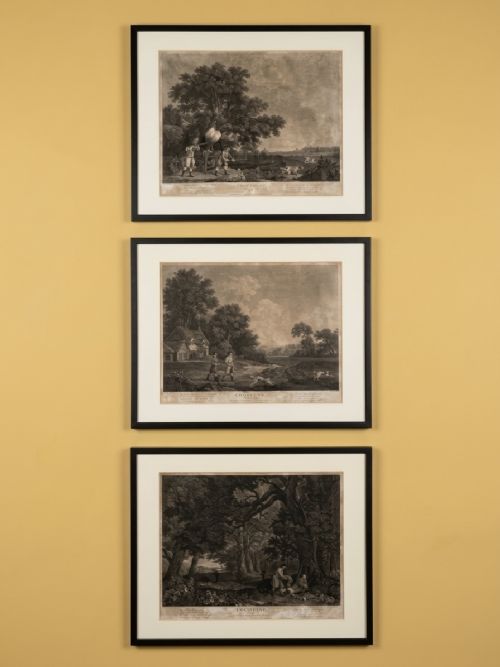
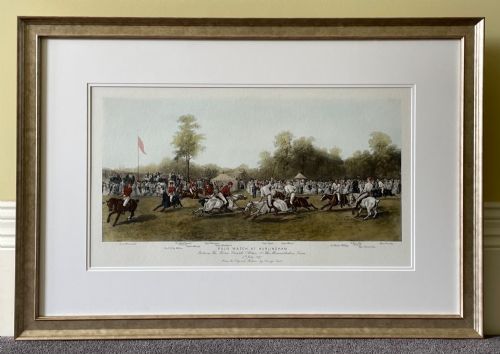
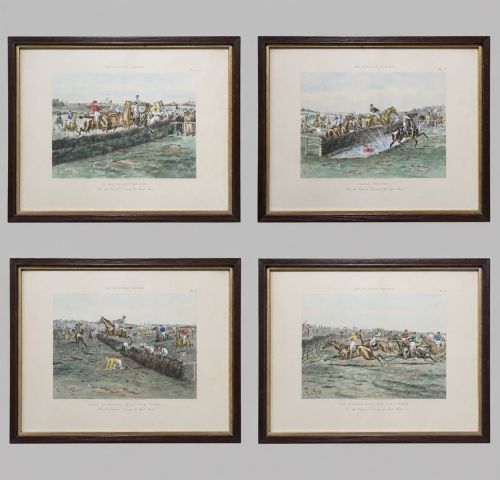
Most examples take the form of framed engravings, aquatints, lithographs or etchings. Sets of four are common, particularly for racing and shooting scenes, often retaining their original hand colouring. These sheets preserve historical matches, famous horses and field sports as recorded by artists and printmakers of the past.
How they were made
Makers produced these works using copperplate engraving, lithography, aquatint and etching on paper. Printers pulled impressions from inked plates or stones, laying down lines that defined the horses, hounds and riders.
Workers frequently applied watercolour by hand to monochrome prints, adding distinct hues to jackets, landscapes and coats. Finished sheets were secured in wood frames, often with gilt mounts and protective glass to guard the fragile paper beneath.
Periods represented range from the Georgian and Regency eras through the Victorian and Edwardian periods up to the 1950s.
What varies in quality
The precision of the ink line and the clarity of the impression separate skilled printmaking from routine output. Sharp, deep strikes from copperplates retain fine details in the subjects, whereas worn plates yield soft, blurred edges.
The care taken in hand colouring determines the visual success of the sheet. Subtle watercolour washes applied by skilled hands enhance the composition without masking the underlying print.
George Finch Mason·George Rankin·Snaffles·Herbert Dicksee·Alken·Hogarth·Riepenhausen·Alfa Romeo·James Dobie·W Dendy Sadler·William Bunbury·Sam Howitt·J F Herring
The Paper Sporting Prints Glossary
- Aquatint
- A printmaking technique that produces tonal areas resembling watercolour washes. It allowed makers to achieve subtle shades of shadow and light behind the etched lines.
- Lithography
- A planographic printing method based on the repulsion of oil and water. Artists drew directly onto limestone or metal plates to capture freehand strokes.
- Etching
- A process where acid bites lines into a metal plate covered with an acid-resistant ground. The resulting trough holds ink for the printing press.
- Stipple engraving
- A method of creating images through a multitude of tiny dots rather than continuous lines. It provided smooth tonal transitions for portraits and figures.
- Chromolithography
- A colour lithographic technique using multiple stones, one for each ink colour. This allowed complex multi-coloured prints to be produced mechanically.
Paper Sporting Prints: Frequently Asked Questions
What periods do these prints come from?
The listings span from the eighteenth century through the Victorian era into the early twentieth century. Georgian and Regency examples sit alongside Victorian chromolithographs and Edwardian etchings.
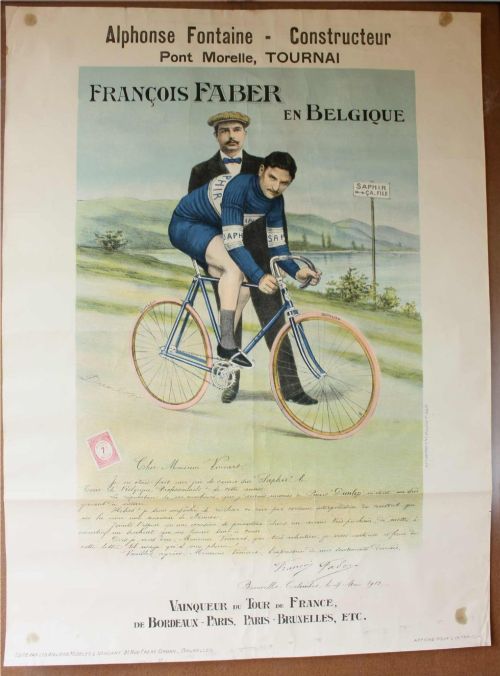
Each period brought distinct printing techniques, from early copperplate engravings to later coloured lithography and posters.
Are these prints usually framed?
Many examples are mounted behind glass in wood, gilt wood or giltwood frames. Framing styles reflect the age of the piece, ranging from simple timber mouldings to ornate nineteenth-century surrounds.
Some sheets appear unmounted, allowing buyers to choose their own presentation.
What sports are typically shown?
Horse racing, fox hunting, shooting and cricket dominate the imagery. You also encounter polo, golf, angling, billiards and pedestrian races.
Individual plates often record specific famous animals, matches or meets from British sporting life.
How do I identify hand colouring?
Hand-coloured prints show subtle brush marks and variations within the pigment under close inspection. The colour sits on top of the printed ink lines rather than forming part of a uniform mechanical dot pattern.
Many nineteenth-century sporting plates relied on this combined method of engraved outlines and watercolour wash.