





Paper Seascape Watercolour Art
Paper seascape watercolour art captures maritime life and coastal views on delicate supports, offering a direct window into nineteenth and twentieth-century marine history.

Paper Seascape Watercolour Art
Paper seascape watercolour art encompasses original paintings depicting ships, harbours, coastal villages, and open waters rendered with water-based pigments. These works primarily span the Victorian era, the Edwardian period, and the early decades of the twentieth century.
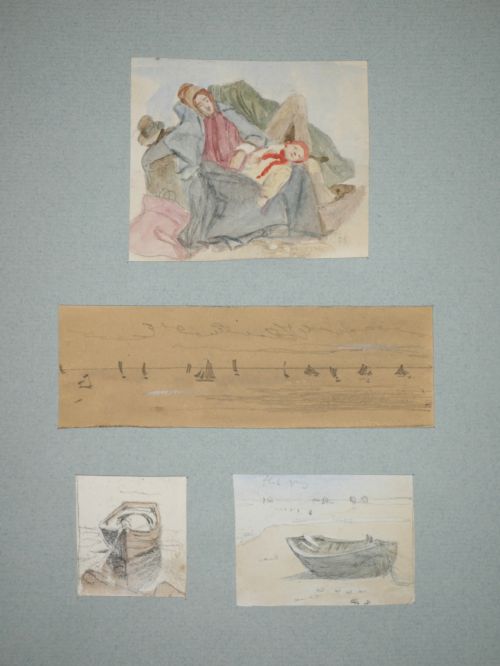
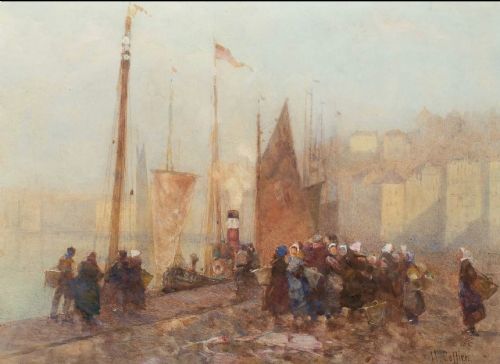
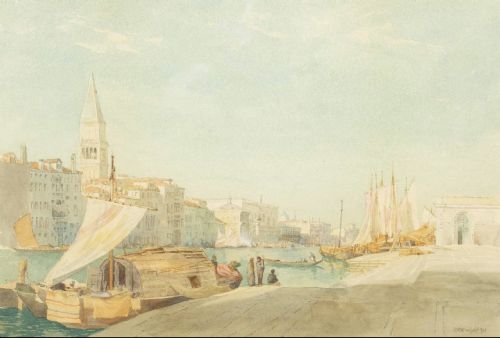
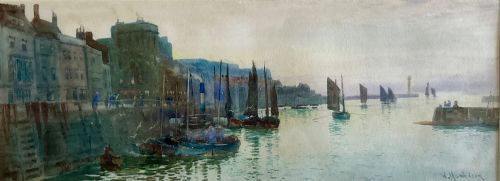
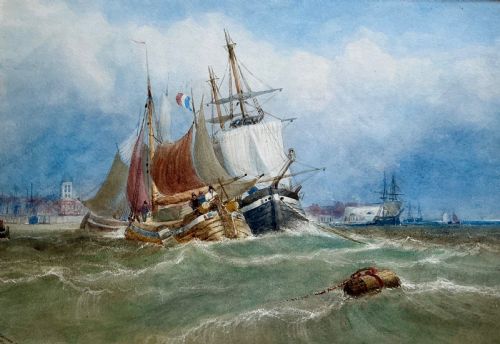
Buyers encountering this selection will find framed artworks and works on paper created by British and European artists. Common subjects range from fishing boats on the Yorkshire coast to Venetian canals and grand sailing vessels.
The category relies heavily on historical authenticity, representing works produced when marine painting documented commercial shipping, naval might, and local coastal communities before the dominance of photography.
Materials and Techniques
Artists utilised watercolour pigment and watercolour paint applied to sheets of paper, occasionally incorporating ink for fine linear detail. These pigments were brushed onto the paper support, sometimes employing gum arabic to add sheen and depth to water or sky.
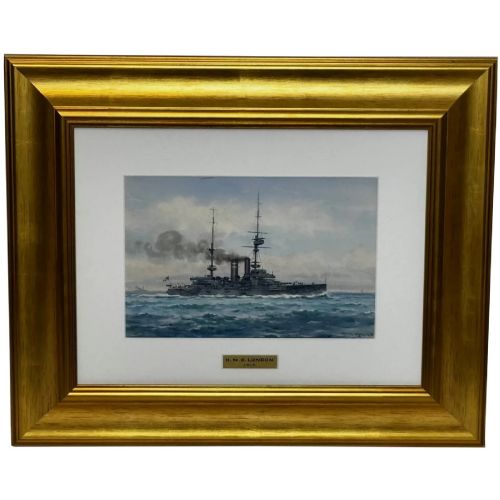
Works were traditionally protected beneath glass within wooden frames to shield the delicate paper surface from atmospheric moisture and handling damage. The absorbent nature of the paper required careful control of water dilution to achieve transparent washes and crisp highlights.
Listings feature works created across the nineteenth and twentieth centuries, spanning the Victorian and Edwardian eras up to the mid-twentieth century.
Factors of Quality
Quality in these watercolours depends upon the artist's ability to capture the movement of water, the play of light on the sea, and atmospheric conditions with economy and precision. Finer examples display confident brushwork and controlled washes that convey immense depth across a fragile paper surface.
Condition also dictates standing within the range, as exposure to light can fade delicate pigments over decades. Works retaining their original vibrancy, strong provenance, and clear signatures by accomplished painters command greater appreciation among collectors.
James Orrock·James Smetham·Frank Watson Wood·Frank William Scarbrough·Hector Caffieri·Richard Henry Wright·William Matthison·Henry Barlow Carter·William Frederick Settle·Paul Delvaux·Thomas Bush Hardy·Sir Thomas Newenham Dean·Robert Leslie Howey·John McDougal·Frank H Mason·Frederick William Hattersley·John Mitchell·Samuel Owen·Frederick William Booty·Kate E Booth·Ernest F Hill·Frederick Stuart Richardson·Stephen John Batchelder·Percy Brooke·William Kay Blacklock
The Paper Seascape Watercolour Art Glossary
- Watercolour
- A painting method in which the paints are made of pigments suspended in a water-based solution. It is traditionally applied to paper supports.
- Seascape
- A genre of art depicting the sea, ships, beaches, and coastal architecture. These scenes often focus on maritime commerce or coastal weather.
- Works on paper
- A classification encompassing drawings, watercolours, and prints created on paper sheets. This medium requires specific preservation methods to prevent degradation.
- Provenance
- The chronological history of the ownership of a piece of art. Clear provenance helps verify the authenticity and attribution of antique paintings.
Paper Seascape Watercolour Art: Frequently Asked Questions
How should I hang antique watercolours?
Keep these pieces away from direct sunlight to prevent the watercolour pigments from fading over time. Position them on interior walls where room temperature and humidity remain relatively stable.
Ensure the frame is properly sealed against dust, and use conservation-grade backing materials if you choose to reframe the work. Proper placement protects both the fragile paper and the historical integrity of the piece.
What subjects appear in these works?
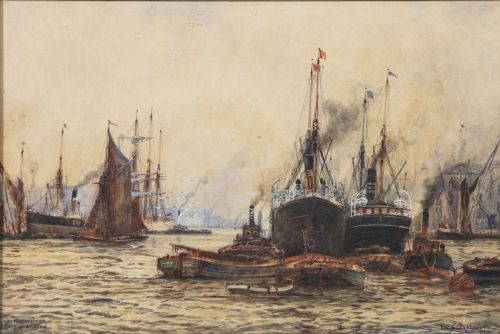
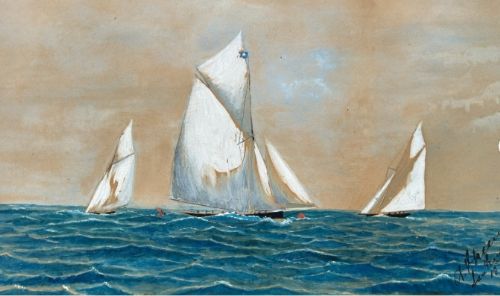
The pieces depict a wide variety of maritime and coastal themes, including fishing boats returning to harbour, bustling ports, and naval vessels at sea. You will frequently find scenes from British coastal towns alongside views of Venetian canals and European shores.
Artists focused heavily on recording working boats, shipping traffic, and coastal architecture during periods of rapid maritime activity. This provides a detailed historical record of nineteenth and early twentieth-century coastal life.
How do I identify the period?
Dating often relies on artist signatures, exhibition labels on the reverse, and stylistic indicators such as clothing or vessel design. Victorian and Edwardian works frequently employ specific paper types and framing styles characteristic of their decade of creation.
Comparing the maritime technology depicted, such as the transition from sailing clippers to steamships, also assists in narrowing down the era. Examining the handwriting on signed pieces or accompanying archival notes provides further chronological clues.
Are these paintings original works?
The listings consist entirely of original hand-painted watercolours rather than modern reproductions or mass-produced prints. Each piece was individually executed by an artist using brush and pigment upon a paper support.
Brushstrokes, pencil underdrawings, and the natural texture of the paper confirm the unique, one-of-a-kind nature of these historical artworks. Even artists painting similar coastal subjects produced distinct variations in every individual sheet.