





Paper Framed Coastal Art
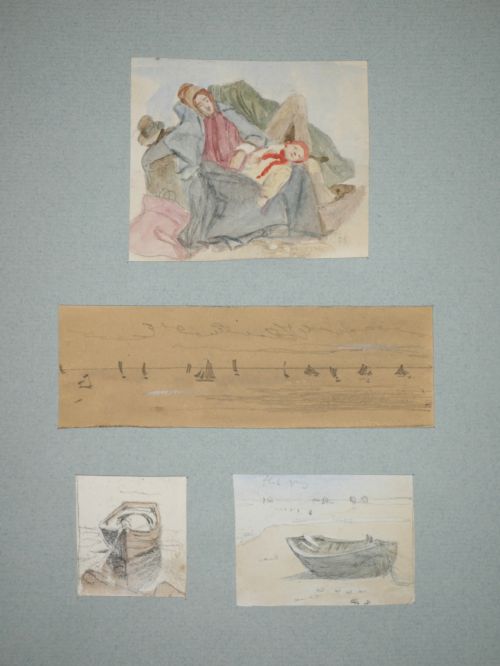
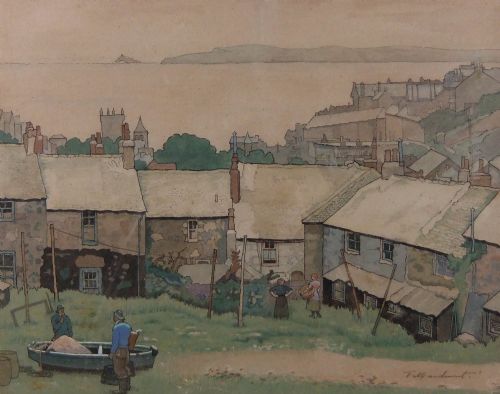
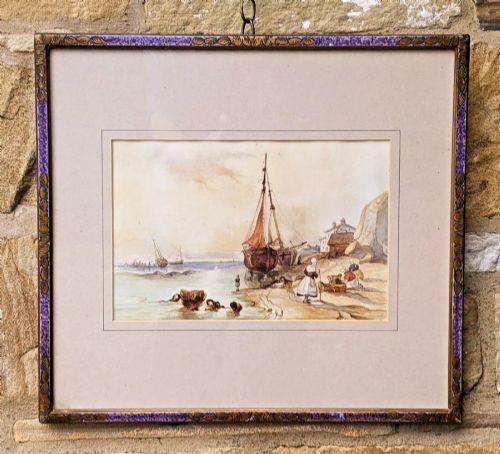
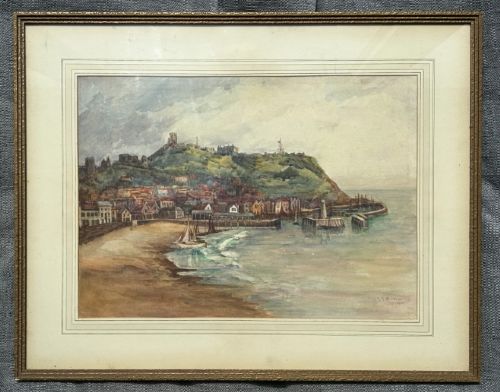
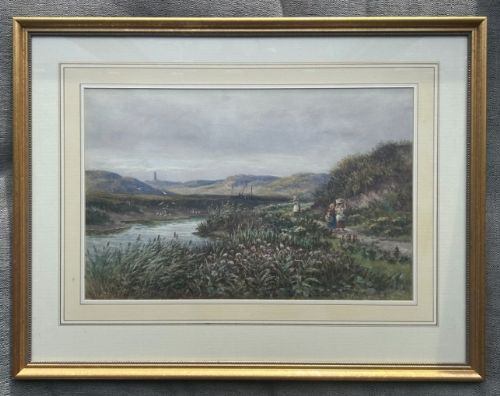
When you search for paper framed coastal art, you find watercolours and etchings of harbours, cliffs and fishing boats preserved beneath glass.
Paper Framed Coastal Art
Paper framed coastal art encompasses works on paper depicting maritime scenes, fishing ports and shorelines from the nineteenth and early twentieth centuries. These pieces record historical British and European coasts, with frequent depictions of Yorkshire harbours, Scottish seascapes and Cornish fishing villages.
The selections available here rely heavily on watercolour paintings, though sets of aquatints and etchings also appear. Such works typically originate from periods such as the Victorian era, Edwardian years and the St Ives School, capturing coastal life through observational painting.
Buyers encounter framed watercolours signed by regional artists alongside unsigned marine sketches and topographical views. Subjects range from busy harbour markets and fishing boats at low tide to quiet rural river estuaries meeting the sea.
Materials and construction
These works utilise watercolour pigment and ink applied directly to paper supports, often framed beneath protective glass within wooden mouldings. Artists of the nineteenth and early twentieth centuries employed watercolour paint for its fluidity, allowing them to capture shifting light on coastal water and open skies.
Intaglio prints like aquatints and etchings involve incising lines onto metal plates before transferring ink onto paper under pressure. The resulting works on paper are subsequently housed behind glass in timber frames to prevent atmospheric degradation.
Materials recorded across the inventory include watercolour pigment, ink, paper, wood and glass.
Distinctions in quality
Quality rests upon the artist's handling of light, atmosphere and perspective within the marine landscape. Stronger watercolours demonstrate confident brushwork that defines architectural elements like harbour walls and shipping rigging without heavy reliance on preliminary pencil lines.
The clarity of the pigment and the preservation of the paper support contribute significantly to the standing of a piece. Works that retain their original tonal depth without excessive fading from sunlight offer a truer representation of the artist's intent.
James Orrock·Thomas Maidment·William Matthison·Paul Delvaux·Arthur Tucker·Thomas Bush Hardy·John McDougal·James Watson·George Hamilton Constantine·Samuel Owen·Ernest F Hill·Frederick Stuart Richardson·Edith E Caswall·Stephen John Batchelder·Frederick Williamson·Albert Robert Quinton·William Tatton Winter·Rowland Henry Hill·Arthur Wilde Parsons·Frank Wasley·Hirst Walker·James George Bingley·Willie Stephenson·Thomas Clavering Alder
The Paper Framed Coastal Art Glossary
- Aquatint
- An intaglio printmaking technique that produces tonal areas resembling watercolour washes. It allows artists to achieve subtle gradients of tone suitable for skies and coastal water.
- Etching
- A printmaking method where lines are bitten into a metal plate with acid before ink is applied and transferred to paper. This process creates fine, precise details often seen in historical maps and architectural views.
- Watercolour
- A painting method in which natural pigments are suspended in a water-soluble vehicle. It provides translucent washes of colour that define maritime atmospheres.
- Seascape
- A work of art depicting the sea, coastal views or marine vessels. These subjects formed a major focus for British fine art throughout the nineteenth century.
- Support
- The physical material upon which a painting or drawing is executed. In these listings, paper serves as the primary support for both finished watercolours and preparatory sketches.
Paper Framed Coastal Art: Frequently Asked Questions
How should I hang coastal watercolours?
Position these works away from direct sunlight to protect the paper and pigments from fading over time.
Keep them in rooms with stable humidity levels to preserve both the paper support and the wooden frame.
What subjects do these maritime paintings feature?
The works predominantly show British and European harbours, fishing vessels, cliffs and coastal villages.
Scenes frequently capture specific locations such as Whitby, St Ives, Scarborough and various river estuaries.
Are these works original paintings?
The majority of the selection consists of original nineteenth and early twentieth-century watercolour paintings on paper.
A small number of listed items comprise period prints such as aquatints, etchings and antique maps.
How do I identify Victorian watercolours?
Look for stylistic markers associated with British Impressionism, the St Ives School or traditional topographical recording.
Signatures, framing styles and paper characteristics often correspond to the active dates of the regional artists.