


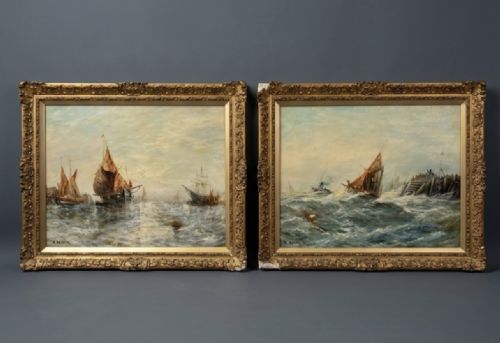
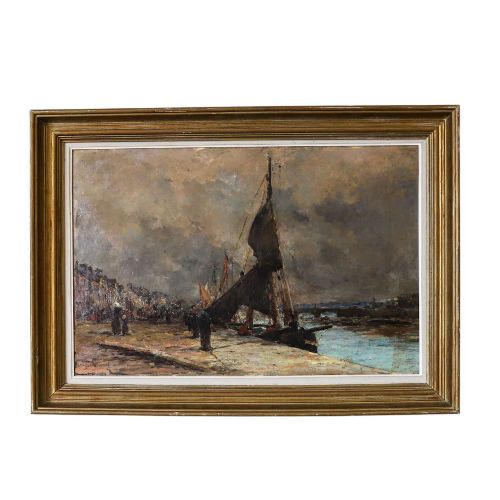
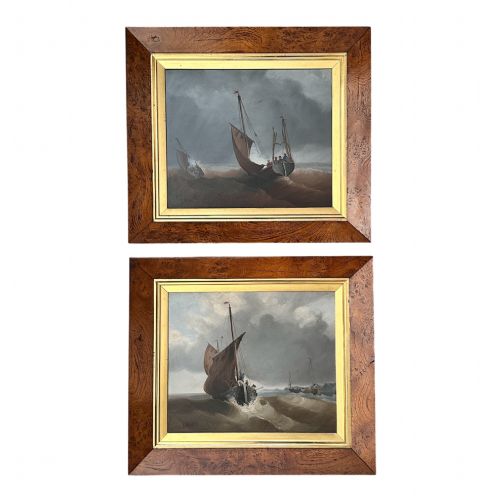
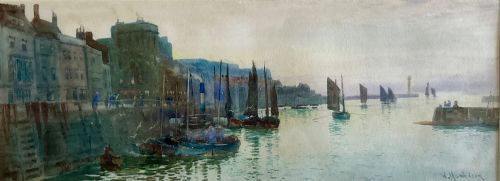
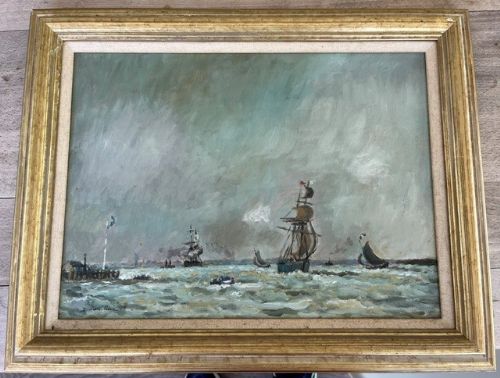
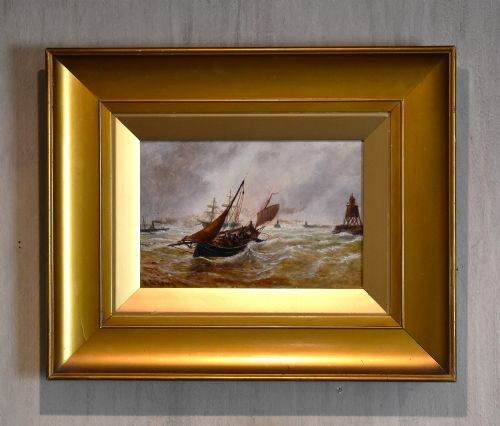
Antique Sailing Boat Artwork
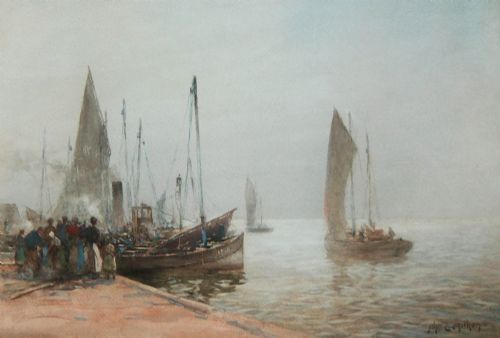
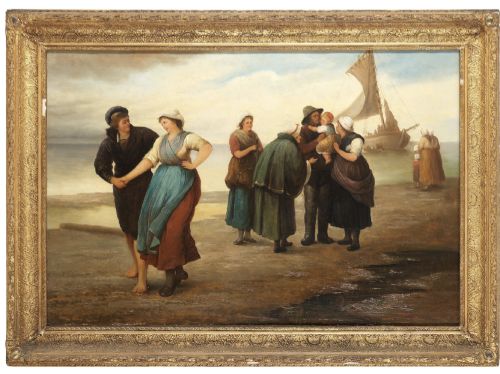
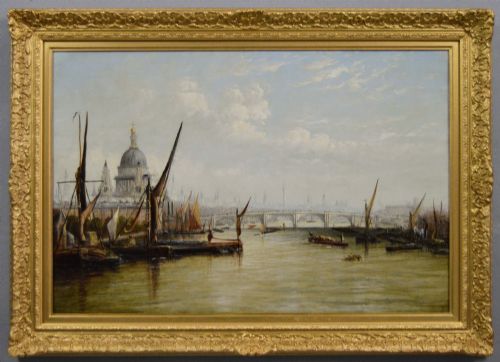
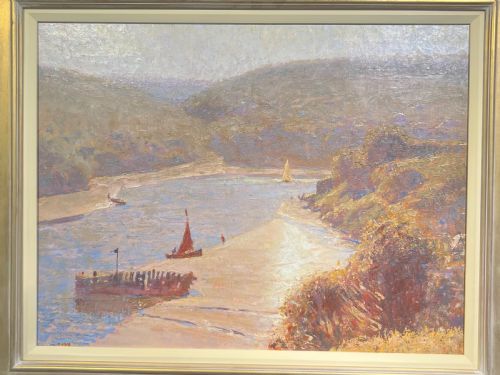
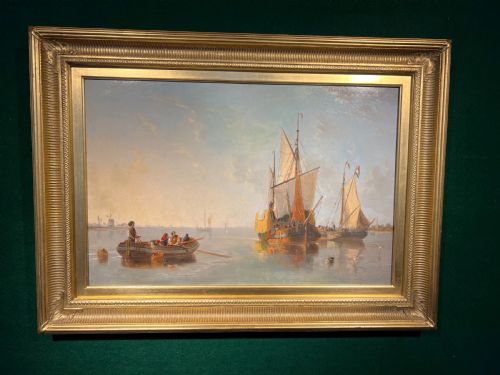
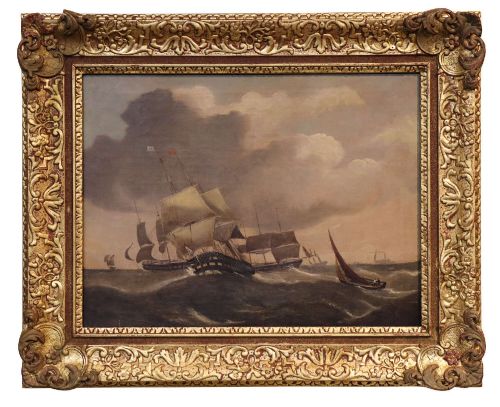
Antique sailing boat artwork captures the movement of vessels across open water through oil and watercolour.
Antique Sailing Boat Artwork
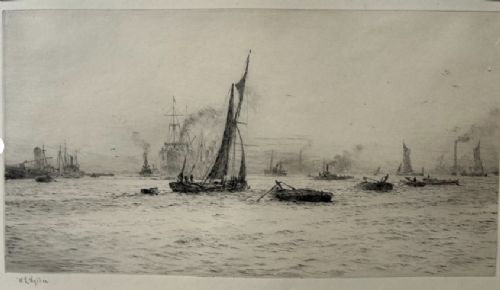
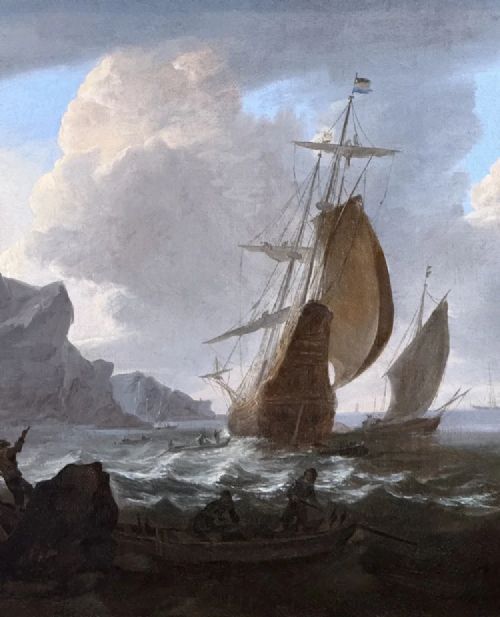
When examining antique sailing boat artwork, collectors encounter depictions of coastal shipping, harbour scenes, and open sea gales. These works document maritime life through the nineteenth and twentieth centuries, recording vessels ranging from Thames barges to fishing boats and large merchant ships.
The most frequent examples on this page are oil paintings on canvas or board and watercolours on paper. Many are framed in period gilt wood settings that complement the maritime subject matter.
Materials and methods
Artists painted these scenes primarily in oil on canvas or board, and in watercolour on paper. Oil pigments allowed for deep textures in stormy seas, while watercolours captured lighter coastal atmospheres.
Support materials include paper, canvas, wood panels, and card. Finished works were often housed in decorative gilt wood frames.
Listings feature works created across the nineteenth and twentieth centuries, utilising oil, watercolour, and etching techniques.
Assessing quality
Quality in these works rests upon the artist's handling of light, atmosphere, and maritime rigging. Strong pieces demonstrate a convincing sense of movement in the water and accurate depiction of vessel construction.
The sensitivity of the brushwork and the preservation of the original medium distinguish finer examples from standard decorative pieces.
James E. Aitken·William Lionel Wyllie·Francis Moltino·John Wilson Carmichael·John Moore of Ipswich·William Matthison·Bernard Benedict Hemy·George Stanfield Walters·Abraham Hulk I·Charles Napier Hemy·Thomas Bush Hardy·Edward Henry Eugene Fletcher·Edward Seago·Frank H. Mason·Clara Montalba
The Antique Sailing Boat Artwork Glossary
- Seascape
- A painting or other work of art that depicts the sea. These works often focus on ships, coastal views, and marine weather.
- Watercolour
- A paint consisting of pigment suspended in a water-based solution. It is typically applied to paper to achieve translucent effects.
- Gilt wood
- Wood that has been treated with a thin layer of gold leaf or gilt paint. Frames of this material are common on nineteenth-century paintings.
- Etching
- A printmaking process where lines are incised into a metal plate with acid. The resulting plate is inked and pressed onto paper.
Antique Sailing Boat Artwork: Frequently Asked Questions
What periods do these artworks cover?
The pieces span from the eighteenth century through to the mid-twentieth century. The majority originate from the nineteenth and early twentieth centuries.
Victorian and Edwardian examples are particularly common among the selections available.
How are these paintings usually framed?
Many of these works retain their original gilt wood frames. These frames often feature traditional moulding suited to the period.
Some pieces may be sold in simpler contemporary or later replacement frames depending on their history.
What is the difference between oil and watercolour versions?
Oil paintings utilise thick pigments on canvas or board to build rich textures and deep water effects. Watercolours employ translucent washes on paper for lighter atmospheric views.
Both mediums were widely used by marine artists to capture different weather conditions.
Where do the coastal scenes usually take place?
The locations vary from British rivers and coastal ports like Whitby and the Thames to Dutch waters and French harbours. Artists often recorded working vessels in familiar local shipping lanes.
Foreign destinations such as Venice or Holland also appear frequently in watercolour works.