
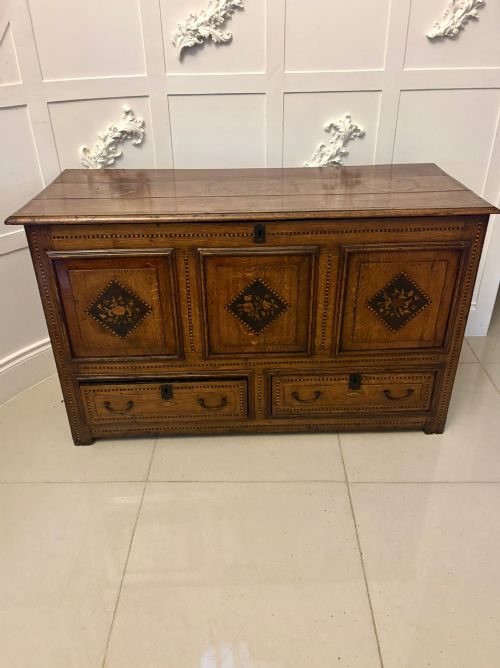
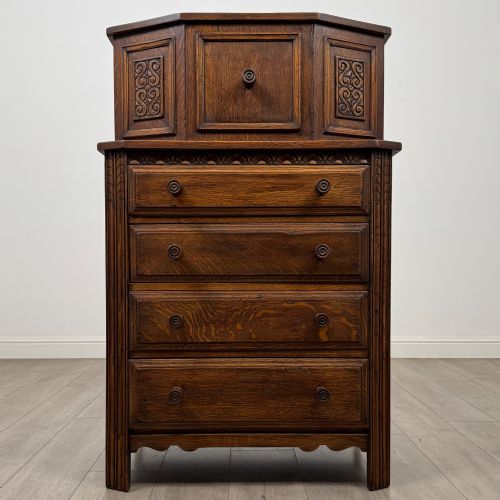
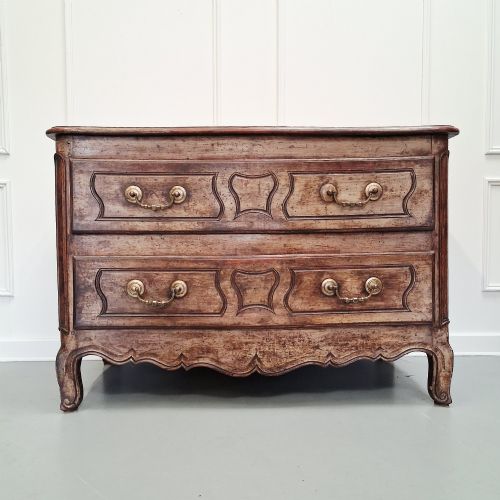
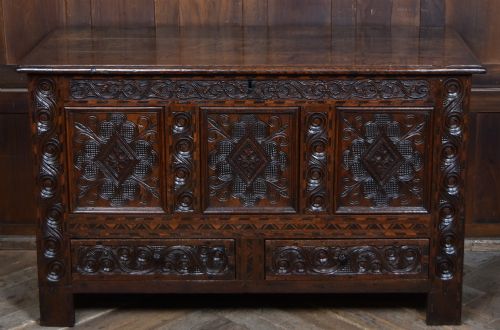
Panelled Oak Chest Drawers
These heavy panelled oak chest drawers anchor a room with centuries of sturdy carpentry.
Panelled Oak Chest Drawers
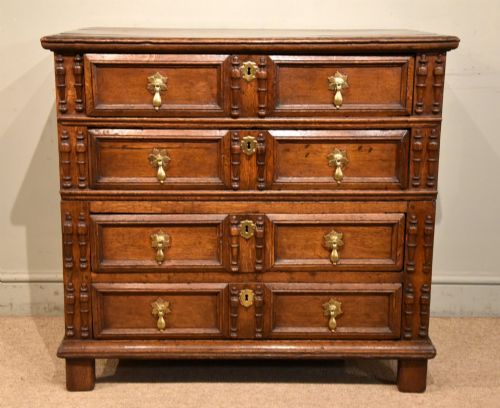
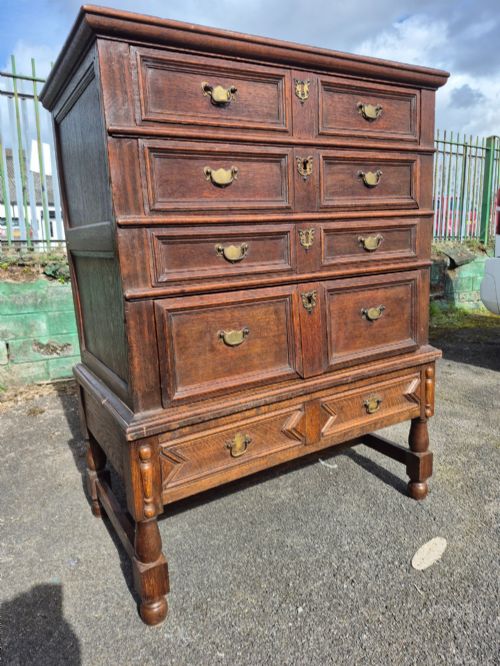
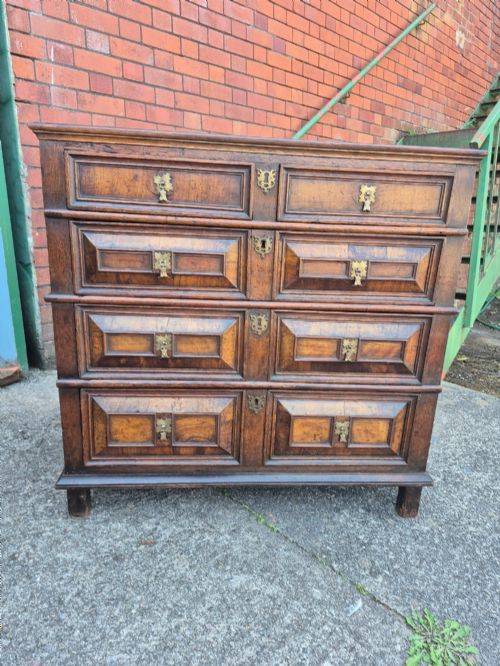
A panelled oak chest drawers combines deep storage with the robust framing characteristic of early English domestic furniture. The selection centres on pieces built across the seventeenth and eighteenth centuries, incorporating periods from the Jacobean era through to Georgian vernacular design.
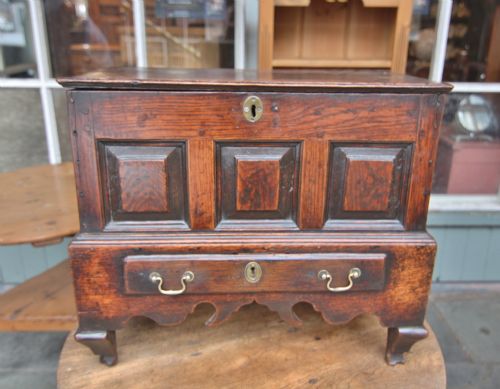
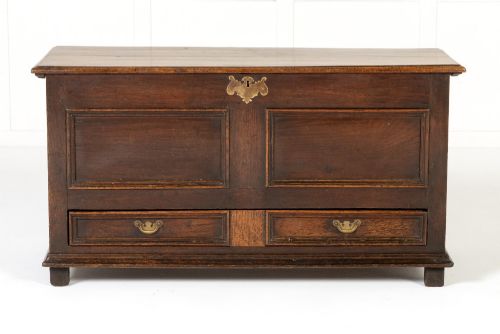
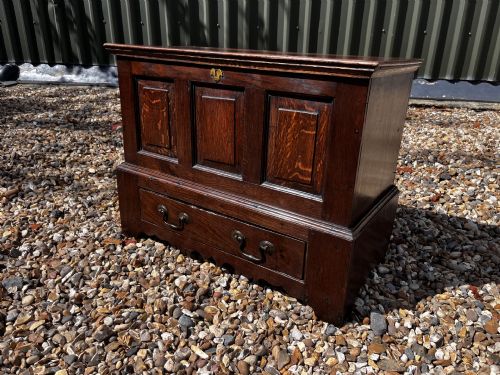
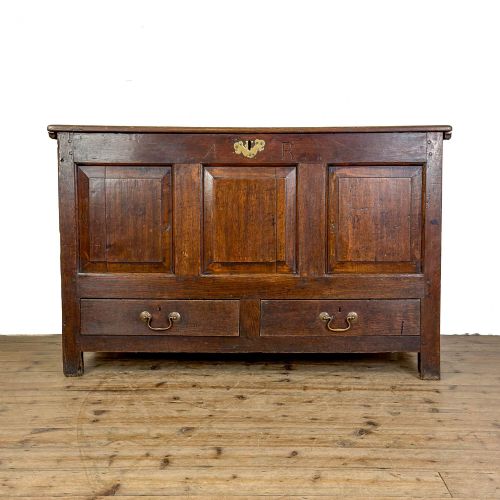
Buyers encounter standard chests of drawers alongside mule chests, coffers with lower drawers, and two-part cabinets. These forms evolved to hold textiles, linen, and personal belongings in homes before fitted wardrobes existed.
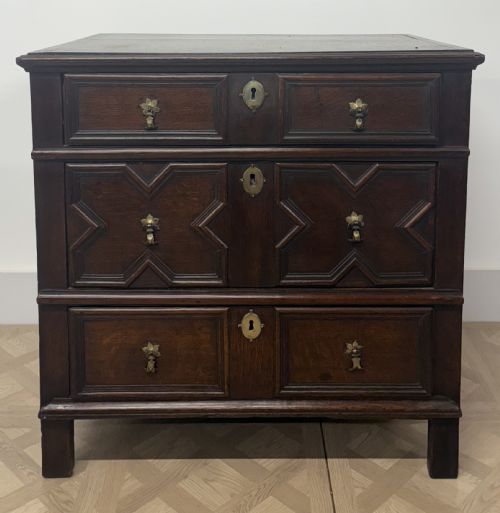
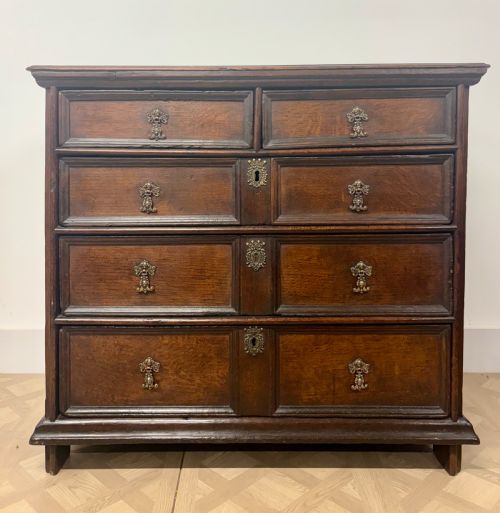
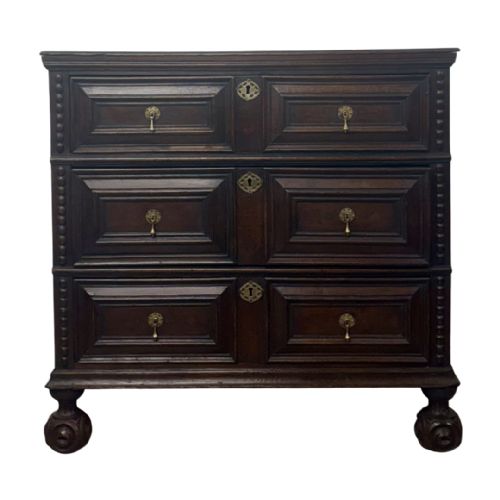
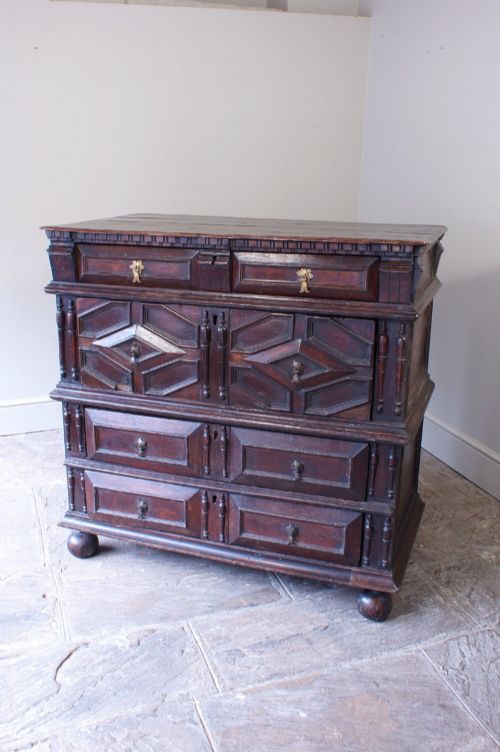
The construction relies heavily on frame-and-panel techniques designed to accommodate the natural movement of solid timber. Many examples display geometric mouldings, raised panels, and integrated drawers set beneath primary lidded compartments.
How they were made
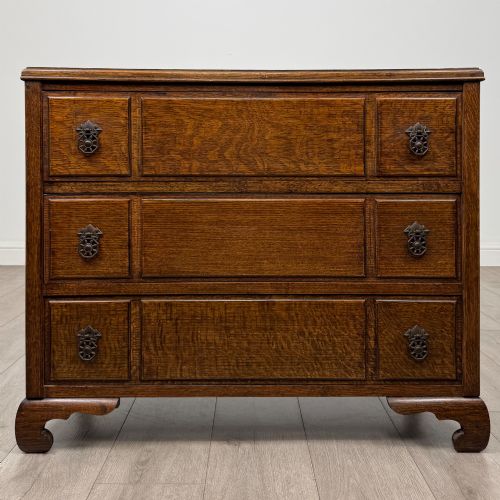
Makers built these pieces primarily from solid oak, frequently selecting quarter-sawn timber to expose the silver grain figures known as medullary rays. Secondary timbers such as walnut, fruitwood, and burr elm appear in applied mouldings, marquetry inlay, and feature panels.
Joinery depended on pegged mortise and tenon frames surrounding floating panels, allowing the wood to expand and contract with seasonal humidity changes. Drawer boxes utilised hand-cut dovetail joints, sliding within closely fitted runners inside the main carcase.
Iron and brass hardware, including drop handles, escutcheons, and butterfly or H-hinges, were secured by hand-hammered nails or threaded pins. Surfaces received finishing through planing, scraping, and applications of wax or oil that developed tone over generations.
Many old mule chests retain hidden spaces behind internal till boxes for stashing coins away from curious household eyes.
What varies in quality
The integrity of the original timber framing determines much of the structural worth in these pieces. Examples retaining their initial board backs, undisturbed floorboards, and unmodified drawer linings command greater respect among purists.
Depth and crispness of surface carving or geometric moulding separate standard utilitarian storage from high-status commissions. Finer versions incorporate sophisticated wood inlay, contrasting walnut veneers, or well-proportioned stiles and rails that show deliberate architectural intent.
The Panelled Oak Chest Drawers Glossary
- Panel
- A flat piece of wood fitted within a surrounding groove or rebate in a frame. This construction method allows the timber to expand and contract without splitting.
- Mule chest
- A storage chest featuring one or more drawers built into the base beneath the main lidded compartment. It bridges the gap between traditional coffers and modern drawer chests.
- Geometric moulding
- Raised wooden mouldings applied in symmetrical patterns to drawer fronts or panels, popular during the late seventeenth century. They create pronounced shadow lines across the facade.
- Coffer bach
- A small Welsh chest or box, often fitted with a single drawer and standing on bracket feet. These miniature items served specialised domestic storage needs.
- Stile
- The vertical upright member in a frame-and-panel construction. It houses the mortises that receive the horizontal rails.
Panelled Oak Chest Drawers: Frequently Asked Questions
How do I date a panelled oak chest?
Dating relies on observing construction methods, handle types, and moulding styles across different eras. Seventeenth-century examples often feature geometric mouldings and pegged frames, while eighteenth-century pieces lean towards cleaner Georgian proportions and simpler drawer configurations.
Changes in hardware attachments and timber preparation also offer clues. Hand-cut dovetails and vernacular tool marks point firmly toward earlier periods of craftsmanship.
What is the difference between a coffer and a mule chest?
A traditional coffer opens only from the top lid and provides deep, open interior storage. A mule chest adds one or more working drawers at the bottom of the structure.
This addition allowed users to access smaller items without lifting the heavy lid or disturbing objects stacked on top of the chest.
How should I care for antique oak furniture?
Keep these pieces away from direct heat sources, radiators, and strong sunlight to prevent the timber from drying out and splitting. Maintain a stable room temperature and humidity level where possible.
Apply a traditional beeswax polish occasionally and buff gently with a soft cloth to nourish the wood and preserve the surface finish.
Why do some drawers have geometric patterns?
Geometric mouldings applied to drawer fronts became fashionable during the late seventeenth century under influence from continental design. These intersecting shapes created texture and visual depth on flat surfaces.
Carpenters cut and mitered small sections of wood, sometimes utilising contrasting timbers like walnut and fruitwood to highlight the pattern.