
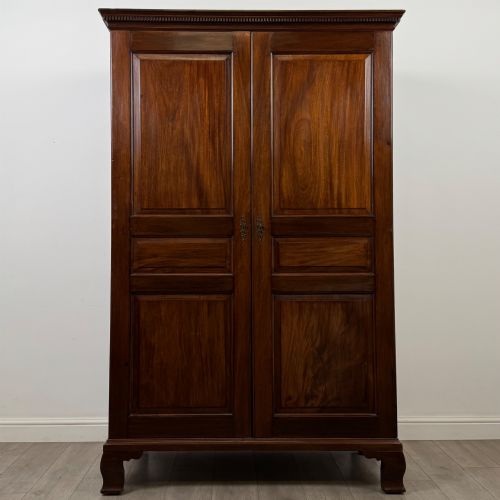
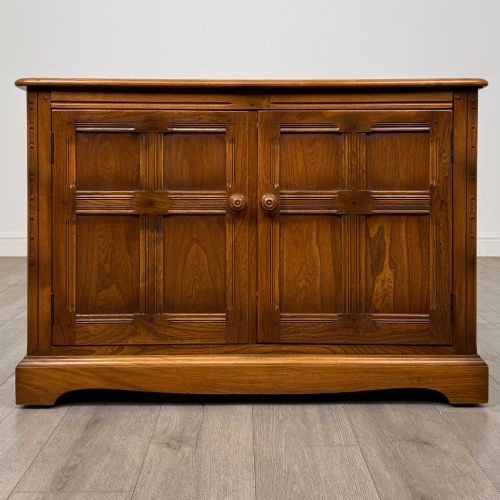
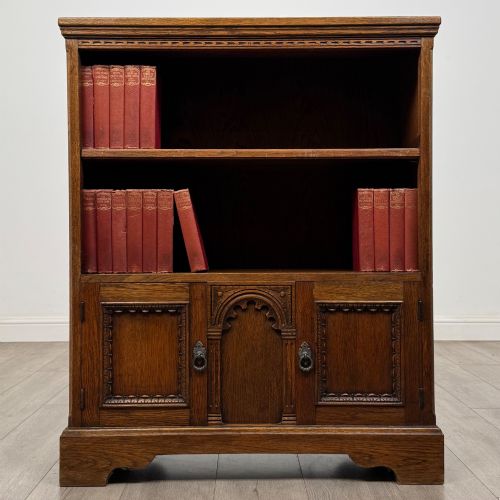
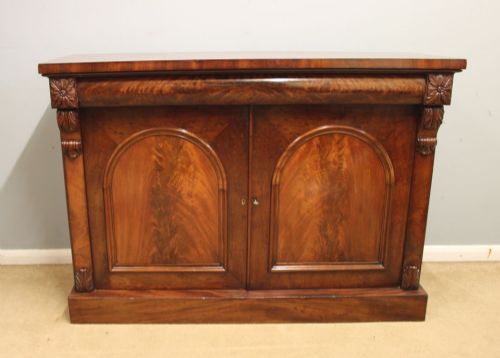
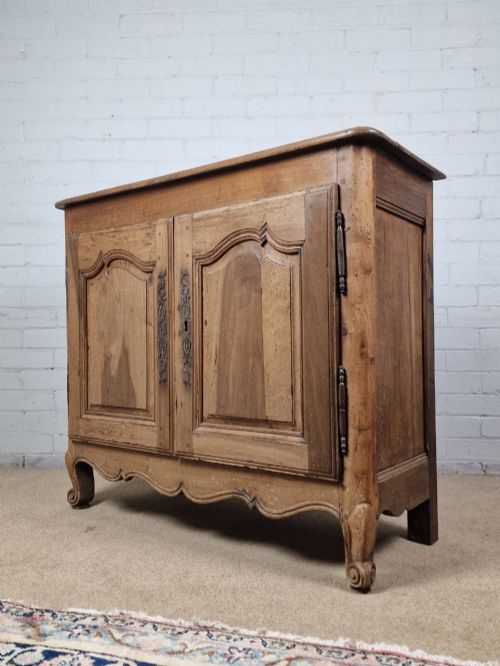
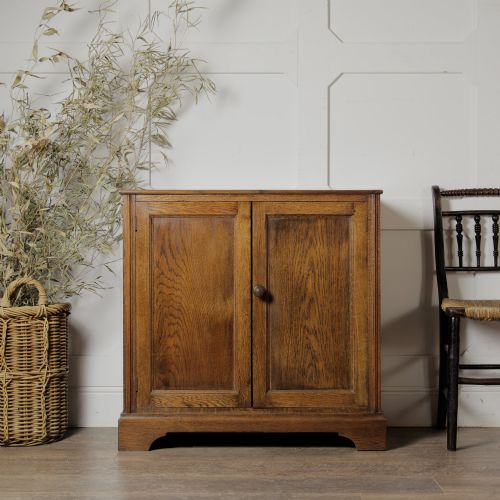
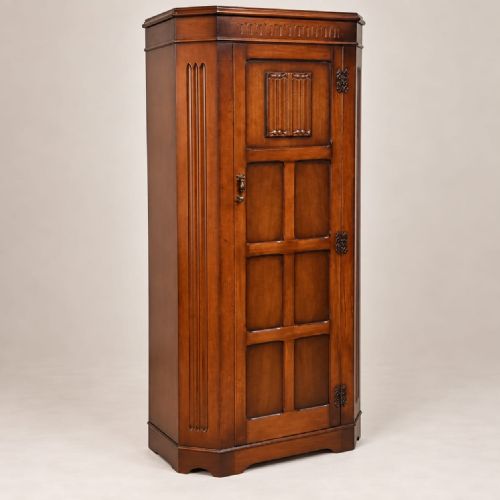
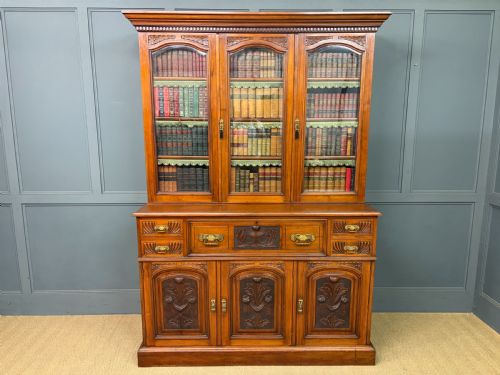

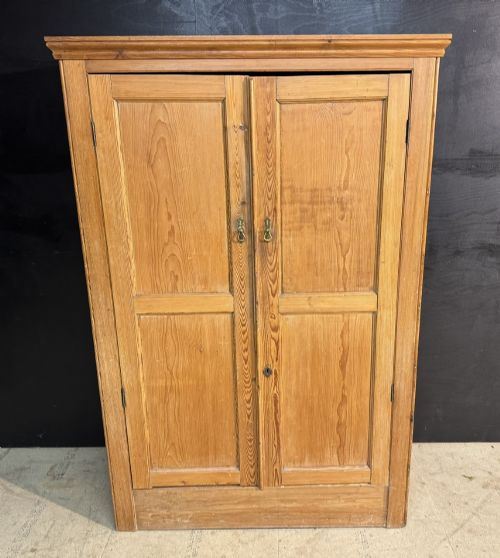
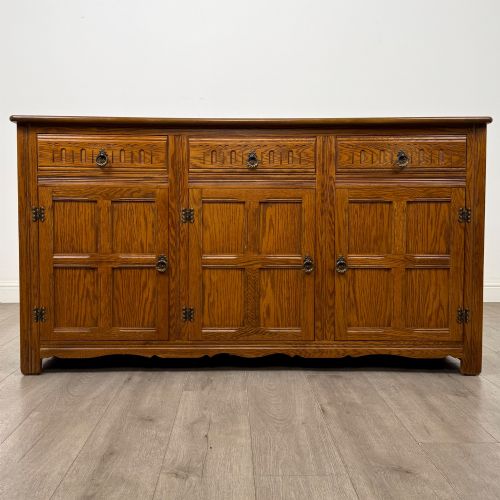
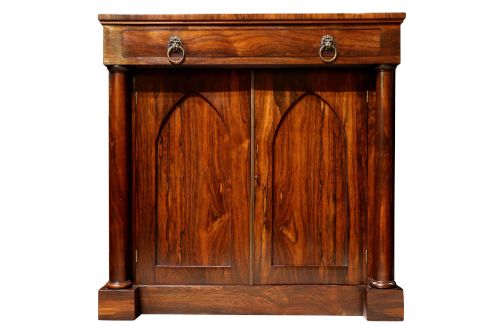
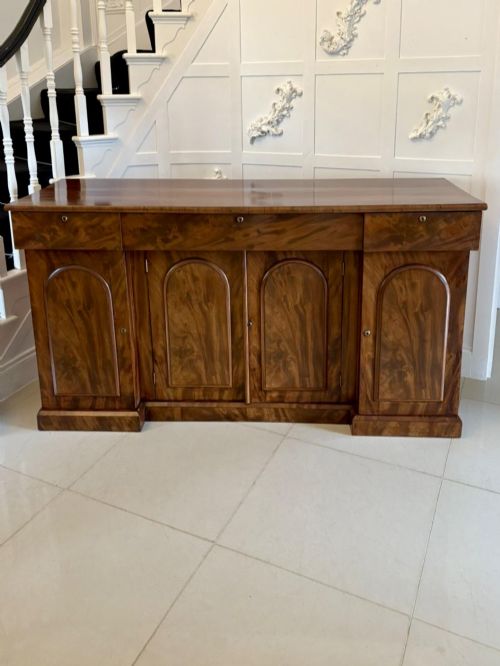
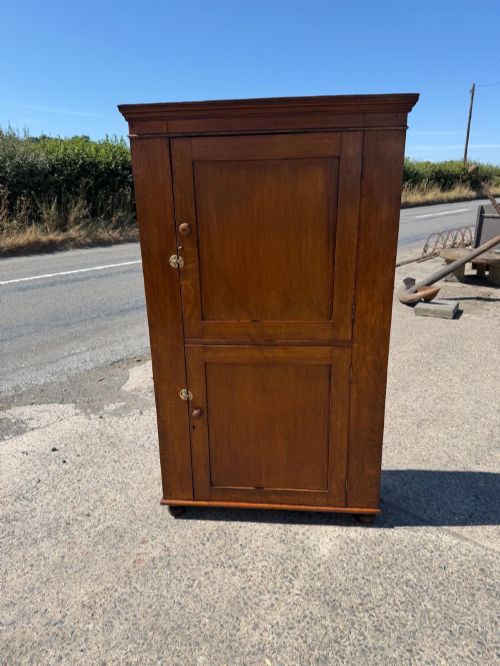
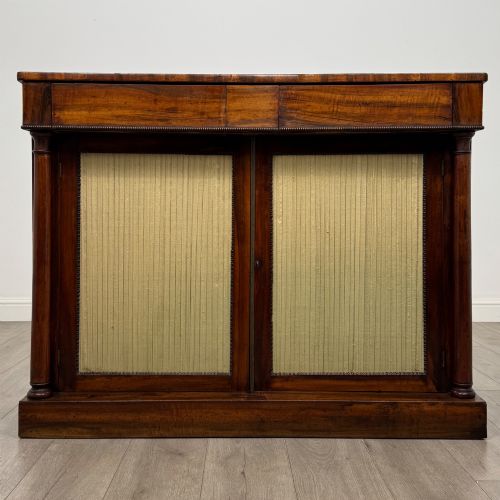
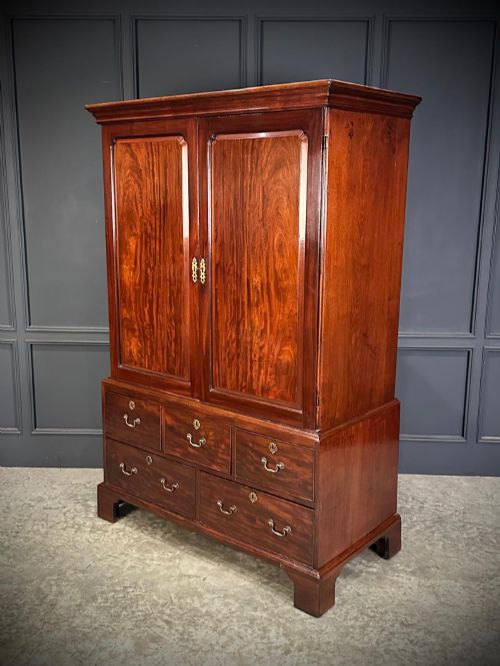
Panelled Door Cabinet
A panelled door cabinet offers solid timber storage built across the eighteenth, nineteenth and twentieth centuries.
Panelled Door Cabinet
A panelled door cabinet is a storage piece designed with framed doors housing inset wooden panels, often configured as corner cupboards, low side units or floor-standing storage.
The selections span distinct periods including Georgian, Victorian, Edwardian and the early twentieth century, alongside revival iterations.
Forms range from compact corner cupboards to larger side cabinets and low cupboards intended for everyday utility.
How they were made
Cabinet makers constructed these pieces primarily in oak and mahogany, alongside pine, walnut, satinwood and rosewood.
Joinery techniques relied on frame and panel construction to accommodate timber movement, supported by brass hardware and iron fittings.
Periods represented span from the eighteenth century through the Georgian, Victorian and Edwardian eras into the 1920s.
What varies in quality
Construction standards depend on timber selection, such as figured mahogany or golden oak, and the precision of the panel framing.
Execution of decorative details like geometric panels, hand-painted sections or carved mouldings distinguishes standard utility pieces from finer examples.
The Panelled Door Cabinet Glossary
- Panelled door
- A door constructed with a solid frame enclosing one or more inset panels. This traditional joinery method prevents warping as the wood responds to humidity.
- Corner cupboard
- A storage cabinet specifically shaped to fit into the corner of a room. These units utilise otherwise wasted angles for displaying or storing household goods.
- Compactum
- A fitted wardrobe or multi-purpose cabinet combining hanging space, drawers and shelving. These pieces maximise storage efficiency within a single footprint.
Panelled Door Cabinet: Frequently Asked Questions
What is a panelled door cabinet?
A panelled door cabinet is a timber storage piece featuring framed doors with inset panels. These units appear across Georgian, Victorian and Edwardian periods in forms like corner cupboards and side cabinets.
They serve as practical storage furniture utilising woods such as oak, mahogany, pine and walnut.
How do I date a cabinet?
Dating relies on timber choices, construction methods and stylistic markers associated with specific periods like the eighteenth or nineteenth century. Georgian pieces often display rich mahogany or oak, while Edwardian examples frequently utilise golden oak or satinwood.
Hardware and joinery details further help anchor the piece to a particular era.
Where should I place a corner cabinet?
Corner cupboards and cabinets fit directly into room angles, making them suitable for dining rooms, hallways or living spaces. They provide accessible storage without occupying open wall space.
Floor-standing and wall-mounted versions both integrate well into period and contemporary interiors.
What woods were used?
Cabinet makers utilised a variety of hardwoods and softwoods depending on the period and regional traditions. Oak and mahogany appear frequently across early and nineteenth-century examples.
Pine, walnut, rosewood and satinwood also feature in specific regional or stylistic pieces.