



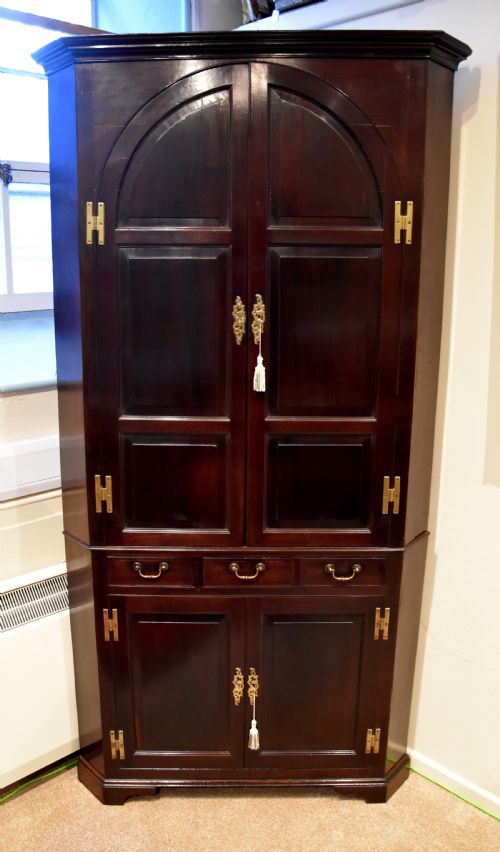

Panelled Corner Cabinet
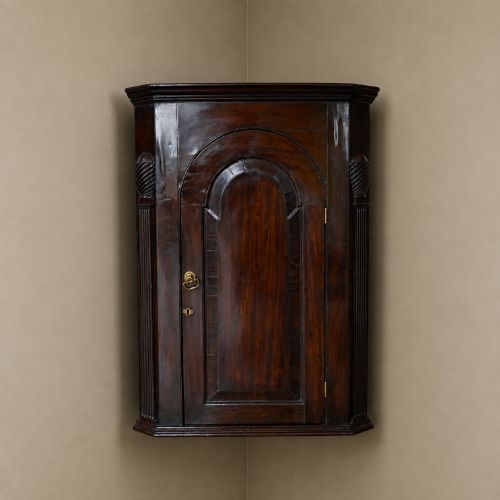
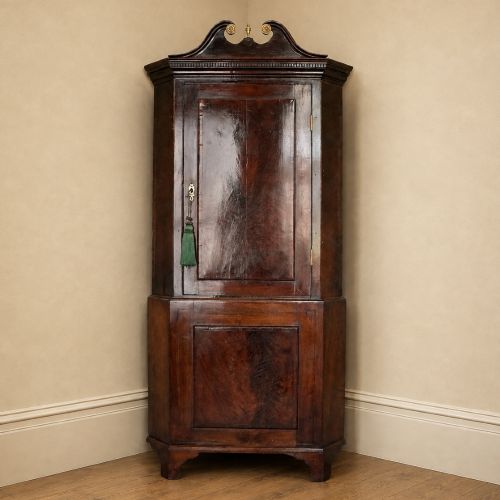
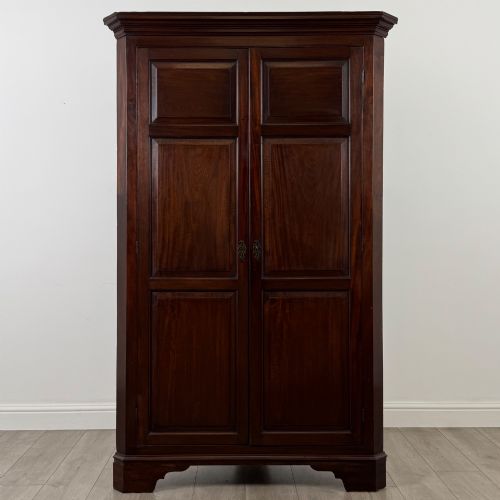
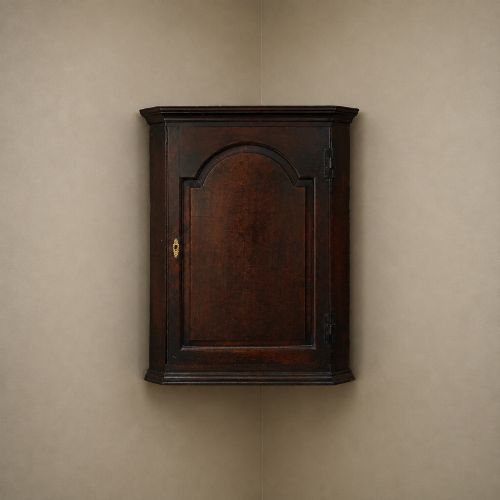
A panelled corner cabinet makes use of empty room angles to store china or provisions while adding architectural depth.
Panelled Corner Cabinet
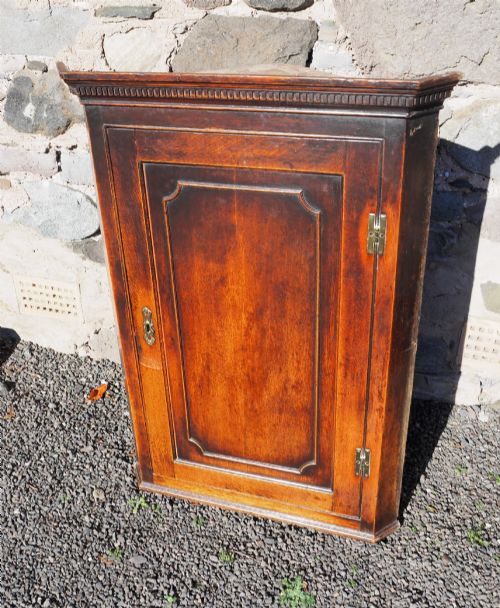
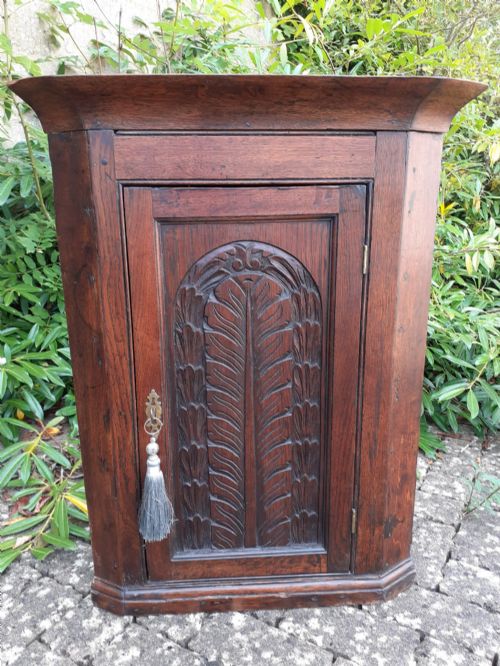
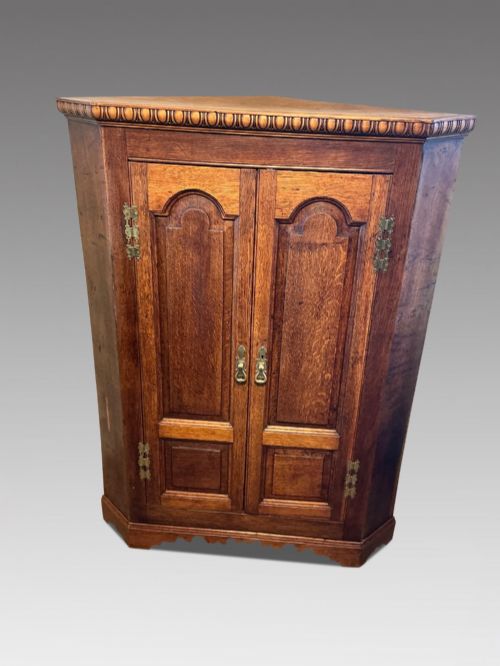
A panelled corner cabinet is designed to fit snugly into the junction of two walls, making clever use of awkward domestic space. These pieces serve primarily to store tableware, dry goods, or glassware behind secure doors.
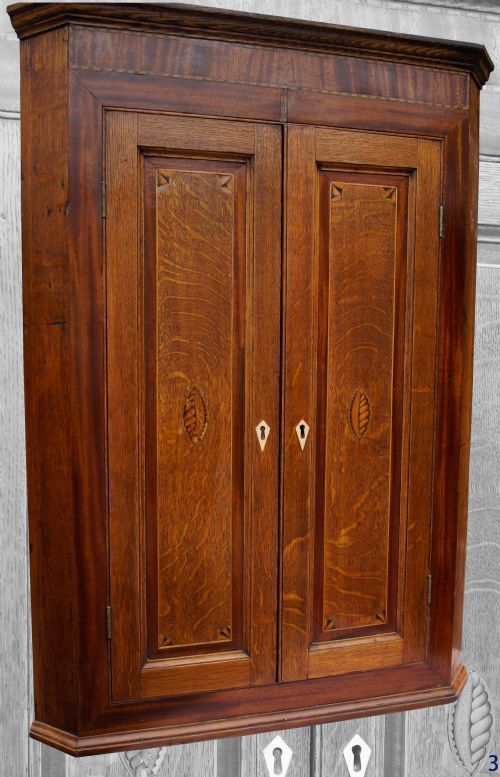
You will most frequently encounter eighteenth-century and nineteenth-century examples fashioned from native timber. Oak and mahogany dominate the selection, appearing in both wall-hanging formats and taller floor-standing variations.
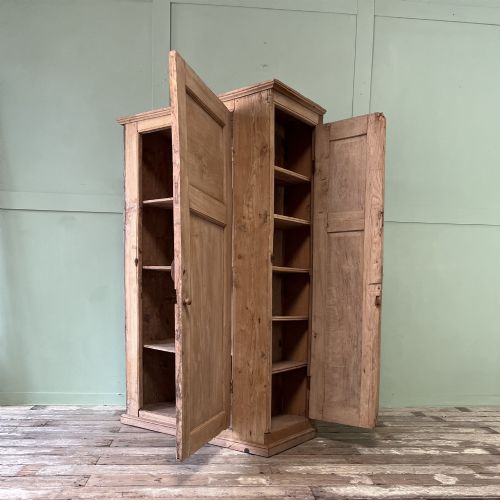
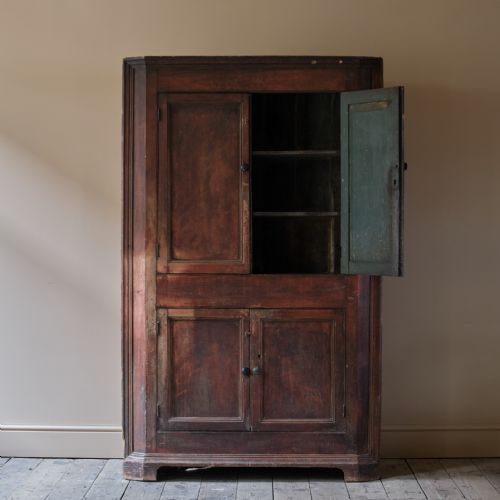
The construction typically relies on frame-and-panel techniques to accommodate seasonal timber movement. Simpler vernacular pieces share space with more formal Georgian designs featuring shaped interior shelving.
Materials and construction methods
Cabinet makers relied heavily on quarter-sawn oak, Cuban mahogany, and regional pine, often selecting timber for prominent grain patterns. Brass H-hinges and iron butterfly hardware fastened the heavy doors to the solid carcasses.
Joinery combined pegged mortise-and-tenon frames with tongue-and-groove backboards to ensure structural stability over centuries of use. Surface finishes ranged from clear wax polish on hardwoods to traditional lead-based paint and simulated graining on pine.
Panelled Corner Cabinet Retail Price Guide 2026
Typical asking prices for panelled corner cabinet among the pieces listed under this phrase on Sellingantiques today, from the lower quarter to the upper quarter. They describe what is for sale here now, not the wider market.
The listings on this site span Georgian, Victorian, and Edwardian periods, constructed primarily in oak and mahogany with occasional pine and elm variants.
Assessing quality and proportion
Quality rests in the selection of timber and the precision of the mitred joints where the cabinet meets the wall. Superior pieces display well-figured mahogany veneers or tight-grained oak boards chosen specifically for the door panels.
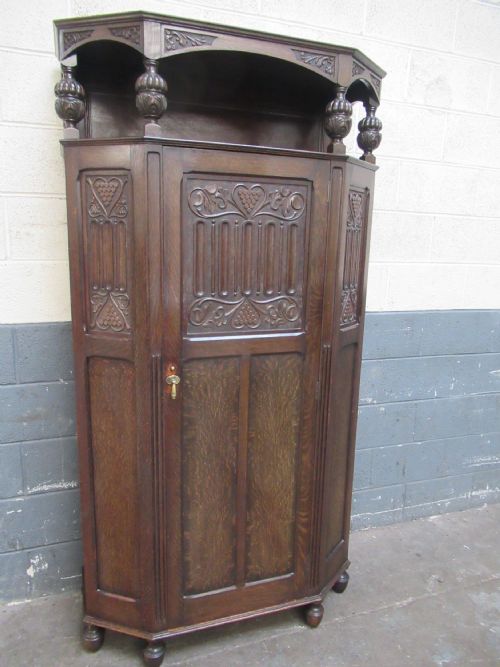
Proportion dictates the visual success of the piece, particularly in floor-standing models where the cornice must balance the weight of the lower cupboard. Interior detailing, such as shaped and shaped-edge shelving, separates standard utility cupboards from finer parlour examples.
The Panelled Corner Cabinet Glossary
- Cornice
- The decorative mouldings that crown the top of the cabinet. This architectural feature often mirrors the interior ceiling height of period rooms.
- Hinges
- Metal fixings securing the doors to the frame. Brass butterfly or H-form hinges are typical of earlier vernacular cabinetwork.
- Vernacular
- Objects built by regional craftsmen for local domestic use rather than following strict metropolitan design books. These pieces often incorporate local timber species like elm or Welsh oak.
- Hanging corner cupboard
- A smaller variant designed to be mounted directly to wall studs. They free up floor space while keeping contents at eye level.
- Frame and panel
- A method of construction where a central floating panel sits within a grooved frame. This technique allows wood to expand and contract without splitting.
Panelled Corner Cabinet: Frequently Asked Questions
What is the difference between hanging and standing models?
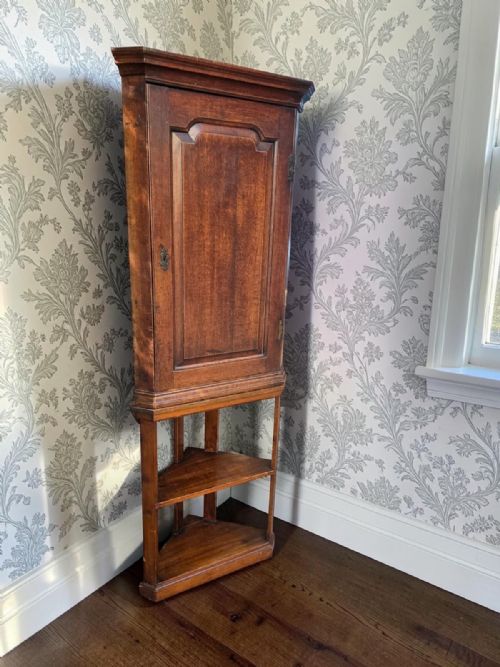
Hanging models attach directly to room walls to preserve floor space, whereas standing models rest entirely on the floor as independent pieces of furniture. Standing versions often split into two distinct sections to ease transport.
Floor-standing examples provide significantly greater storage capacity, frequently incorporating a lower cupboard section beneath the main display area. Both types utilise the same fundamental geometry to fit room angles.
How do I identify eighteenth-century oak?
Eighteenth-century oak exhibits distinct medullary rays, which appear as shimmering silver flakes across the grain. The timber generally feels dense and heavy, showing rich patination developed through centuries of waxing.
Hand-cut dovetails and pegged joinery further indicate period manufacture rather than later revival work. Iron or brass hardware on these pieces typically displays irregular hand-finished characteristics.
Can these cabinets fit modern rooms?
The compact geometry of a corner cabinet allows it to occupy unused wall junctions without dominating a modern floor plan. They provide functional storage in dining areas or kitchens while introducing period character.
Measuring the exact wall return and ceiling clearance ensures the projecting cornice fits the available corner space comfortably. Most standard room angles accommodate these historical proportions without difficulty.