





Paisley Carpet Runner
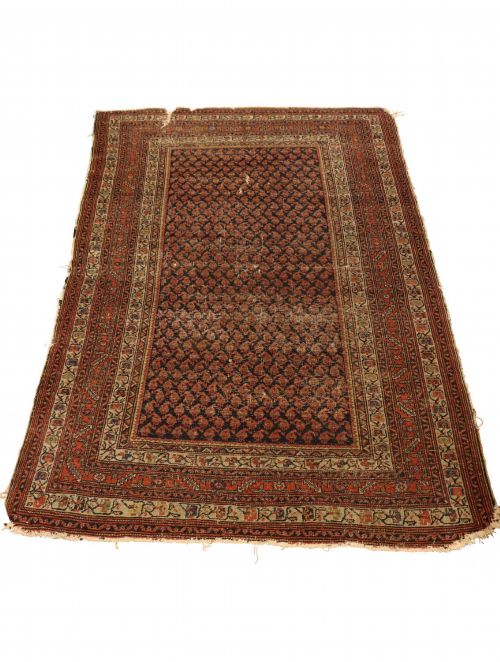
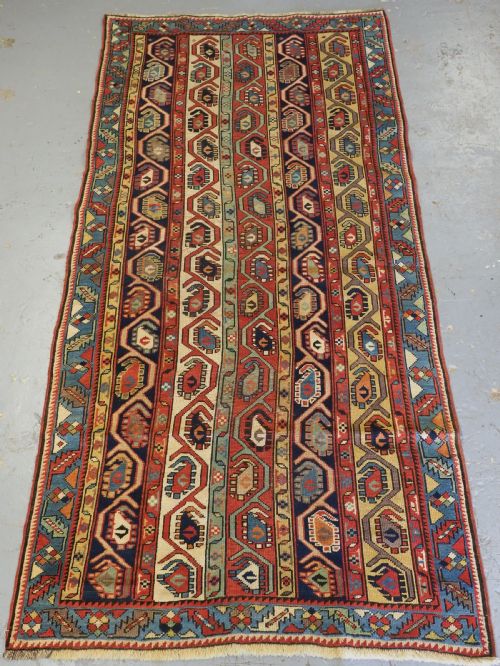
A paisley carpet runner brings the fluid motion of traditional boteh motifs and long, narrow proportions into a hallway or corridor.
Paisley Carpet Runner
When searching for a paisley carpet runner, buyers encounter narrow formats designed for corridors and galleries, populated by repeating seed or almond boteh motifs. These pieces bridge several regional aesthetics, appearing under Caucasian, Persian, and Kurdish attributions from the late nineteenth century and the early twentieth century.
The format itself serves long spaces, stretching from room transitions to grand hallways. Most examples rely on wool pile knotted tightly onto cotton foundations, creating sturdy surfaces built to handle regular foot traffic.
How they were made
Weavers constructed these long formats using wool for the soft pile and cotton for the underlying warp and weft threads. Hand-knotting techniques allowed makers to execute intricate diagonal or all-over boteh patterns with precision.
Natural dye extraction produced the rich hues seen across these pieces, anchoring deep tones that held fast across decades of use.
Paisley Carpet Runner Retail Price Guide 2026
Typical asking prices for paisley carpet runner among the pieces listed under this phrase on Sellingantiques today, from the lower quarter to the upper quarter. They describe what is for sale here now, not the wider market.
Several runners feature flaming boteh designs, where the tip of the paisley curls upward like a flickering tongue of fire.
What varies in quality
Knot density dictates the clarity of the boteh motifs and the overall resilience of the foundation underfoot. Tighter packing yields sharper lines and firmer structures that resist distortion over time.
Dye saturation and colour harmony distinguish finer weaving traditions from standard commercial production. Balanced palettes and well-executed regional designs elevate certain runners above simpler village examples.
The Paisley Carpet Runner Glossary
- Boteh
- A traditional almond-shaped or teardrop motif with a curved upper tip, often interpreted as a stylised floral spray or cypress tree. This pattern forms the primary visual element in paisley designs.
- Warp
- The vertical threads stretched tightly on the loom that form the structural skeleton of the rug. Cotton typically serves this purpose in these regional pieces.
- Weft
- The horizontal threads passed between warp threads to lock the knots firmly in place. They alternate with the pile rows to secure the textile.
- Pile
- The dense surface layer of upright wool ends that receives foot traffic and displays the woven design. Hand-knotting creates this tactile upper texture.
Paisley Carpet Runner: Frequently Asked Questions
How do I clean a runner?
Professional dusting and specialist immersion washing preserve the natural wool fibres and prevent dye bleeding.
Regular gentle vacuuming without rotary brush heads removes grit before it settles deep into the foundation.
Are these runners durable?
Wool pile and sturdy cotton foundations provide natural resilience for hallways and high-traffic corridors.
Using a quality underlay prevents slipping and cushions the weave against hard stone or timber floors.
What is a boteh?
The boteh is an ancient Persian motif resembling a curved palm leaf or almond shape, widely known in the West as paisley.
Weavers arranged these symbols in diagonal rows, all-over fields, or framed medallion structures.
How do I date a rug?
Structural characteristics, regional weaving traits, and dye types help narrow down the period of production.
Nineteenth-century examples often display vegetable-derived palettes and varied tribal knotting techniques.