

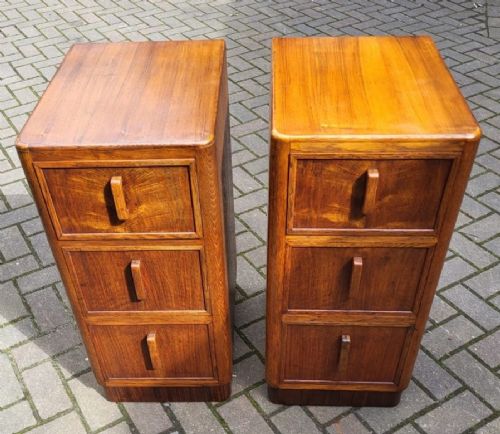
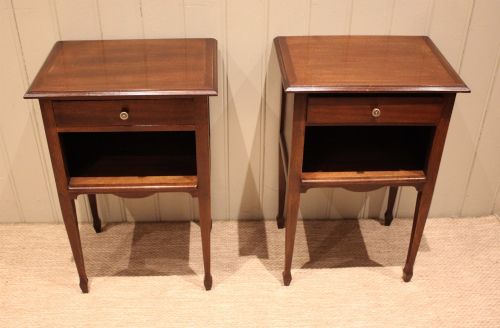
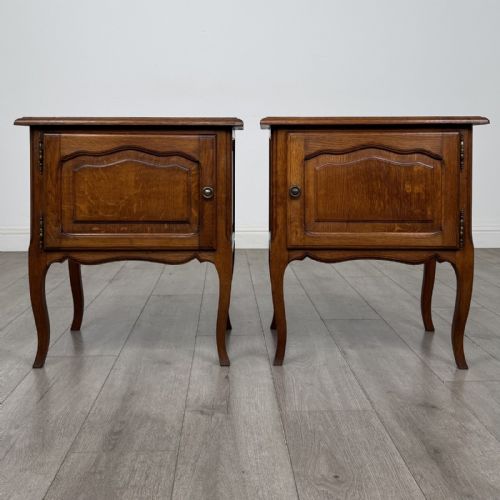
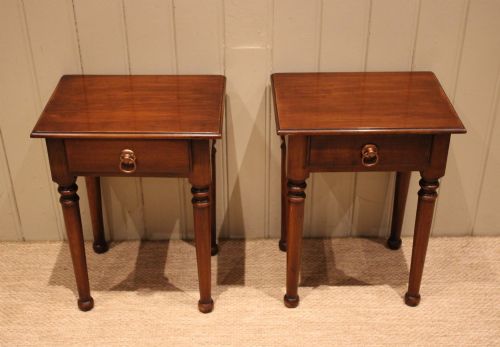
Paired Bedside Cabinets
Paired bedside cabinets bring symmetry to the bedroom, offering matched storage in mahogany, walnut, oak and marble.
Paired Bedside Cabinets
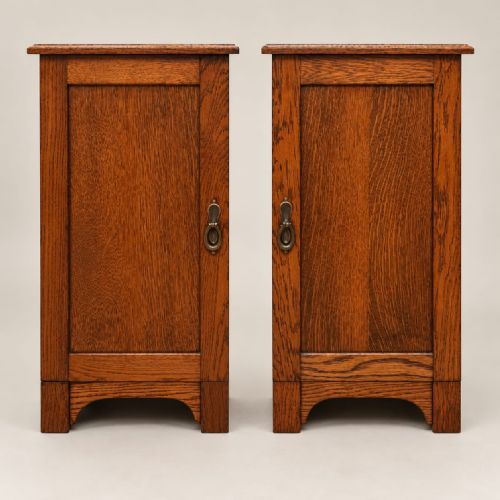
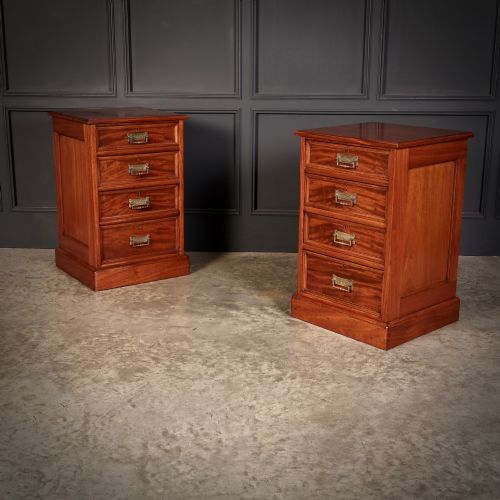
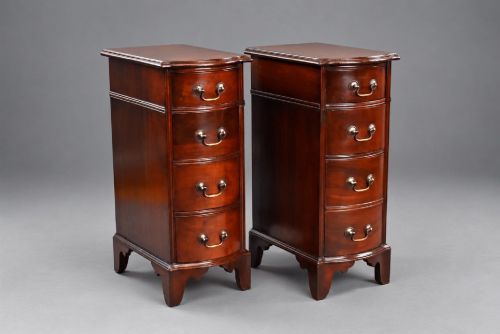
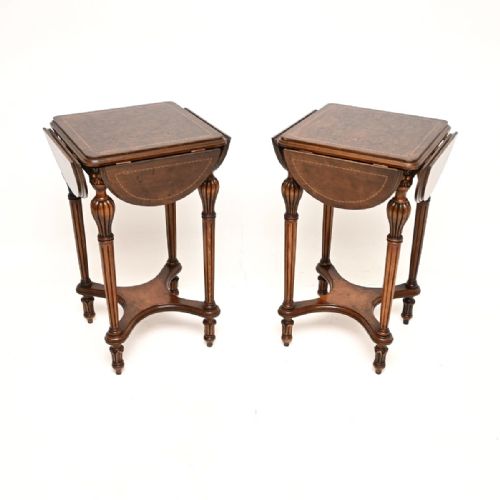
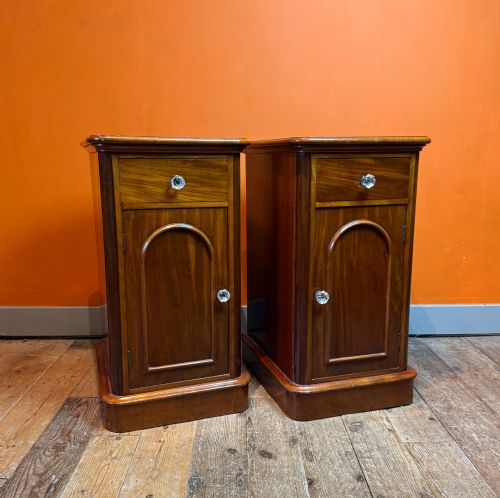
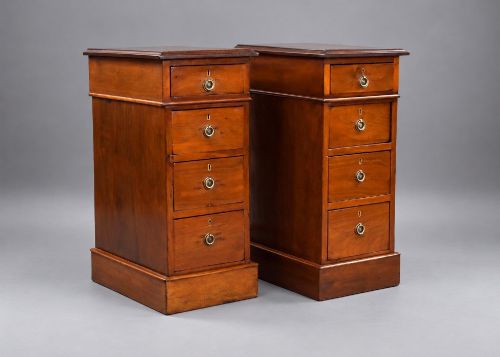
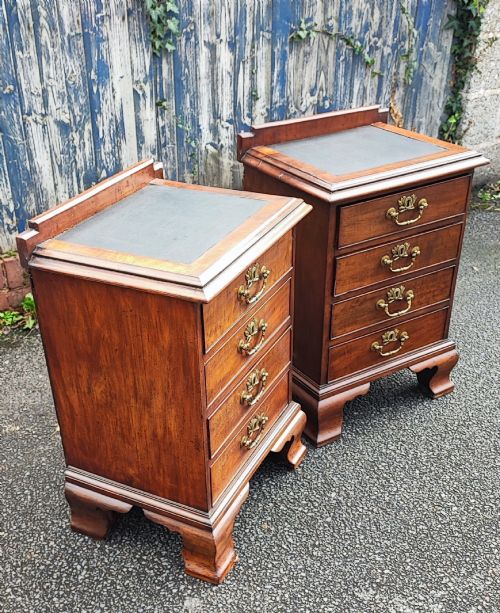
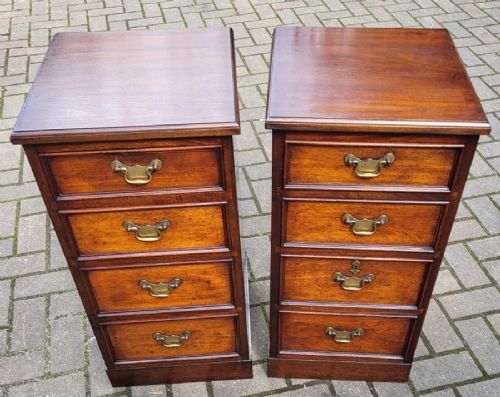
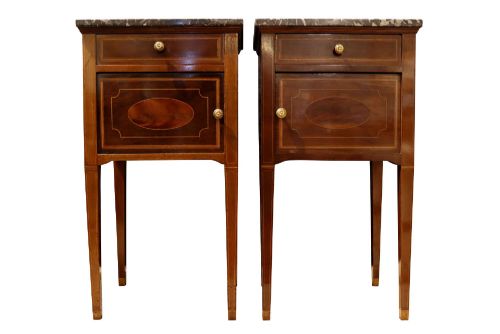
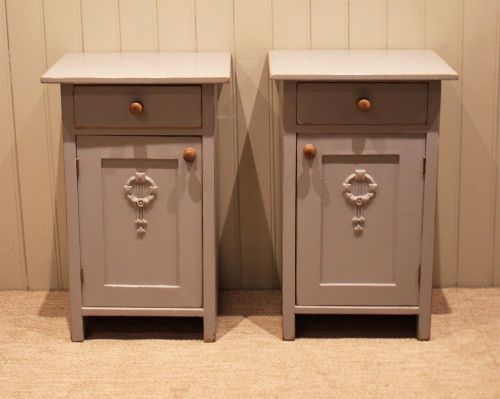
Paired bedside cabinets are matching night-time storage pieces designed to stand beside a bed, appearing in forms from simple cupboards and open tables to drawer chests. When you search for paired bedside cabinets, you encounter matched pairs dating from the mid-nineteenth century through the Art Deco era of the nineteen-thirties.
The nineteenth-century examples lean towards heavy timbers like mahogany and burr walnut, often built as small cupboards or chests with panelled doors. By the nineteen-twenties and nineteen-thirties, continental workshops introduced lighter woods such as cherry, satin birch and French oak alongside marble tops.
Materials and Construction
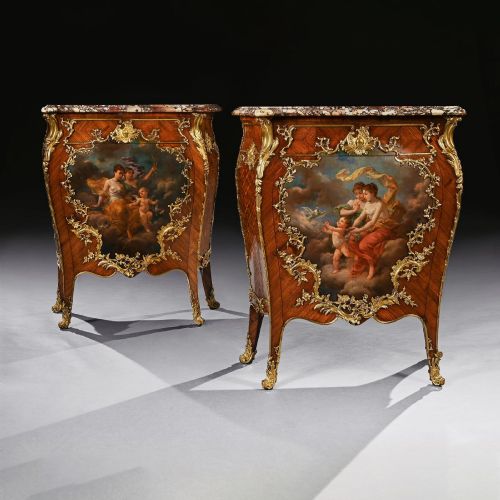
Cabinet makers utilised dense hardwoods like mahogany, walnut and oak for the primary carcases, frequently applying decorative veneers such as kingwood, rosewood and satinwood to the exterior surfaces. Marquetry inlay and bow-fronted shaping appear on finer pieces from both the Victorian period and the early twentieth century.
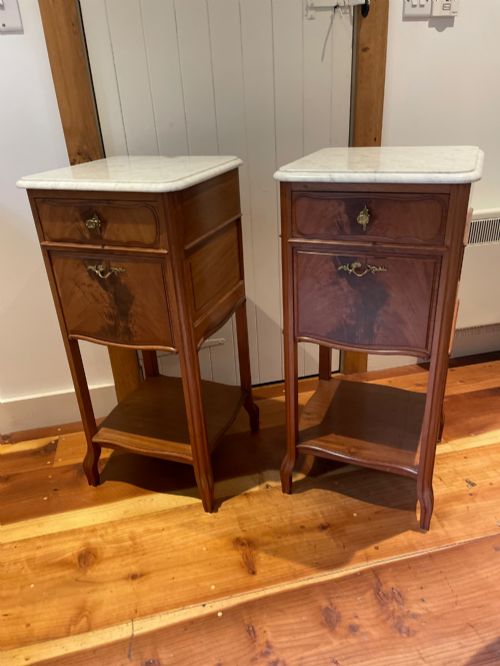
Many continental cabinets incorporate inset marble tops in white or coloured stone to protect the wooden surface from water jugs and glassware. Brass hardware, drop handles and occasional gallery rails complete the construction of these cupboards and drawers.
Paired Bedside Cabinets Retail Price Guide 2026
Typical asking prices for paired bedside cabinets among the pieces listed under this phrase on Sellingantiques today, from the lower quarter to the upper quarter. They describe what is for sale here now, not the wider market.
Listings feature paired bedside cabinets spanning the nineteenth century, Edwardian era, and nineteen-thirties, constructed from mahogany, walnut, oak, and marble.
Standard of Manufacture
Quality rests upon the selection of timber and the precision of the cabinet work, visible in tight joints, uniform veneer matching across the pair, and smooth drawer operation. Superior pairs display consistent grain patterns and substantial timber thickness rather than thin surface laminates.
The integration of secondary materials defines the upper tier of production, where heavy marble slabs fit flush into rebated wooden tops and marquetry details remain crisp and complete. Lesser examples show mismatched timber ageing or replacement hardware that disrupts the symmetry of the pair.
The Paired Bedside Cabinets Glossary
- Marquetry
- Decorative patterns formed by inserting small pieces of wood veneer into a background panel. This technique creates geometric or floral designs on cabinet doors and drawer fronts.
- Bow front
- A convex, curved front profile found on chest of drawers and bedside cabinets. It softens the geometric lines of bedroom furniture.
- Chevet
- A French term for a small bedside table or cabinet. These often feature a combination of a small drawer and a lower cupboard space.
- Burr walnut
- Timber taken from the warted growths on walnut trees, yielding highly figured grain patterns. Cabinet makers utilised these swirling veneers on luxury Victorian furniture.
- Satin birch
- A pale, golden hardwood with a distinct shimmering grain. Swedish workshops favoured this timber for Art Deco bedside cabinets.
Paired Bedside Cabinets: Frequently Asked Questions
Are paired bedside cabinets always identical?
Most surviving sets are matching pairs designed together in the workshop, sharing timber species, dimensions and decorative details.
However, some early pieces originate as assembled pairs where two single cabinets of the same period and timber have been matched together for symmetry.
How do I care for a marble top?
Marble tops require gentle cleaning with warm water and a soft cloth to preserve the polished stone finish. Avoid acidic cleaners that can etch the surface over time.
Using coasters for glasses protects both the stone and any surrounding wooden mouldings from moisture rings.
What periods do these cabinets cover?
The selection spans from the Victorian era and the late nineteenth century through Edwardian designs and into nineteen-thirties Art Deco.
Victorian pieces typically feature solid mahogany or burr walnut, while later twentieth-century items often showcase French oak, cherry wood or limed finishes.
How were bedside cabinets used historically?
Bedside cabinets served as private storage beside the sleeping quarters, holding night-time requisites, chamber pots or personal belongings.
The enclosed cupboards and small drawers kept items hidden from view, maintaining a tidy appearance in traditional bedrooms.