


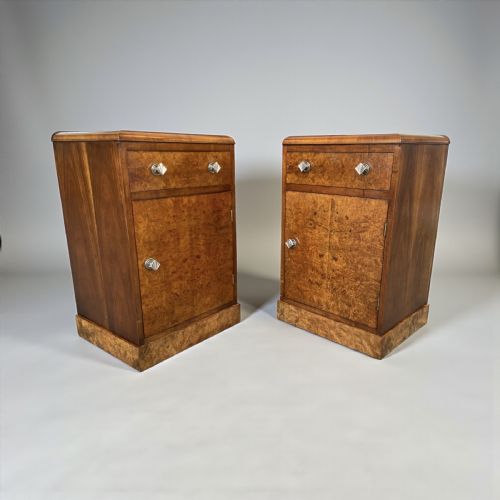

Paired Bedroom Pedestals
Paired bedroom pedestals offer matching bedside storage and surface space, bringing symmetry and proportion to a sleeping chamber.
Paired Bedroom Pedestals
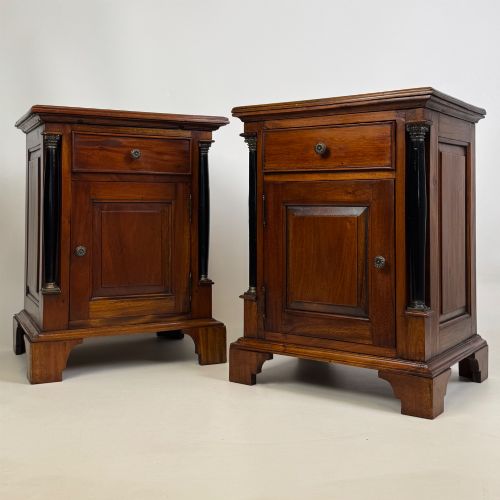
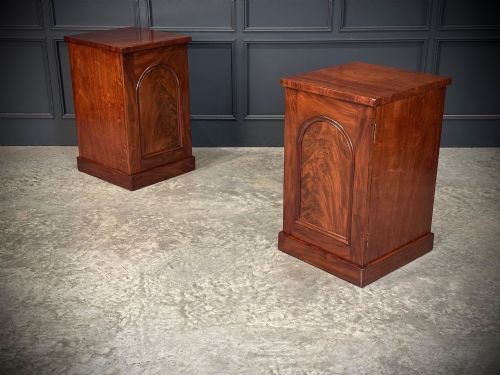
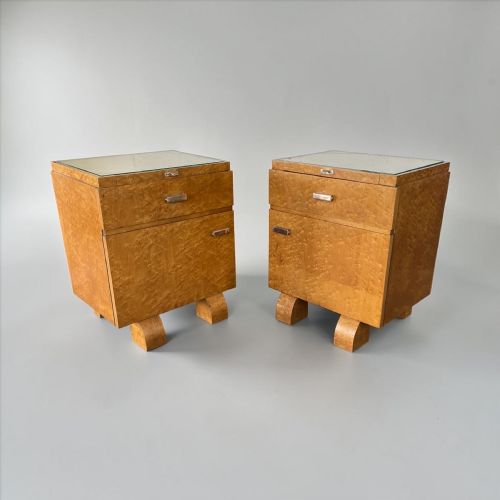
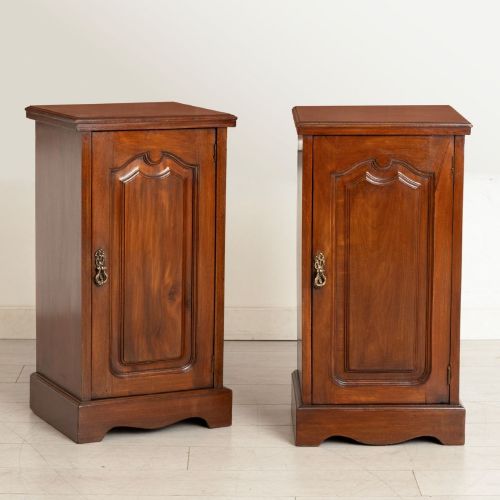
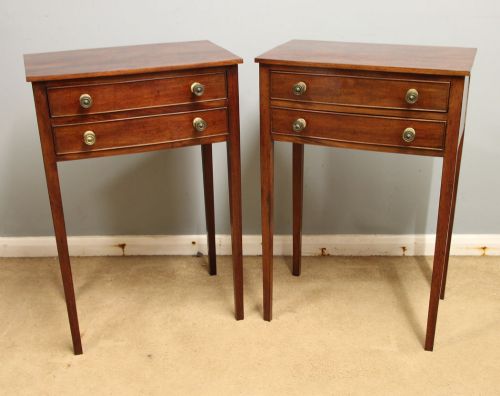
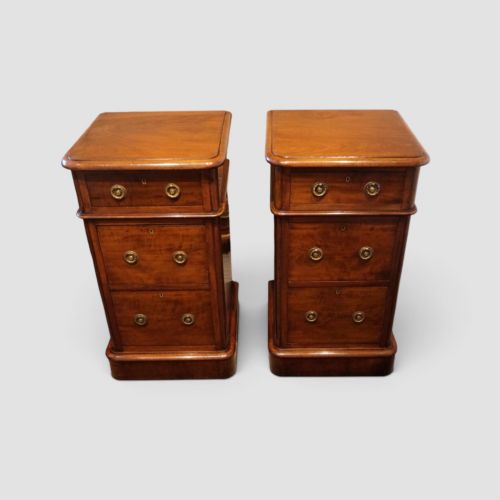
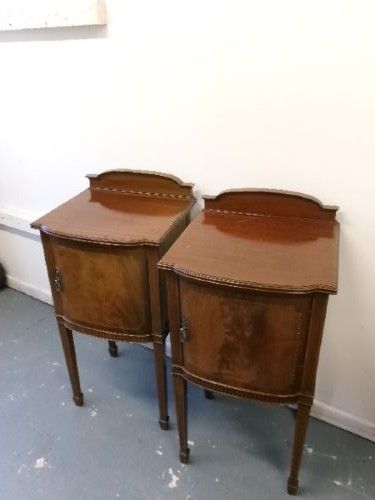
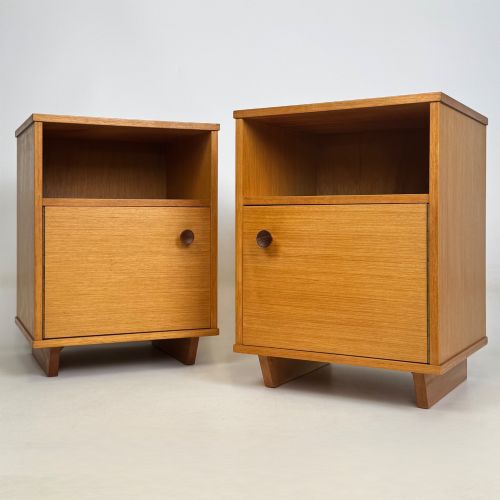
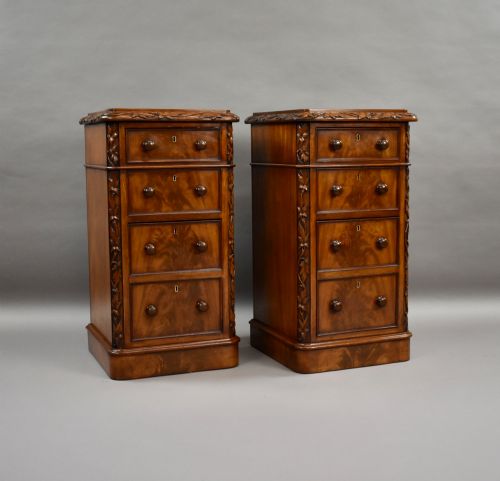
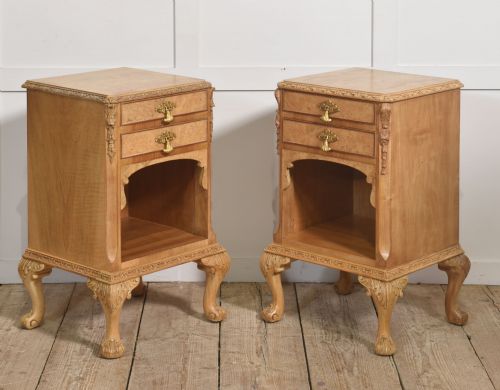
These items comprise matching sets of bedside storage units, frequently designated as bedside cabinets, tables, chests, or nightstands. They originate from various periods spanning the Victorian era through the Edwardian years and into the 1930s Art Deco movement.
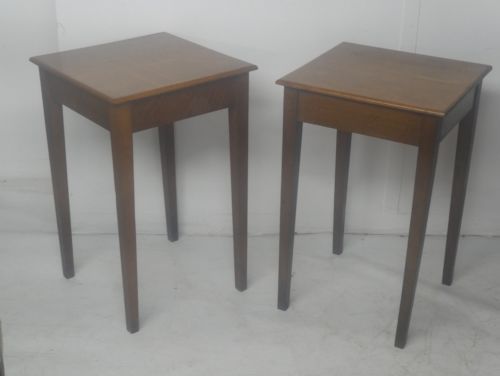
Mahogany forms the most frequent timber encountered, alongside walnut, satinwood, and oak. Forms range from simple single-door cupboards and open tables to multi-drawer chests and taller Wellington-style formats.
Revival styles appear regularly, including Sheraton Revival, Queen Anne Revival, and Louis XVI Style, alongside distinct regional pieces such as Scottish oak lamp tables and Irish bedside tables.
Materials and construction methods
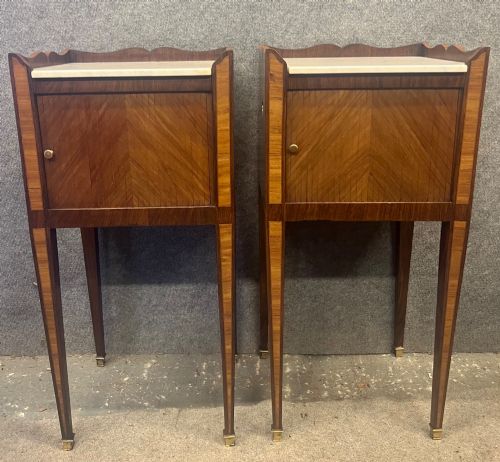
Metal elements including brass hardware, handles, and occasional structural mounts accent timber bodies, particularly on French-influenced designs. Marble tops also appear on select Victorian and 20th-century pieces to provide a durable, wipe-clean bedside surface.
Some Victorian nightstands secretly began life containing china chambers, proving that historical convenience often masqueraded as fine cabinetry.
Distinctions in standard and execution
The refinement of the timber selection dictates much of the visual standard, with heavily figured burr walnut, flame mahogany, and matched marquetry setting higher grades apart from plain stock. Joinery precision, such as tight drawer dovetails and well-fitted cupboard doors, marks out superior workshops.
Proportion and scale also define finer examples, from exceptionally narrow footprints designed for compact spaces to substantial multi-drawer chests with integrated locking mechanisms and carved detailing.
The Paired Bedroom Pedestals Glossary
- Wellington chest
- A tall, slender chest of drawers secured by a hinged vertical locking flap on one side. This form provides substantial vertical storage with a minimal footprint.
- Marquetry
- The art of applying decorative veneer pieces of different woods, metals, or shells to a structure to form intricate pictorial or geometric patterns.
- Pot cupboard
- A traditional enclosed bedside cabinet originally designed to house a chamber pot. These typically feature a single door and sometimes an internal shelf.
- Flame mahogany
- A veneer cut from the fork of a mahogany tree where the branches join the trunk. This creates a distinctive, fiery flame-like pattern across the wood surface.
- Satinwood
- A durable, hard timber possessing a lustrous, golden-yellow sheen. It frequently appears as a contrasting inlay or as the primary wood for Edwardian cabinets.
Paired Bedroom Pedestals: Frequently Asked Questions
What is the difference between a bedside cabinet and a nightstand?
Bedside cabinets generally feature an enclosed cupboard space with a door, whereas nightstands more often provide open shelving or a simpler table format.
Both serve the identical purpose of holding bedside items, though historical terminology often preferred cabinet or pot cupboard for enclosed storage.
How do I identify Victorian paired bedroom pedestals?
Victorian pieces typically rely on solid mahogany or walnut construction with heavier proportions, visible drawer dovetails, and traditional knob handles.
They frequently manifest as three-drawer chests or single-door cupboards without the lighter inlaid satinwood decoration seen in later Edwardian variations.
Were these pieces originally made as pairs?
Many examples emerged from workshops as matched pairs for dual-side bed placement, sharing identical timber grain, dimensions, and hardware.
Certain listings reflect pieces matched together later based on style, height, and material similarity rather than originating from the same bench.
How do Art Deco pedestals differ from earlier styles?
Art Deco versions dating from around 1930 favour streamlined geometries, blonde birdseye maple, and contrasting satinwood or walnut banding.
They discard historical revival ornament in favour of clean, symmetrical lines and polished modern surfaces.