
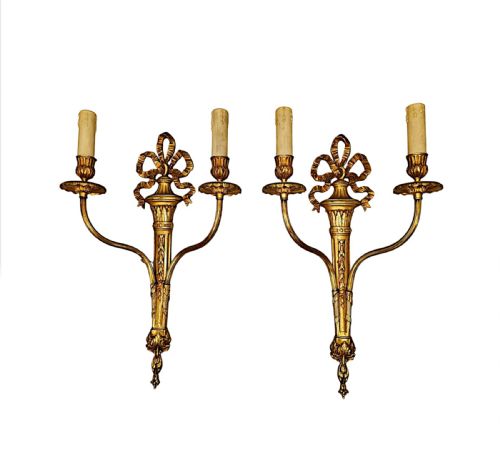
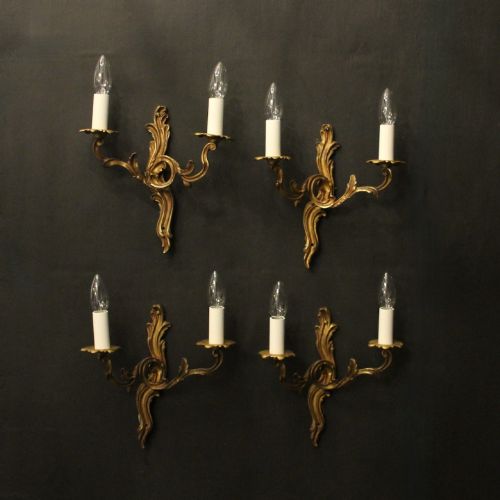
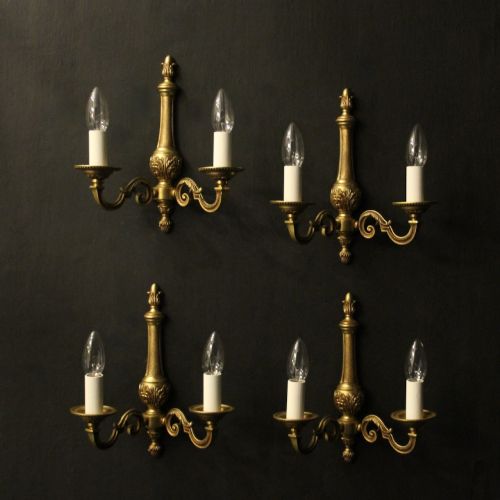
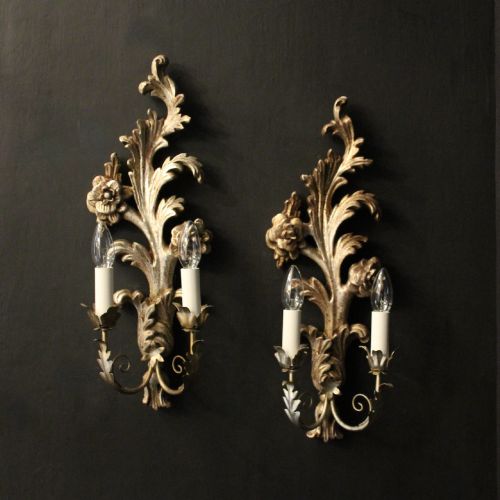
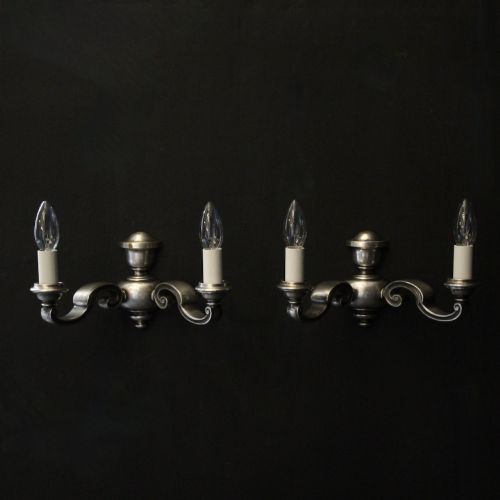
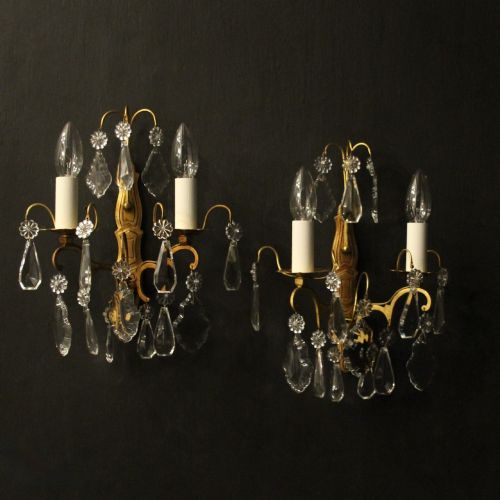
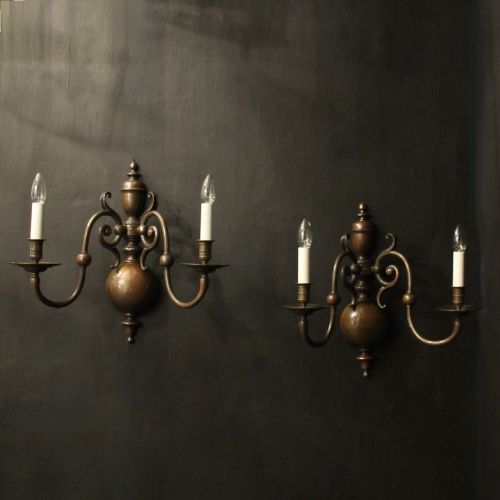
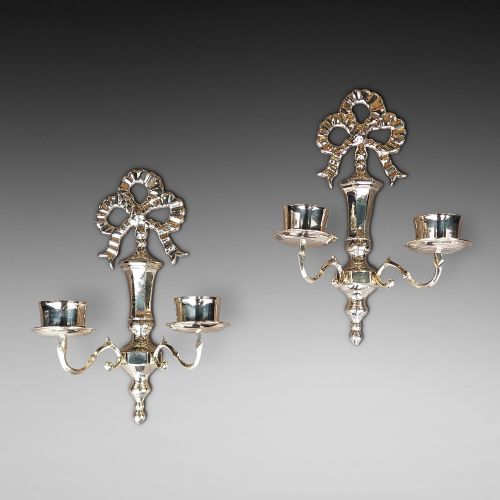
Pair Twin Arm Sconces
Pair twin arm sconces bring balanced illumination and period character to a room, mounted directly to the wall for classic symmetry.
Pair Twin Arm Sconces
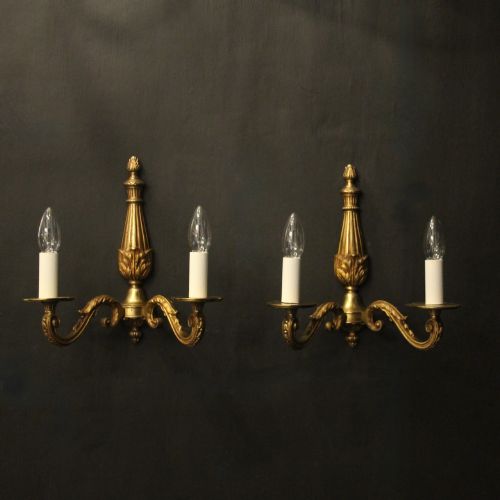
Pair twin arm sconces are wall-mounted lighting fixtures designed to hold two candles or bulbs branching from a single backplate, creating a balanced decorative scheme. Buyers searching for pair twin arm sconces will encounter formations originating mainly from the nineteenth and early twentieth centuries, spanning periods from the Victorian era through the 1930s.
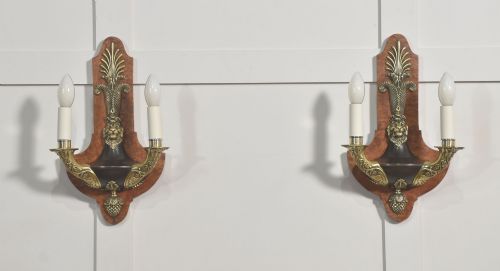
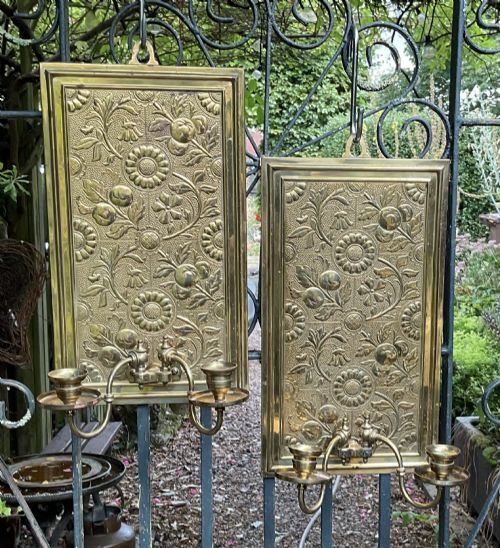
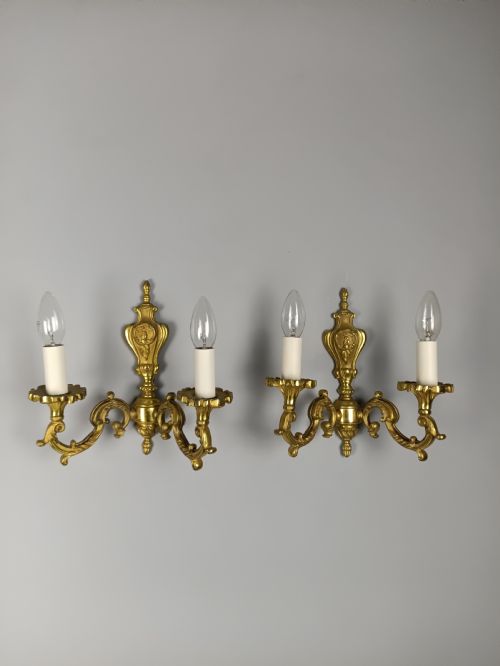
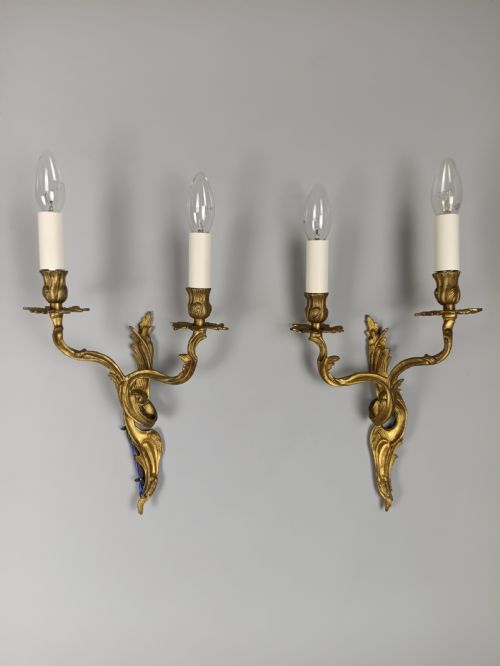
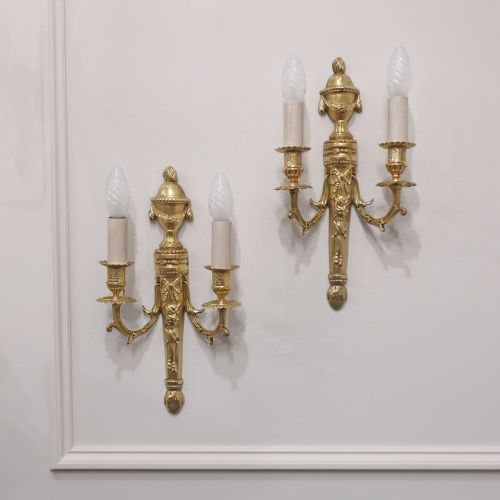
The most common versions met on this page are French and English designs, often cast in bronze, brass or giltwood. These pieces frequently draw upon historical aesthetics such as French Rococo, Neoclassical and Adam Revival styles, reflecting the decorative tastes of their respective periods of production.
How they were made
Metal sconces rely heavily on traditional casting techniques, utilising bronze, brass and iron shaped into backplates and branching arms. Many examples receive a surface application of gilt, ormolu or silver plating to enhance their decorative appeal under candlelight.
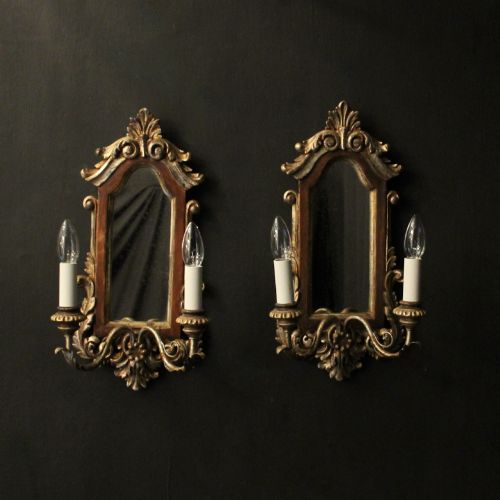
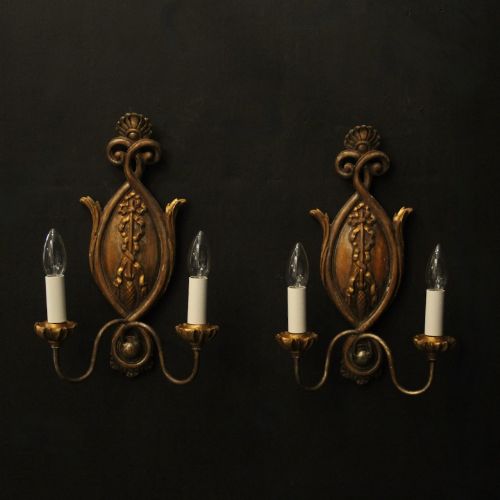
Wooden alternatives employ carved giltwood or turned timber, often complemented by applied composition details or integrated glass elements like Murano crystals and mirrors. These diverse materials are assembled to ensure stability when mounted to vertical surfaces while supporting dual light branches.
Listings feature brass, gilt bronze and carved giltwood materials spanning the Victorian era through the 1930s.
What varies in quality
The sophistication of the casting and carving dictates the distinction between standard and superior examples. Finer pieces demonstrate crisp, deep relief in the chasing of metal or the intricate hand-carving of wood, whereas lesser specimens show softer, shallower detailing.
The integrity of the original surface finish, whether rich ormolu, burnished giltwood or patinated bronze, heavily influences the overall character of the piece. Superior examples retain cohesive gilding and well-matched components that speak to the original maker's skill.
Bruce Talbert·Casier·F. & C. Osler
The Pair Twin Arm Sconces Glossary
- Ormolu
- A technique involving the application of finely ground high-carat gold to a bronze base. This creates a rich, durable surface finish frequently found on finer French pieces.
- Girandole
- A branched wall light or sconce that typically incorporates a mirror backplate. The reflective glass serves to multiply the illumination cast into the room.
- Giltwood
- Timber that has been coated with a thin layer of gold leaf. This process was widely utilised in decorative wall lights across various revival periods.
- Backplate
- The foundational mounting piece secured directly to the wall. It supports the projecting arms and conceals the primary structural fixings.
Pair Twin Arm Sconces: Frequently Asked Questions
How were pair twin arm sconces used historically?
These fixtures were mounted beside mirrors, fireplaces or along hallway walls to maximise the reflection and spread of candlelight before the advent of widespread electricity.
Their twin arms allowed a single mounting point to project double the light, creating a balanced visual anchor within formal domestic interiors.
Are these sconces wired for electricity?
Many surviving examples have been adapted for modern electrical wiring to function safely as wall lamps, though some retain their original candle-only configuration.
Buyers can find pieces suited either for contemporary electrical installation or for traditional decorative display using taper candles.
How do I identify French styles from English ones?
French examples frequently exhibit elaborate Rococo or Neoclassical curves, rich gilding and cast bronze figures featuring naturalistic foliate motifs.
English designs often lean toward restrained neoclassical proportions, incorporating polished brass, silver plating or simpler timber and metal construction.
Where should I mount these in a home?
They suit flanking positions on either side of a fireplace mantel, a large mirror or a headboard to establish symmetrical accent lighting.
Ensuring correct installation height helps protect surrounding wall treatments and directs the illumination effectively across the space.