


Pair Silver Salt Pots
These pair silver salt pots bring dining history to the table, offering clever miniature forms from the Georgian, Victorian, and Edwardian periods.
Pair Silver Salt Pots
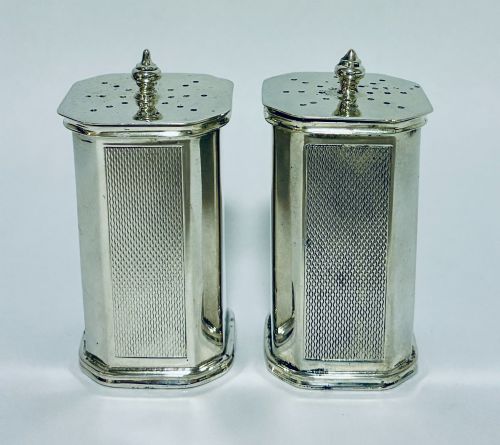
When searching for pair silver salt pots, collectors look at dual vessels designed for dining tables, spanning open salt cellars, pepper pots, and condiment sets. These items appear across Georgian, Victorian, Edwardian, and 1920s eras, reflecting changing domestic habits.
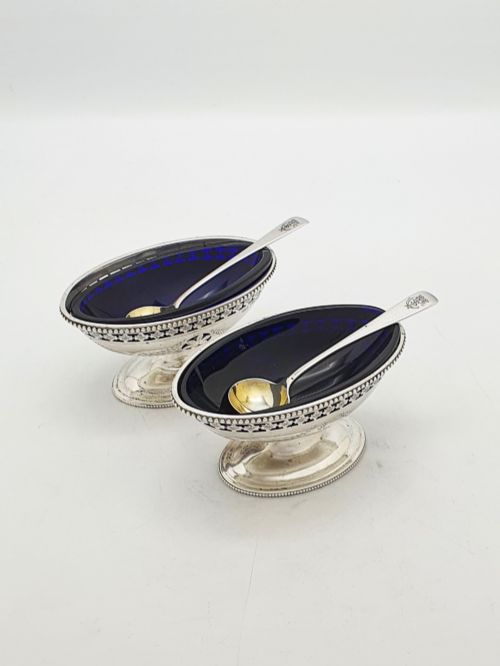
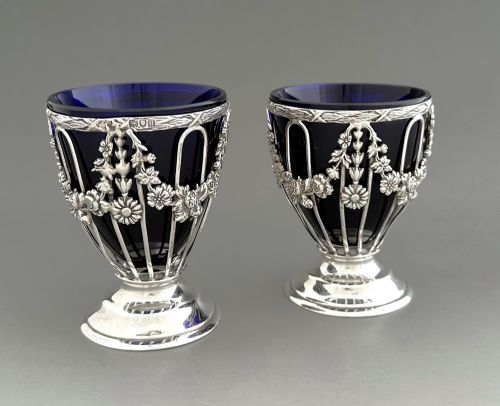
The most common versions met on this page are Edwardian and Victorian sterling silver salt cellars paired with contrasting coloured glass liners, alongside novelty peppers shaped as birds or figures.
Materials and construction
Items on this page utilise sterling silver, silver plate, and solid silver, frequently combined with fragile insert materials such as cobalt glass, cranberry glass, silk, and velvet linings.
Manufacturing methods range from cast silver figural modelling and wirework construction to hallmarked stamped metalwork designed to hold removable glass vessels securely.
Victorian dining tables once featured silver salt pots shaped as Mr Punch's dog Toby, guarding dinner guests with ferocious loyalty.
What separates the grades
Quality differences emerge through the crispness of cast details in novelty pieces, such as modelled birds and figures, compared to plain open tubs.
The presence of undamaged original glass liners, clear hallmarks, and matching spoons determines the higher end of surviving domestic tableware.
Sampson Mordan·Richard Comyns
The Pair Silver Salt Pots Glossary
- Salt cellar
- An open tabletop vessel used to hold loose salt before the invention of free-flowing shakers. These often require a small spoon.
- Cobalt glass
- A deep blue potassium glass commonly utilised for removable interior liners within open salt cellars. It protects the metal from corrosive salt.
- Hallmark
- An official stamp indicating metal purity, origin city, and date of manufacture. British silver frequently displays these marks on the base or rim.
- Pepperette
- A small tabletop shaker designed for dispensing ground pepper. They often feature perforated tops and matching proportions to salt cellars.
Pair Silver Salt Pots: Frequently Asked Questions
How do I clean old silver salt pots?
Wash silver gently in warm soapy water using a soft cloth, avoiding harsh abrasive dips that strip away age.
Remove glass liners entirely before cleaning the metal to protect vulnerable materials from moisture damage.
Are glass liners original to the pots?
Original liners fit snugly into the silver frame without excessive movement and match the period manufacturing style.
Replacement liners often differ slightly in glass tint or thickness compared to the outer metal holder.
Can I still use these for dining?
These table items function well for modern dinner parties provided the interior glass liners remain completely intact.
Wash salt out promptly after use to prevent long-term corrosion on older silver surfaces.
What period are most salt pots from?
The majority of surviving examples date from the Victorian and Edwardian eras, reflecting heavy domestic production.
Earlier Georgian pieces appear less frequently and usually feature simpler open designs without novelty shapes.