


Pair Putti Sculptures
These pair putti sculptures bring winged figures and classical grace into a room, spanning bronze, carved wood and garden lead.
Pair Putti Sculptures
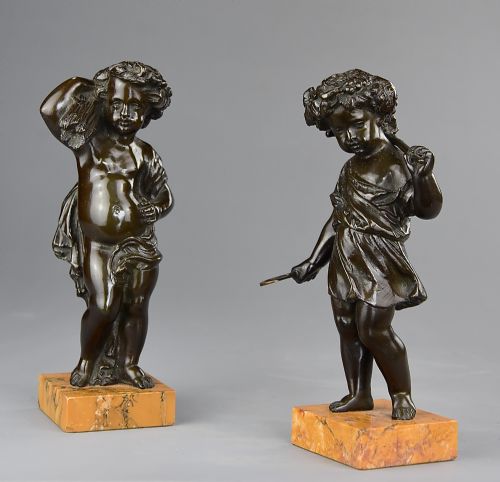
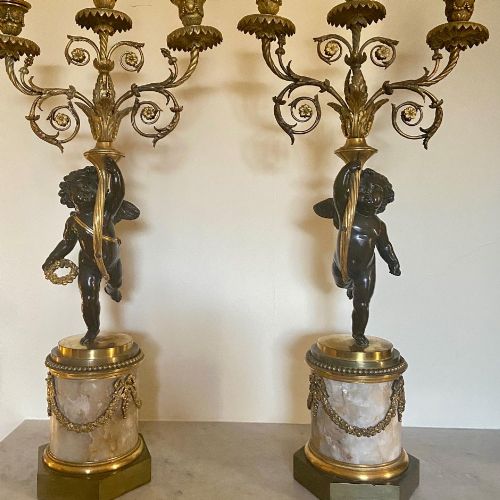
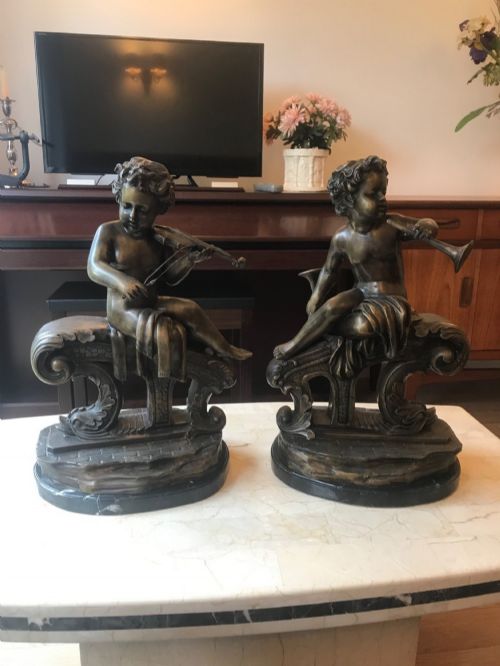
When you search for pair putti sculptures, you encounter dual figures of winged cherubs, infants and classical youths rendered in metal and stone. They appear as freestanding statues, candelabra, bookends and garden statues across periods from the seventeenth century through to the mid twentieth century.
The versions most common on this page are nineteenth-century bronze castings, often mounted on marble bases or styled after French models. These span musical cherubs, allegorical harvest figures and classical cupids originating from English, French and Italian workshops.
How they were made
Metal figures rely on bronze casting, utilising patinated finishes, silvering and sometimes gold leaf to define the surface. Marble and fluorspar frequently provide dense, polished bases or supporting elements for the metal work.
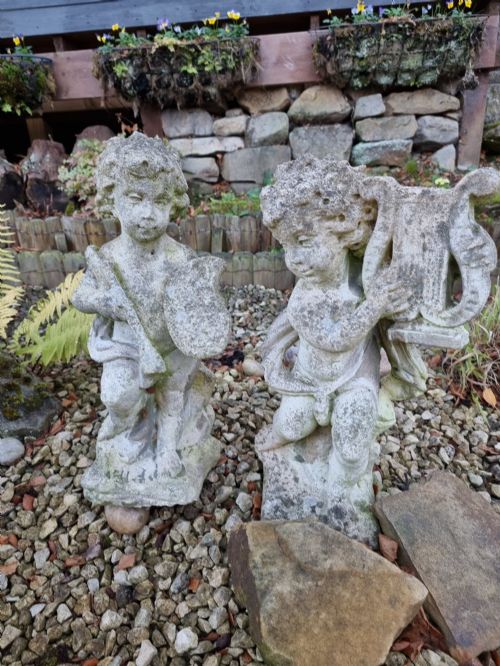
Carved pieces utilise limewood and other timbers, finished with polychrome paint and gesso to build up detail. Lead and garden stone serve for outdoor statues designed to weather in the open air.
Some putti busy themselves gathering grapes, while others double as doorstops or hold musical instruments.
What varies in quality
The refinement of the chasing and the crispness of the cast separate standard foundry work from superior artistic sculpture. Softer, worn details indicate repetitive casting or heavy over-cleaning that has erased the original tool marks.
The quality of the materials itself shifts the character of the piece, from simple cast lead up to finely veined marble bases paired with nuanced patinated bronze. Signatures, maker marks and firm attributions elevate specific examples above unsigned workshop output.
Claude Michael Clodion·Francois Redmond·H Schubert·Charles Cumberworth·Dumond
The Pair Putti Sculptures Glossary
- Putto
- A plump, naked male child figure, frequently winged, appearing in classical and neoclassical art. Plural putti.
- Patination
- The surface coloration and ageing on metal, wood or stone produced by natural oxidation or chemical treatment.
- Candelabra
- Branched lighting fixtures designed to hold multiple candles, often supported by figural bronze sculptures.
- Polychrome
- Decorated in multiple colours, typically applied to carved wood or gesso figures.
- Grand Tour
- Extended travel through Europe undertaken by the wealthy during the eighteenth and nineteenth centuries, often resulting in the acquisition of Italian bronzes.
- Gesso
- A plaster mix applied to wood surfaces as a smooth base for paint or gilding.
Pair Putti Sculptures: Frequently Asked Questions
How do I clean bronze putti?
Dust gently with a soft dry cloth to remove surface particles without disturbing the underlying patination. Avoid harsh chemical cleaners or abrasive materials that strip the original finish.
Keep bronze away from excessive moisture and direct heat sources to preserve the metal surface over time.
Where should I place these sculptures?
Smaller bronze figures and bookends suit mantelpieces, desks and an enclosed bookcase where the detailed casting can be viewed closely. Larger candelabra and architectural groups anchor side tables or console surfaces.
Garden statues require sheltered outdoor positions or stable stone plinths if exposed to freezing winter weather.
Are these figures always made of bronze?
While bronze is common, materials vary widely to include carved limewood, gesso, lead and garden stone. Some examples combine bronze with marble bases or fluorspar.
Each material dictates the placement and expected indoor or outdoor environment for the sculpture.
How do I date a putti sculpture?
Look to the base material, casting seams, surface patination and stylistic cues such as Neoclassical or Art Nouveau lines. Maker signatures or foundry stamps also point to specific active decades.
Comparing the treatment of hair, wings and drapery against dated examples helps narrow down the century of manufacture.