



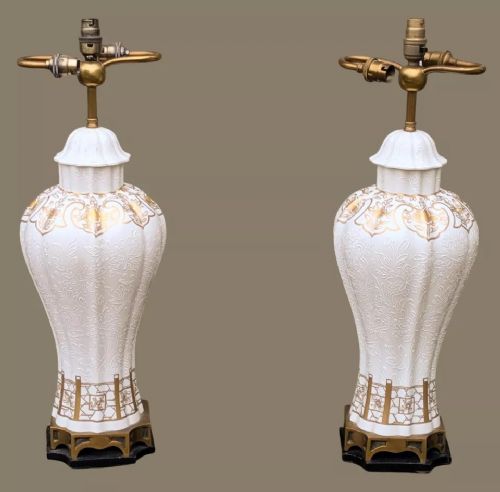


Pair Porcelain Urn Lights
These pair porcelain urn lights bring together ceramic bodies and lighting conversion, offering decorative symmetry for interiors.
Pair Porcelain Urn Lights
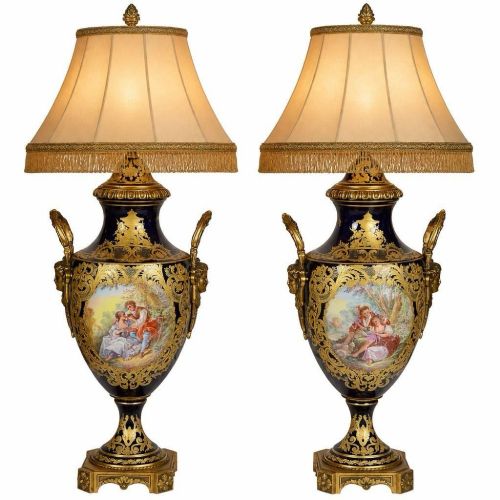
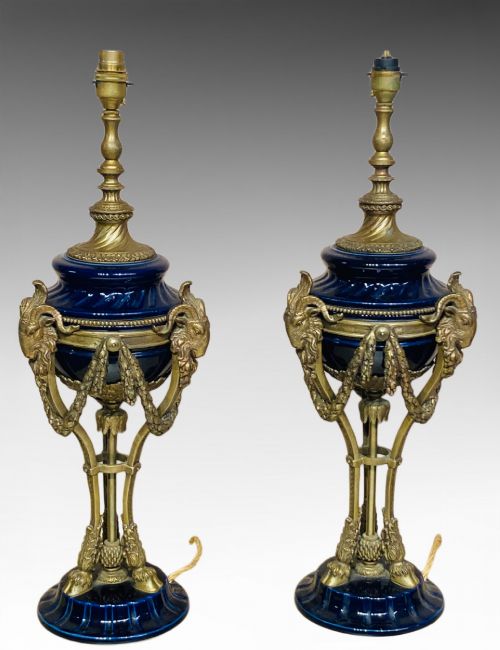
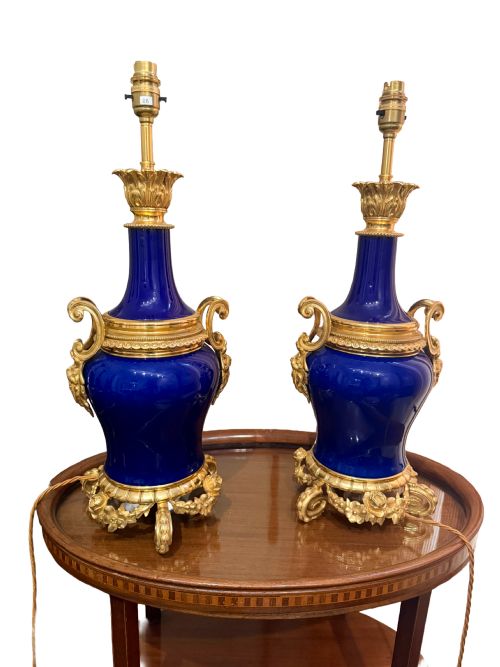
When you search for pair porcelain urn lights, you find matched sets of ceramic vessels adapted into table lamps, often originating from nineteenth century European workshops and Asian export centres. These pieces combine traditional vase and jar forms with electrical or oil lighting fittings, serving as balanced focal points on side tables and mantelpieces.
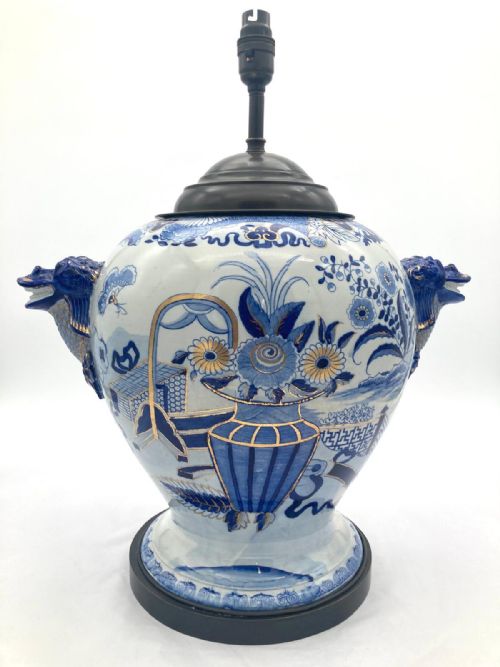
You are most likely to meet French Sèvres style models with ormolu mounts, or Japanese Satsuma and Chinese blue and white ginger jars converted into lamps. The selection spans the nineteenth century through the mid twentieth century, encompassing styles such as French Rococo Revival and Regency Chinoiserie.
The objects balance utility with decorative presence, using glazed ceramic surfaces alongside metal mounts in brass and gilt bronze. Their dual nature means many began life as decorative vases or ginger jars before receiving lamp fittings in later decades.
How they were made
Makers shaped porcelain bodies on the potter's wheel or in moulds before applying hand painted cobalt blue, polychrome enamels, or celadon glazes and firing them in kilns. These ceramic bases often received mounts of cast ormolu, gilt bronze, and brass to secure the lighting hardware and elevate the overall form.
Conversion into lamps involved mounting electrical or oil components through the top or base of the vessel, sometimes paired with handmade fabric or silk shades. The physical construction joins fragile fired ceramics with heavy metal bases, requiring precise fitting to ensure stability.
Object forms include table lamps, ginger jars, vases, and oil lamps styled in Japanese Meiji and French Rococo Revival traditions.
What varies in quality
The quality of pair porcelain urn lights depends on the crispness of the hand painting and the depth of the glaze, alongside the weight and detail of the metal ormolu and gilt bronze mounts. Finer examples display intricate hand painted details on cobalt blue or polychrome surfaces rather than transfer printed decoration.
The precision with which the original ceramic vessel integrates with its metal mounts and electrical fittings dictates the overall finish. Superior pairs show harmonious matching between both sides, with balanced proportions and securely seated mounts that complement the original ceramic body.
The Pair Porcelain Urn Lights Glossary
- Ormolu
- Gilded bronze mounts applied to furniture, clocks, and porcelain lamps. This technique involves coating bronze in a mercury and gold amalgam before heating.
- Satsuma
- Japanese earthenware and porcelain pottery characterised by a crackle glaze and ornate polychrome enamel decoration. These pieces often feature gilded pictorial scenes.
- Celadon
- A term for ceramics denoting a pale green glaze imitating jade. The colour results from iron oxide in the glaze recipe interacting during reduction firing.
- Ginger jar
- A high shouldered storage jar of Chinese origin with a domed cover. These vessels frequently find new life as lamp bases.
- Imari
- Japanese export porcelain decorated in underglaze blue, iron red, and gold. This style originated in Arita and gained popularity across European markets.
Pair Porcelain Urn Lights: Frequently Asked Questions
How do I clean porcelain lamp bases?
Dust ceramic surfaces gently with a soft, dry cloth to prevent accumulation. Avoid harsh chemical cleaners that might damage hand painted glazes.
Keep metal mounts polished with appropriate non abrasive materials, taking care to avoid contact with the ceramic body.
Are these lamps converted from old vases?
Many examples began as decorative vases, ginger jars, or twin handled urns before receiving electrical or oil burner fittings. This practice of conversion preserves antique ceramic forms while giving them a functional role in lighting.
Evidence of adaptation often appears at the neck or base where wiring and hardware integrate with the original body.
What styles are common in these lamps?
The selection includes nineteenth century French Sèvres style pieces with gilt bronze mounts, alongside Japanese Satsuma and Chinese blue and white ginger jar forms. Styles range from Louis XVI Neoclassical and French Rococo Revival to Chinoiserie.
These diverse aesthetic influences reflect global trade and European taste for Asian ceramics over successive decades.
How do I match replacement shades?
Select shades that complement the proportions and decorative palette of the ceramic urn below, such as handmade fabric or silk designs. Consider the height and width of the vase body to maintain visual balance when lighting is switched on.
Neutral tones work well with complex polychrome or blue and white patterns without competing for attention.