
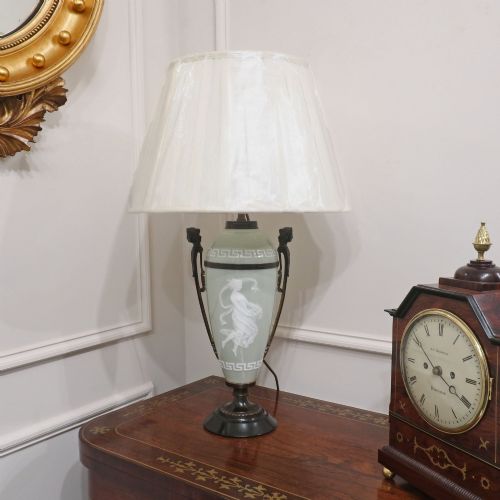
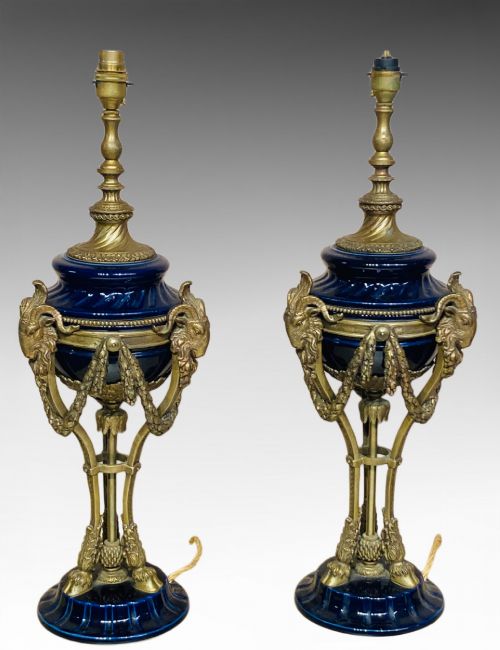
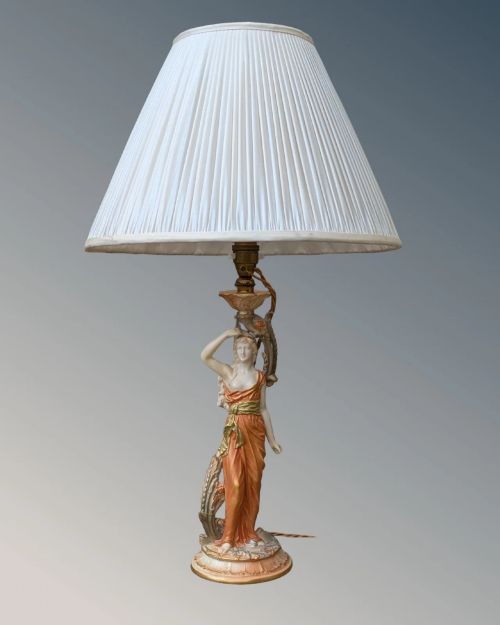


Classical Porcelain Table Lamps
Classical porcelain table lamps bring grounded nineteenth century presence and refined ceramic form into a room.
Classical Porcelain Table Lamps
Classical porcelain table lamps combine glazed ceramic bodies with metal mounts, drawing on nineteenth century and Edwardian design traditions. You will frequently encounter French Neoclassical, Louis XVI, and Sevres styles alongside blue and white or bleu celeste colourways.
Many examples originate from French workshops or English potteries, often adapting earlier vase forms into electrified lighting during the Victorian and Art Deco eras. Pairs and single side lights dominate the selection, bringing substantial height and decorative presence to a table.
The aesthetic bridges classical antiquity and period interiors, utilising hand-painted details, figural elements, and patinated ormolu bases. These pieces reflect enduring neoclassical tastes that have been adapted for domestic illumination over successive generations.
Materials and construction methods
The foundation of these lamps relies on fired porcelain or glazed ceramic, frequently shaped into classical urns or amphorae and decorated with hand-painted motifs or pate sur pate. Metal mounts in brass, ormolu, and gilt bronze provide structural support and decorative framing.
Secondary materials include marble bases, gilt metal, and fabric shades that complement the ceramic bodies. Skilled metalwork secures the porcelain vessels without damaging the fired glaze, integrating electrical components into historical bodies.
French Neoclassical and Sevres styles dominate the decorative vocabulary, accompanied by Edwardian and Art Deco interpretations.
Distinguishing quality across the range
Quality rests upon the crispness of the porcelain modelling and the depth of the hand-painted decoration, where finer brushwork and controlled gilding elevate the piece. The weight and chasing of the ormolu or brass mounts also indicate the care taken in original manufacture.
The integration of the ceramic body with its metal mounts demonstrates workshop skill, with superior examples maintaining strict symmetry and secure fittings. Retaining original surfaces, distinctive glaze colours such as bleu celeste, and well-preserved pate sur pate details further distinguish finer examples.
Royal Worcester·Samuel Alcock
The Classical Porcelain Table Lamps Glossary
- Ormolu
- Gilded bronze mounts cast and chased with decorative details. It appears frequently on French nineteenth century pieces to accent the ceramic body.
- Pate sur pate
- A method of porcelain decoration where liquid clay is applied in layers to build up a low-relief design before firing. This technique creates a cameo-like effect on the lamp body.
- Bleu celeste
- A bright sky blue glaze associated with Sevres porcelain production. It provides a striking backdrop for gilt bronze mounts.
- Neoclassical
- A style drawing inspiration from classical antiquity, marked by symmetry, restrained ornamentation, and classical motifs. It informs much of the design vocabulary seen in these lamps.
- Paris porcelain
- A general term for wares produced by various independent workshops in Paris during the eighteenth and nineteenth centuries. These pieces are noted for fine painting and eclectic styling.
Classical Porcelain Table Lamps: Frequently Asked Questions
How do I date an antique porcelain lamp?
Dating relies on stylistic clues, glaze characteristics, and the nature of the metal mounts. Nineteenth-century examples often display hand-painted reserves and mercury gilt ormolu, while later twentieth-century adaptations incorporate simpler electrical fittings.
Examining the base and interior construction reveals manufacturing methods specific to periods like the Victorian era or the 1920s Art Deco movement.
Are these lamps originally electrified?
Most pieces began life as nineteenth-century vases, urns, or garniture components before conversion into table lamps. The adaptation process typically occurred later, utilising period-appropriate wiring and hardware.
Understanding the original vessel form helps explain the proportions and weight distribution of the finished lamp.
How do I care for gilt bronze and porcelain?
Maintenance requires gentle dusting with a soft, dry cloth to protect delicate hand-painted surfaces and gilded details. Avoid chemical cleaners and commercial polishes, which can strip thin gilding from ormolu mounts and damage ceramic glazes.
Keeping the lamp away from direct sunlight preserves the vibrancy of blue glazes and painted panels over time.
What defines the French Neoclassical style?
This style draws directly on archaeological discoveries from Pompeii and Herculaneum, favouring symmetrical urn forms, classical foliage, and controlled gilding. It emphasises architectural balance and refined proportions.
In table lamps, this translates to structured ormolu bases supporting finely painted ceramic bodies with classical motifs.