


French Classic Side Lamps
French classic side lamps bring heavy metals, carved wood, and period silhouettes to a room, offering warm light and decorative presence.
French Classic Side Lamps
When you search for french classic side lamps, you encounter table lamps spanning the nineteenth century through the 1920s, drawing on Neoclassical, Louis XV, Empire, Art Nouveau, and Art Deco traditions.
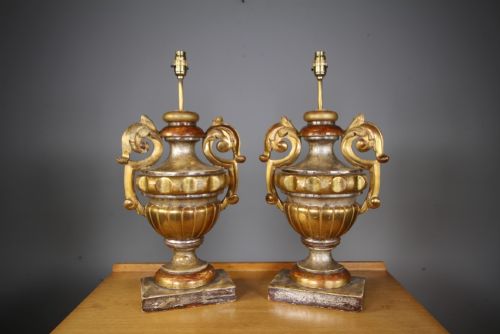
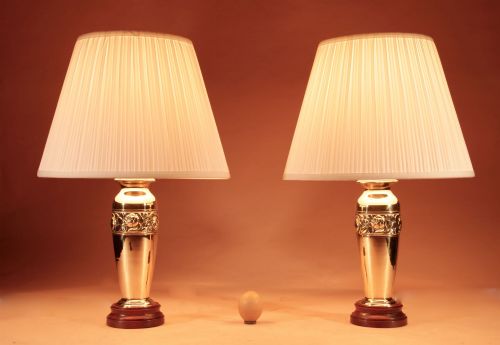
The pieces on this page appear primarily as table lamps and pair arrangements, taking forms such as urns, bouillotte designs, putti figures, and multi-branch candelabra conversions.
Makers and designers referenced in the inventory include Aug. Moreau and Sèvres style porcelain, alongside substantial works in bronze, brass, ormolu, and marble.
How they were made
These lamps rely on cast and chased metals including bronze, brass, ormolu, and gilt bronze, often combined with carved pine or solid wood bases.
Many examples incorporate polished marble plinths, hand-painted porcelain bodies in the Sèvres style, and painted metal toleware shades.
Articulated multi-branch structures, putti figures, and carved urn motifs demonstrate nineteenth-century and early twentieth-century foundry and joinery methods.
Bronze putti perpetually hold up the light for rooms that have forgotten why they need card-playing illumination.
What varies in quality
The distinction between tiers rests on the crispness of the bronze chasing, the weight and veining of the marble bases, and whether porcelain elements feature hand-painted detail.
Substantial multi-branch configurations and signed sculptural works by founders like Aug. Moreau stand apart from simpler cast brass and wood table lamps.
Aug. Moreau
The French Classic Side Lamps Glossary
- Ormolu
- Gilded bronze, typically mercury-gilded, used extensively on French decorative arts and lighting mounts. This finish provides a bright, durable golden surface.
- Bouillotte lamp
- A traditional French table lamp featuring a central shaft, multiple candle arms, and an adjustable painted metal shade. It was originally designed for the card game bouillotte.
- Tole
- Painted or lacquered sheet metal, frequently utilised for shades on period French lamps. It offers a contrasting matte finish against polished brass or bronze.
- Neoclassical
- A style drawing on classical Greek and Roman motifs, prominent in nineteenth-century French metalwork and lighting. It favours symmetry, urn forms, and architectural restraint.
- Sèvres style
- Porcelain decorated in the manner of the famous Sèvres factory, often featuring hand-painted panels and rich colour grounds mounted in ormolu.
French Classic Side Lamps: Frequently Asked Questions
What periods do these lamps cover?
The current selection spans the nineteenth century up to the 1920s, encompassing periods from the 1890s through the Edwardian era and Art Deco years.
This range includes nineteenth-century pieces alongside early twentieth-century interpretations of Louis XV and Neoclassical designs.
How were bouillotte lamps used?
Bouillotte lamps served as task lighting for card games played on French tables, equipped with adjustable shades to direct light downward.
The central metal shade moved up and down the stem to control illumination over the playing surface.
Are these lamps sold as pairs?
Many listings on this page consist of matched pairs, particularly the urn, brass, and marble table lamps from the nineteenth and early twentieth centuries.
Single lamps also appear, especially larger sculptural pieces featuring bronze figures or multi-branch candelabra formats.
What materials predominate?
Bronze, brass, and ormolu form the primary metalwork across the inventory, frequently paired with white or dark marble bases and carved pine.
Additional materials include hand-painted porcelain in the Sèvres style, fabric components, and painted toleware.