


French Ceramic Bedside Lamps
These French ceramic bedside lamps bring warmth and character to a room through decorative pottery mounted in bronze or brass.
French Ceramic Bedside Lamps
French ceramic bedside lamps combine glazed pottery bodies with metal mounts, appearing across periods from the late nineteenth century through to the mid twentieth century. These table lamps range from petite nineteenth century pieces to larger Paris porcelain and Faience designs.
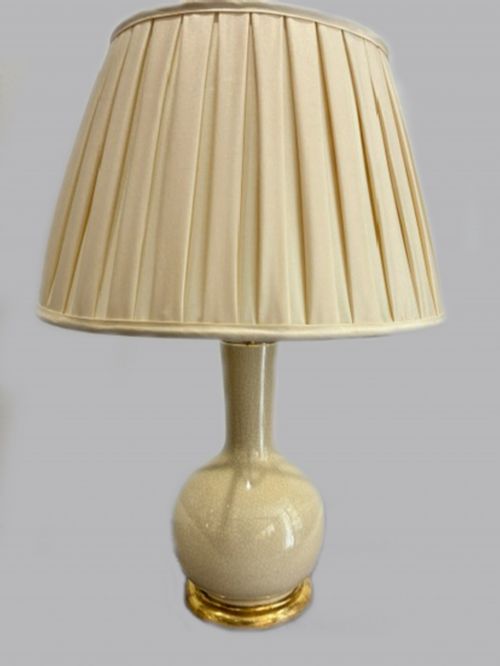
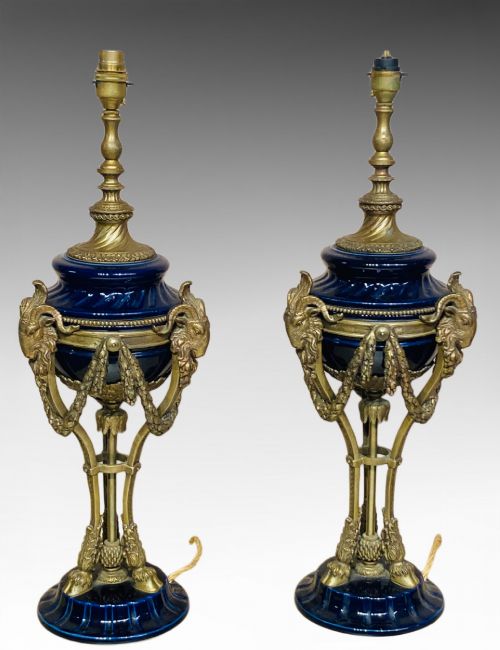
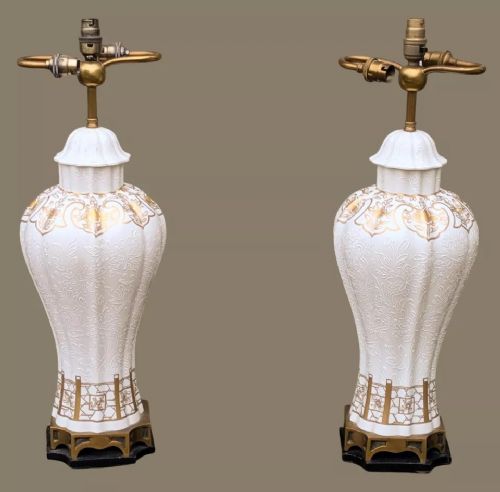
The selection includes single lamps and balanced pairs utilising styles such as French Neoclassical, Rococo Revival, and Chinoiserie. Makers and workshops draw upon traditional forms, incorporating hand painted details and crackle ware finishes.
Buyers encounter porcelain, china, and faience bodies paired with fabric shades and metal bases. The designs span simple nineteenth century work to elaborate gilt bronze and ormolu mounts.
Materials and construction
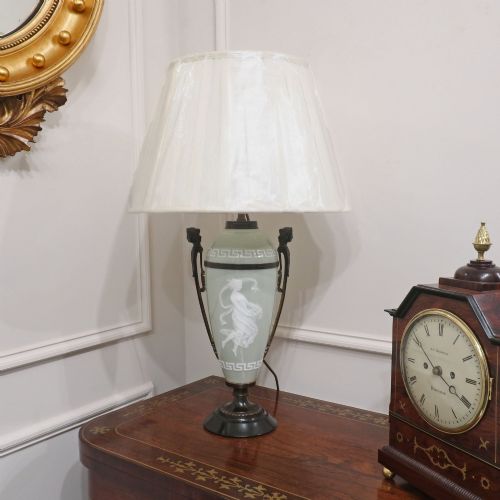
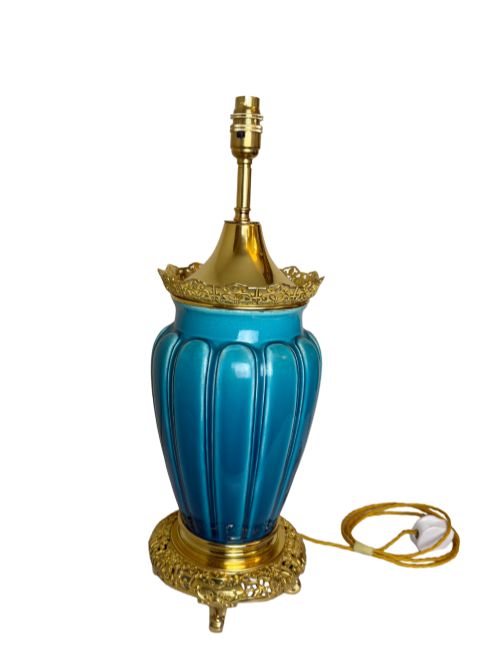
Potters shaped the ceramic and porcelain bodies by hand or in moulds before applying glazes in celadon, turquoise blue, and deep blue. Artisans often hand painted floral and figurative designs directly onto the ceramic surface.
Foundries supplied the cast ormolu, gilt bronze, and brass mounts that secure the bases and collar the rims. These metal elements fasten tightly to the ceramic vessels with threaded rods or secure pins.
Listings feature porcelain, ceramic, and faience bodies combined with ormolu, gilt bronze, and brass mounts across the nineteenth and twentieth centuries.
Quality and craftsmanship
Finer examples demonstrate superior detail in the hand painting on the porcelain and precision in the chasing of the gilt bronze or ormolu mounts. Heavier casting metals and crisper surface decoration distinguish the better workshops.
The integration between ceramic body and metal hardware reveals the standard of assembly, where superior pieces maintain alignment and secure fittings without excess adhesive.
Gien France·Samson
The French Ceramic Bedside Lamps Glossary
- Ormolu
- Gilt bronze mounts applied to furniture and ceramics. This technique involves coating bronze in a gold amalgam.
- Pate sur pate
- A porcelain decoration method where wet white slip is built up in layers on a coloured clay body to create a low relief cameo effect.
- Celadon
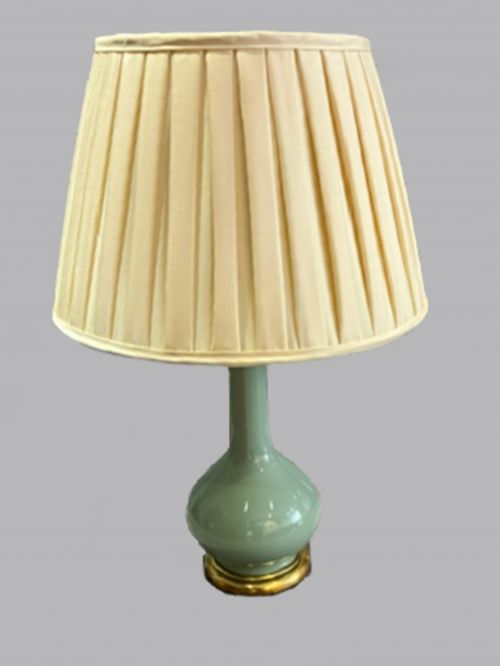
- A pale green or grey green glaze traditionally associated with East Asian ceramics and adopted by European makers.
- Paris porcelain
- A general term for porcelain produced by various independent workshops and factories in Paris during the eighteenth and nineteenth centuries.
French Ceramic Bedside Lamps: Frequently Asked Questions
How do I style these lamps?
These lamps suit bedside tables, sideboards, and desk spaces where their decorative ceramic bodies and metal mounts provide soft ambient lighting. Pairing them with simple fabric shades lets the painted porcelain and ormolu details remain the focus of the room.
Consider the scale of the furniture when choosing between petite nineteenth century examples and larger pairs. Their traditional styles complement both classic interiors and neutral modern spaces.
Are these lamps wired for modern use?
Many antique lamps receive updated wiring to meet current electrical standards while retaining their original ceramic and metal components. Buyers should inspect the flex and plug to confirm compatibility with local fittings.
Professional rewiring preserves the internal hardware and ensures safe operation for daily bedside use.
How do I date a ceramic lamp?
Dating relies on examining the characteristics of the ceramic body, the glaze type, and the style of the metal mounts. Nineteenth century examples often feature hand painted details and heavier bronze or ormolu castings.
Twentieth century pieces, such as those from the Art Deco period, introduce brighter faience glazes and different stylistic influences.
Can I buy these as matching pairs?
The selection includes matched pairs alongside individual table lamps. Pairs often feature identical porcelain bodies and balanced gilt bronze mounts.
Matching pairs work well on twin bedside tables or balanced mantle placements, while single lamps suit smaller spaces.